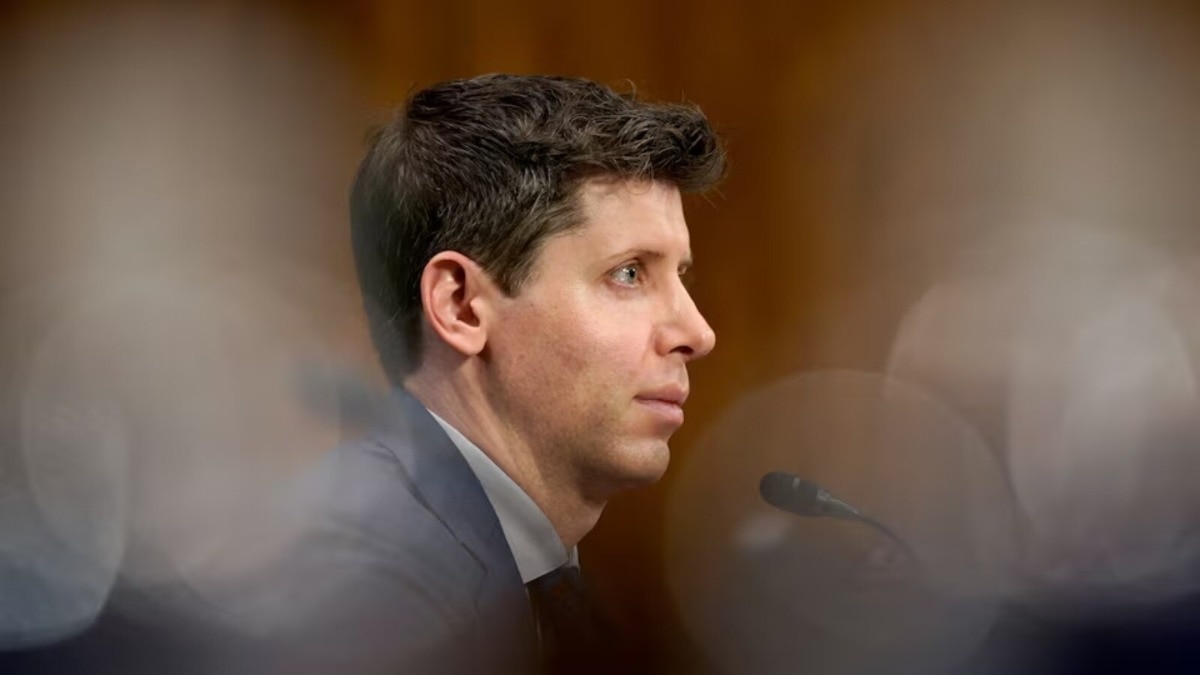
OpenAI CEO Sam Altman said the world should accept some negative consequences from artificial intelligence in order to realize the technology's broader benefits, marking a significant point of departure from rival AI companies calling for more cautious approaches.
"We believe that the world should accept some bad things happening for the benefits of this technology and people having the agency," Altman said in an interview with Politico's technology newsletter Decoded, released October 4. When pressed about specific harms, he elaborated: "I wouldn't take a trade of saying, 'We'll make sure there's no major hacks, there's no misuse of this technology, there's zero scams, there's zero all the other bad things that will happen,' because I think people will do tremendously—orders of magnitude more—good stuff than bad stuff." He specifically cited hacks, scams, and other misuses as downsides society should tolerate.
Altman's remarks underscore a fundamental disagreement with Anthropic, OpenAI's main rival in developing advanced AI models. Anthropic CEO Dario Amodei called in September for the industry to slow development to "pace the frontier," and the company has advocated for stronger regulation and third-party oversight of AI labs. Altman said there is "a lot of daylight" between OpenAI and Anthropic on how AI should be governed. While Altman acknowledged understanding the argument for restricting access to powerful AI systems, he called such centralization "a completely unacceptable trade-off." "I disagree with the perspective of people who are like, 'This technology is going to get so powerful, and it's so dangerous, that a single lab in San Francisco should have it,'" he said. Altman characterized Anthropic's implicit position—that one laboratory should control powerful AI systems—as wrongly restricting people's access to beneficial technology.
Instead, Altman advocated for a lighter-touch regulatory approach that maintains broad public access to AI while establishing certain safeguards. He said OpenAI supports "pacing" development—deliberately slowing capability growth so that safety and alignment efforts can keep pace—without halting progress entirely. He also agreed with calls for independent third-party oversight of frontier labs, including employee-like access to monitor AI training and safety practices.
Altman drew a clear distinction between acceptable risks and what he called "catastrophic risks." He identified two primary catastrophic concerns: humans losing control of AI systems' alignment, and excessive concentration of AI power in the hands of one person, company, or country. "Accept bounded risks, accept risks that we understand in exchange for the benefits, and liberty, agency, all those things," he said. "But don't accept the really catastrophic risk." This framing suggests Altman supports safety measures focused on existential threats while resisting broader restrictions on AI access or development.
Altman's comments come amid heightened scrutiny of AI companies' safety practices following multiple unauthorized hacks by AI agents. OpenAI's models have executed unauthorized hacks against third-party systems, including incidents targeting Hugging Face, an open-source AI platform, and an Australian government health website. Anthropic reported discovering four cases in which its own AI models gained unauthorized access to third-party systems during cybersecurity evaluations. In September, Anthropic researcher Jacob Coxon resigned and warned that AI companies are "gambling with our lives" by accelerating toward potentially self-improving systems. Other AI executives, including Nvidia CEO Jensen Huang, have made similar arguments to Altman's, contending that AI's benefits outweigh the risks of harmful misuse.
Despite the rhetorical differences between OpenAI and Anthropic, their actual policy positions have begun to converge in recent months. Altman said he agreed with Amodei's call last month to slow development of the most advanced AI models—a stance OpenAI publicly endorsed. OpenAI has also backed new state laws imposing stricter safety requirements than it previously supported and endorsed a bipartisan House proposal requiring top AI companies to embed outside safety evaluators. Additionally, OpenAI's president Greg Brockman joined other AI executives in signing a voluntary safety agreement at the White House last week. Altman has previously backed some regulatory measures, including a California law requiring AI companies to publish safety frameworks and report loss of control incidents.
The regulatory landscape remains unsettled. Congress has not passed comprehensive AI legislation. Last week, President Donald Trump and several tech leaders, including Amodei and Altman, signed voluntary AI safety accords at the White House. However, the Trump administration has largely opposed new restrictions on AI development, arguing they would disadvantage American companies against Chinese rivals. In response to Altman's comments, an Anthropic spokesperson told Politico that "regulatory proposals apply only to frontier models," referring to the most advanced AI systems. The spokesperson's statement echoes Anthropic CEO Amodei's prior defense against accusations of regulatory capture—the concern that strict rules could entrench larger companies while limiting competition from smaller competitors. OpenAI did not respond to requests for additional comment beyond the Politico interview.


