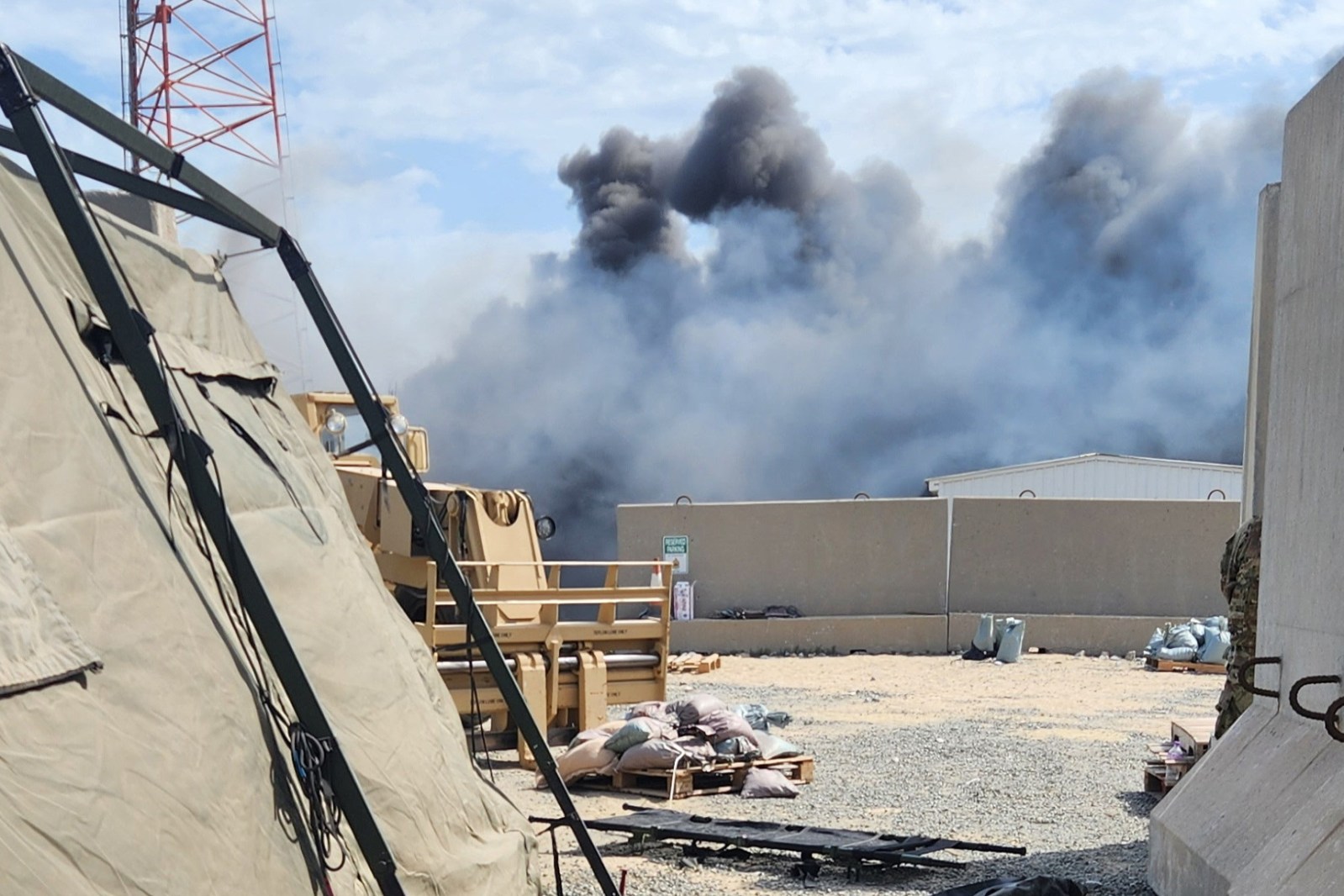
On March 1, the day after President Donald Trump began military operations against Iran, Chief Warrant Officer 3 Robert Marzan was coordinating critical Army supplies at Port Shuaiba, a working seaport and industrial area south of Kuwait City, when an Iranian drone crashed through the ceiling and exploded. Marzan, who had served in the military for 36 years, was killed along with five other soldiers. The blast force flung soldiers into the air, and fragments of sheet metal and glass impaled their bodies. According to soldier accounts, the tin roof was peeled back "like opening up a sardine can." Dozens of other personnel were injured in what was the deadliest known strike on U.S. troops since Operation Epic Fury commenced on February 28.
Many of the wounded—some with decades of military and combat experience—have told the Associated Press that their serious injuries were not treated promptly or adequately in the weeks following the attack. According to interviews with 13 soldiers primarily in key positions of responsibility, commanders had been warned that the facility, a rectangular building with wooden sides, was particularly vulnerable to a drone strike. That warning went unheeded, the soldiers say. Some also stated that higher-ranking officers pushed for an all-clear to be called, though it remains uncertain from their accounts who ultimately made the decision to move soldiers out of safer bunker spaces.
Tina Marzan, the widow of Chief Warrant Officer Marzan, told the AP: "We have the right to know what really happened. If somebody messed up, those people need to be held responsible." Several soldiers spoke on the record about their concerns—a rare step for troops still serving in the Army—while others requested anonymity out of fear of reprisal. Many are raising their concerns publicly for the first time and calling for the Army to reconcile what they describe as failures of preparedness and response.
The Army declined to comment on the AP's reporting about the strike, saying it had not yet briefed the families of those killed on the outcome of its investigation. The Pentagon also declined to comment. "Out of respect for the primary next of kin who will be scheduled for briefs on the official findings of the completed investigation, we will not comment on specific details, individual accounts, or leaked portions of the report at this time," the Army said in a statement. According to an official familiar with the Army's investigation who spoke on condition of anonymity, the Army completed its investigation in June but has yet to release a report, citing the need to redact sensitive information.
The AP's account of the attack is based on interviews with soldiers serving in key positions at the facility or familiar with high-level briefings leading up to the strike, as well as several Gold Star families—the military's designation for relatives of soldiers killed while on active duty. Some details of the attack have previously been reported by other news organizations, including The Washington Post and CBS News, but the AP reports other details for the first time.
The broader context of the conflict underscores the stakes involved. In the early days of the war, Trump described it as a "little excursion" that would end quickly, but it now approaches its eighth month with no clear off-ramp in sight. The toll has reached 19 U.S. personnel killed, more than 800 wounded, and at least $44 billion spent to wage the fight. For those present at Port Shuaiba on March 1, the attack has not receded from memory, and their calls for accountability highlight larger questions about military preparedness and the response to intelligence warnings in the early stages of the conflict.


