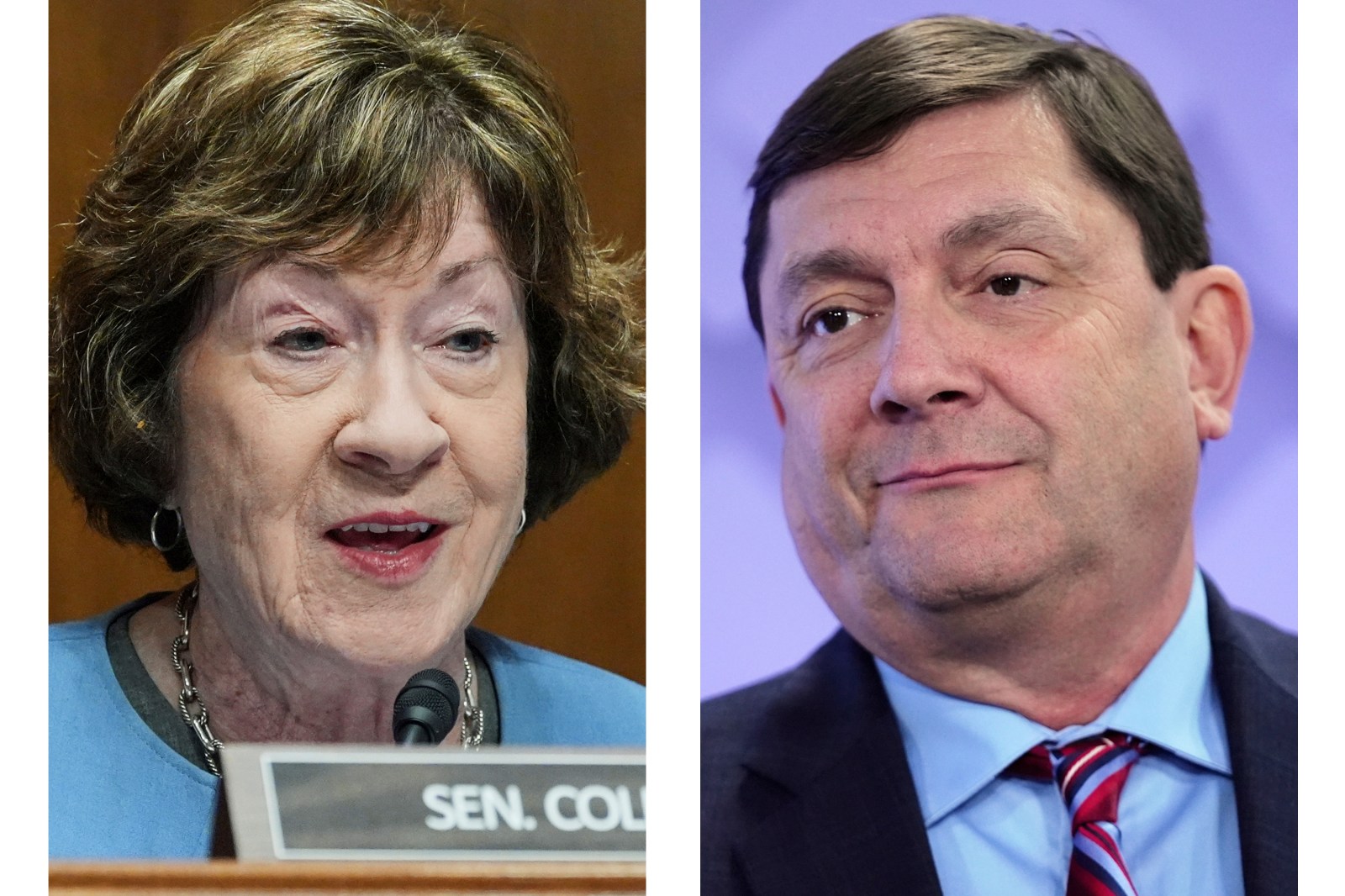
Republican U.S. Senator Susan Collins and Democrat Troy Jackson met for their first Maine Senate debate on Tuesday, October 6, with Collins making a direct effort to distance herself from President Donald Trump during the hourlong event.
Collins repeatedly asserted her political independence, telling debate moderators, 'I'm not exactly his favorite senator.' She argued that she has voted against Trump's agenda more frequently than she did against President Joe Biden's when he was in office, and claimed she has voted against her own party 'more than any other senator on either side of the aisle.' The senator cited her opposition to Trump on issues including tariffs, immigration enforcement, and military intervention in Iran.
Jackson, a former state lawmaker and logger, focused much of the debate on attempting to connect Collins to Trump. He opened by pointing to her critical vote confirming Supreme Court Justice Brett Kavanaugh, a Trump nominee who later joined the majority in overturning the constitutional right to abortion. Jackson also raised Collins' procedural vote to advance Trump's 2025 tax and spending bill, though Collins ultimately broke with her party to vote against the final measure. Collins responded by reiterating her disagreement with Trump on key issues and her record of independence.
The debate's focus on Trump reflects national political dynamics. According to a September AP-NORC poll cited in reporting on the debate, only 31 percent of U.S. adults approved of how Trump was handling the presidency—well below his approval rating when he took office in 2025. Trump has begun holding rallies across the country to support Republican candidates ahead of November's elections.
When a moderator noted that Trump had floated the idea of campaigning in Maine and asked whether Collins would stand beside him, she responded: 'I would say that he's not coming to Maine.' Collins has previously said she did not vote for Trump in 2016 and voted to convict him following his 2021 impeachment related to the January 6 Capitol riot. In January 2026, she joined a handful of Republican colleagues in backing a failed effort to limit the president's unilateral authority to use military force in Venezuela—a move that prompted Trump to say on social media that they 'should never be elected to office again.'
The Maine Senate race has become a Democratic target as the party seeks to gain control of the Senate. Trump lost Maine in 2024, giving Democrats hope of defeating the five-term moderate Republican. Democrats have previously attempted to unseat Collins and failed. Jackson is reportedly leading Collins in polling averages, according to reporting from New York Magazine.
Collins emphasized her seniority and legislative experience during the debate, arguing that her position in the Senate has brought money and resources to Maine and that 'leadership matters in Washington.' She also attempted to steer focus toward Maine-specific issues, including the state's high cost of energy.


