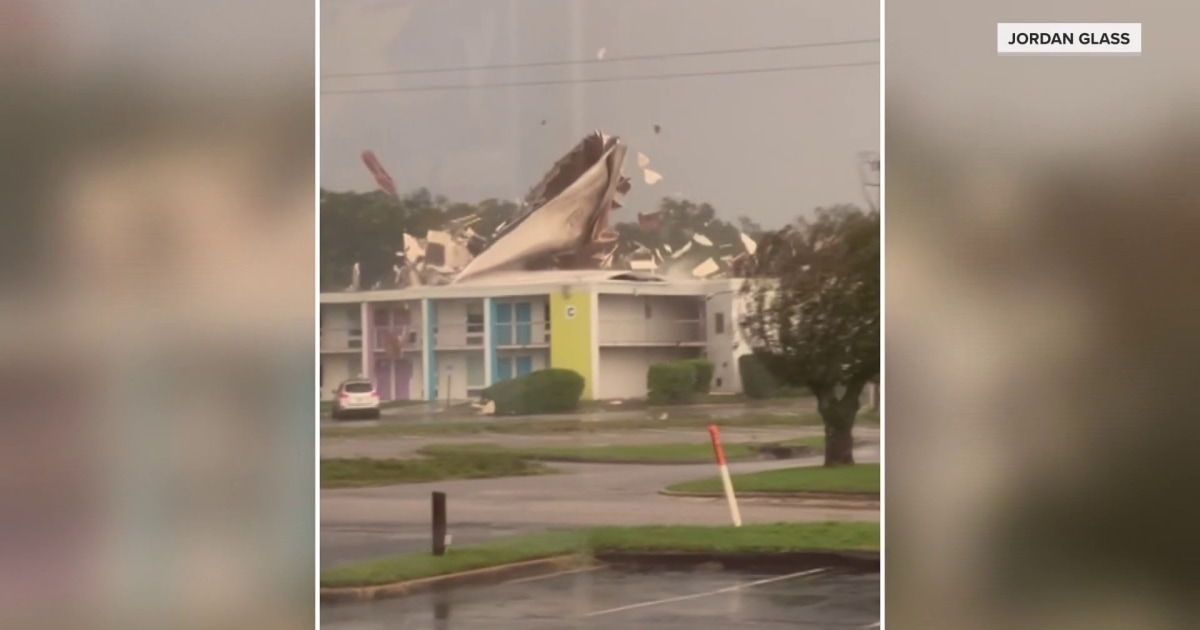
Hurricane Isaias made landfall near Destin, Florida, on Friday as a Category 2 hurricane, marking the first major hurricane of the 2026 Atlantic season. The storm has since weakened to a post-tropical cyclone but continues to threaten millions across the Southeast with heavy rainfall, flooding, and tornado risks.
At least four people have died as a result of the storm, according to local authorities. Two of the deaths resulted from trees falling on homes, while authorities in Florida reported no search and rescue requests in the immediate aftermath of landfall, suggesting limited initial impact in that state. More than 900,000 customers in Florida, Alabama, and Georgia were without power early Saturday, with the greatest concentrations in Florida (about 420,000 customers), Alabama (190,000), Georgia (43,000), and Mississippi (17,000), according to tracking firm PowerOutage.us. A separate storm, Tropical Storm Rachel, left an additional 7,000 people without power in California.
The National Hurricane Center warned that dangerous conditions would persist across the region. Forecasters said the storm could produce 4 to 8 inches of rain across southern Alabama, the Florida Panhandle, and the Big Bend area over the weekend, with a significant threat of tornadoes across parts of the Florida Panhandle, Georgia, and the Carolinas. Early Saturday, Isaias was located about 25 miles south-southwest of Montgomery, Alabama, with maximum sustained winds of 35 mph, and was expected to move into the Tennessee Valley later in the day.
Emergency response efforts mobilized quickly across the affected areas. Florida Governor Ron DeSantis reported that about 16,000 utility linemen had prepared to respond to the storm, and authorities listed power restoration as a priority. Emergency declarations were approved in Florida and Alabama to ensure federal resources would be available for response efforts. However, some coastal areas faced additional challenges—the city of Pensacola reported a lack of drinking water, and Pensacola airport, Florida's 10th largest, was damaged and closed to commercial flights until further notice.
The hurricane also disrupted energy production in the Gulf of Mexico. According to the Marine Minerals Administration, approximately 69 percent of oil output and 57 percent of natural gas production in the U.S. Gulf of Mexico remained shut down on Saturday, slightly down from Friday levels. Some 113 production platforms, representing 30 percent of the total, remained evacuated. In response, the U.S. Energy Department authorized an emergency exchange of up to 4 million barrels of crude oil from the Strategic Petroleum Reserve to address supply disruptions caused by the hurricane.
President Donald Trump initially said hurricane preparations were "under control" on Friday, but subsequently scrapped his plans to attend a scheduled college football game between the University of Georgia and the University of Alabama on Saturday, stating he did not want to disrupt emergency response efforts.
Isaias is the first hurricane to strike the eastern United States since Hurricane Milton affected Florida's Gulf Coast in 2024. The storm is expected to bring heavy rain and potential flooding to much of the Southeast over the weekend, then to parts of the Midwest and Northeast into Monday.