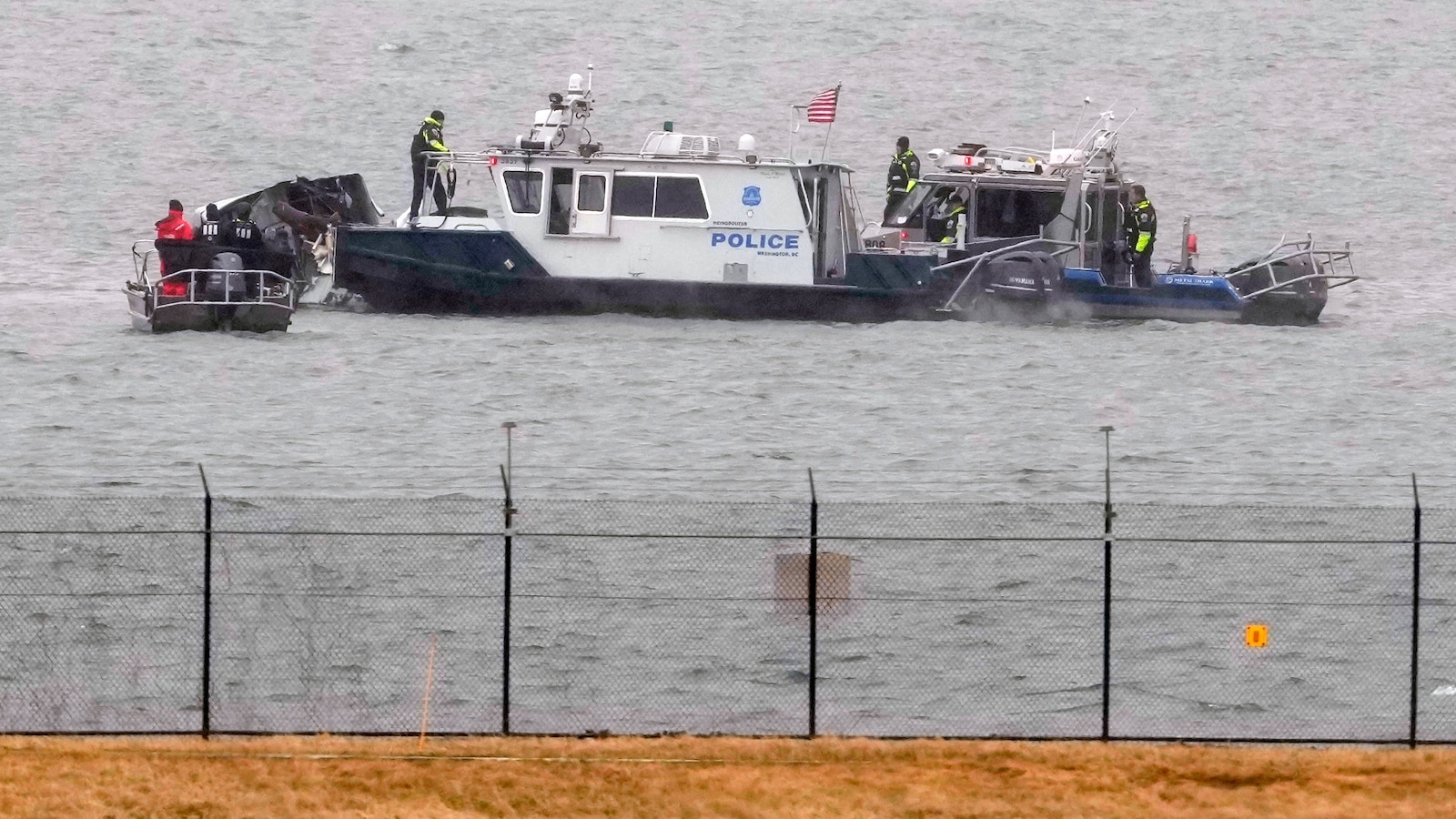
The U.S. Army released an investigative report Thursday identifying systemic safety breakdowns that contributed to last year's midair collision between an American Airlines jet and an Army Black Hawk helicopter near Washington, D.C. The crash, which occurred when the helicopter collided with the descending airliner near Ronald Reagan Washington National Airport and sent both aircraft into the icy Potomac River, killed 67 people and ranks as the deadliest aviation disaster on U.S. soil in more than two decades.
The Army report, completed in May but withheld for months amid family pressure, was obtained by the Associated Press on Thursday morning and released publicly later that day. The report identified multiple contributing factors, including two broken radio transmissions that prevented the helicopter crew from receiving critical information about the approaching jet from air traffic control. The report also cited the controller's failure to provide the helicopter crew with precise details about the jet's location and the controller's failure to warn the jet's pilots about the helicopter. Additional factors included a poorly designed helicopter flight route that provided only 75 feet of vertical separation between aircraft, night-vision goggles worn by the military pilots that limited their field of vision, and insufficient safety equipment on some Army helicopters.
Lieutenant General [name not provided in sources], who authored the report, stated that "breakdowns across all layers of conflict management caused this accident," but identified the two failed radio transmissions as "the most salient contributing factor." The report also found technical deficiencies, including that the Black Hawk helicopter was not providing critical safety location data due to improper maintenance, and that many helicopters in the Army battalion—including the aircraft involved in the collision—lacked Traffic Alert and Collision Avoidance systems. The report noted that Army pilots in the battalion had failed to maintain required semiannual flight hour minimums and that the Army's coordination with the Federal Aviation Administration on helicopter safety issues in the Washington area was inadequate before the crash.
Tim Lilley, a former Army Black Hawk pilot whose son Sam Lilley was the first officer on the American Airlines jet, said the report left critical questions unanswered. Parts of the report were redacted, and responsibility for the Army's failures was assigned broadly across the military rather than to specific individuals or decision-makers. "The Army owes the families and the American public a full accounting of how these risks were allowed to persist, who was responsible for the decisions that allowed them to persist and what will be done to make sure this never happens again," Lilley said. The Army acknowledged the families' concerns, stating: "We recognize the families' need for answers and remain committed to transparency regarding the Army's review."
The Army report largely reinforces conclusions from the National Transportation Safety Board's investigation, though the civilian inquiry was broader in scope and emphasized years of warning signs missed by the FAA alongside a weak military safety culture. The NTSB has faulted the FAA for failing to implement roughly one-third of its safety recommendations. In contrast, the NTSB said in an October 1 letter that it was pleased with the Army's progress in addressing seven of eight recommendations directed at the military. Since the crash, the FAA has prohibited air traffic controllers from relying on pilots to maintain visual separation in busy airspace, and the Army has implemented stronger training and surveillance checks.
The Army report recommended that military leaders examine helicopter operations in every major city where the service operates to ensure similar risks are not present. An Army official said reviews are ongoing in Los Angeles, the Seattle-Tacoma region, and other cities, including those in South Korea, Japan, and Germany. The report also called for improved training for military pilots around Washington and Baltimore commercial airports and for the Army to pursue advanced night vision equipment and work toward an FAA data-sharing agreement to identify potential midair collision risks. After the collision, the Army issued an urgent safety message requiring inspections of all Army aircraft transponders; all 3,600 Army helicopters were inspected by July 2025.
Congress is currently debating aviation safety legislation following the collision. The family group representing passengers on the American Airlines flight, who were traveling from Wichita, Kansas, said the Army report reinforces their calls for Congress to pass comprehensive aviation safety reforms and require aircraft to be equipped with advanced collision avoidance systems. The report represents the latest accountability measure in an incident that prompted immediate changes to aviation safety protocols and continues to drive policy discussions on Capitol Hill.


