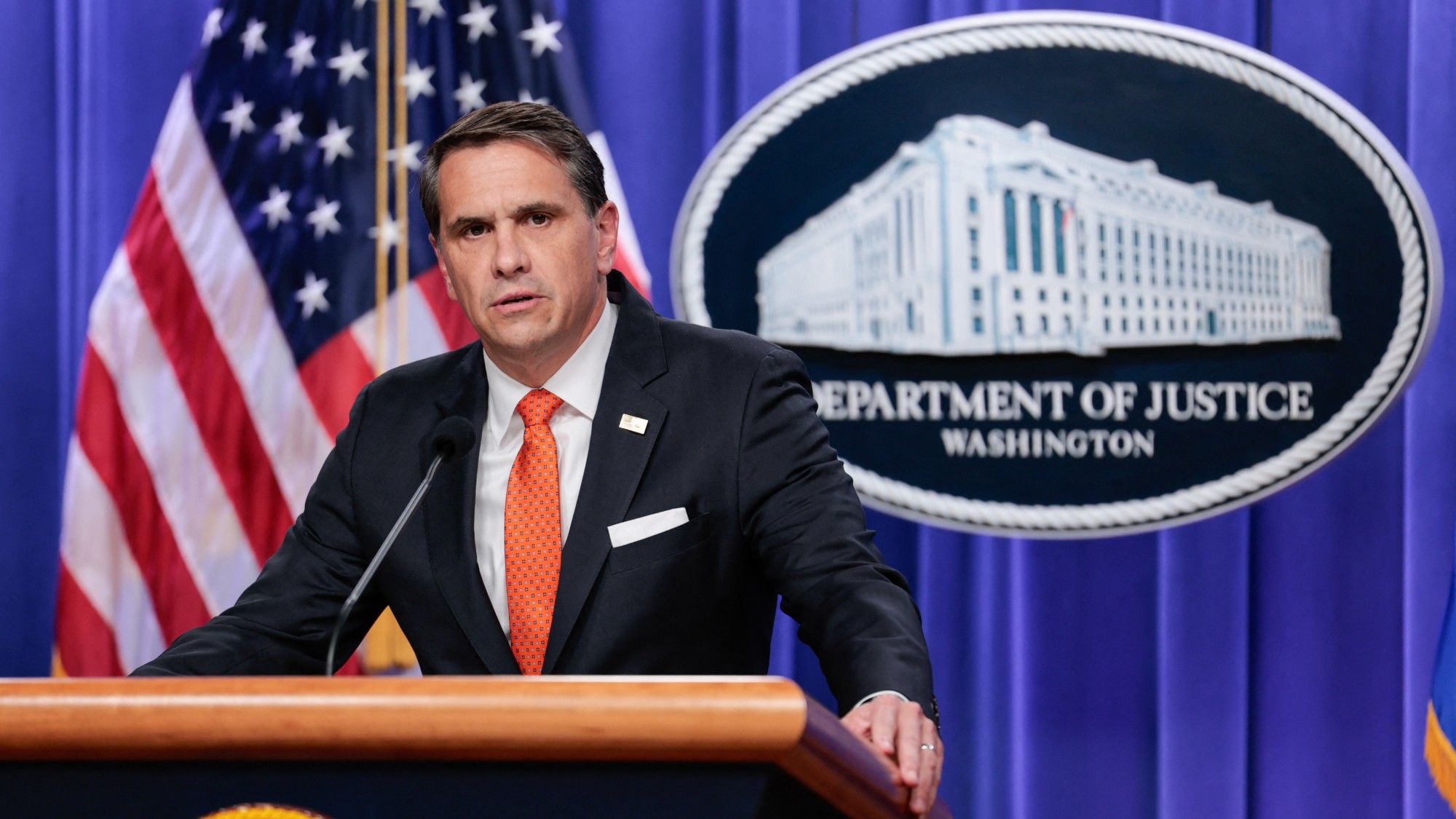
The Department of Justice announced Monday that it has filed denaturalization petitions against 40 naturalized U.S. citizens in what Attorney General Todd Blanche characterized as "the largest denaturalization effort in modern history."
The petitions, lodged between August 10 and October 2, 2026, target individuals accused of a wide range of criminal offenses. According to the DOJ, the accused include one individual convicted of espionage-related crimes, as well as people charged with child sexual abuse, voluntary manslaughter, aggravated sodomy, fraud, tax evasion, and immigration document fraud. At least 19 of the 40 individuals face denaturalization proceedings specifically for allegedly providing false information on visa forms. The individuals named come from multiple countries, including Pakistan, Mexico, Cambodia, Nepal, and Afghanistan, with at least one person of Indian origin also facing proceedings.
Under the Immigration and Nationality Act, a federal court may revoke a naturalized citizen's citizenship if the government establishes that the citizenship was "illegally obtained or procured through concealment of a material fact or willful misrepresentation." Assistant Attorney General Brett A. Shumate of the Justice Department's Civil Division stated: "Every single one of these individuals lied their way into U.S. citizenship." Shumate added that the administration plans to "continue to pursue the largest denaturalisation effort in department history to restore trust and integrity in U.S. citizenship."
One case cited by the DOJ involves Jinchao Wei, a China-born former U.S. Navy sailor. According to the Justice Department, Wei enlisted in the Navy in 2021 and by February 2022 had begun conspiring to sell military secrets to China. He became a U.S. citizen in May 2022 under provisions designed to expedite naturalization for people serving honorably in the armed forces. Wei was convicted in August 2025 of conspiracy to commit espionage, espionage, and unlawful export of technical data related to defense articles, and was sentenced to 200 months in prison.
Another case involves Balwinder Singh of California, who faces denaturalization in the U.S. District Court for the Eastern District of California. According to the DOJ, Singh submitted an immigration application under one identity in 1992, then sought and received permanent resident status under a second identity in 2003. Fingerprints established that Singh submitted both applications. He naturalized under his second identity in 2009. The Justice Department alleges Singh made numerous misrepresentations.
The denaturalization push reflects a policy shift within the Trump administration. In June 2025, the Justice Department's Civil Division issued an internal memo directing attorneys to "prioritize and maximically pursue denaturalization proceedings in all cases permitted by law and supported by the evidence." According to a senior Justice Department official cited by CNN, the administration plans to file at least 250 denaturalization cases by October 2026. An earlier report by the New York Times indicated the Justice Department had identified approximately 384 naturalized citizens whose nationalities it sought to revoke.
Historically, denaturalization has been characterized as a rare legal process reserved for egregious offenders. However, according to reporting, the process has become more common during the Trump administration's terms. Notably, some cases do not involve criminal convictions or guilty pleas—at least 19 of the 40 individuals currently facing denaturalization proceedings have been targeted solely for allegedly providing false information on visa applications rather than being convicted of crimes.


