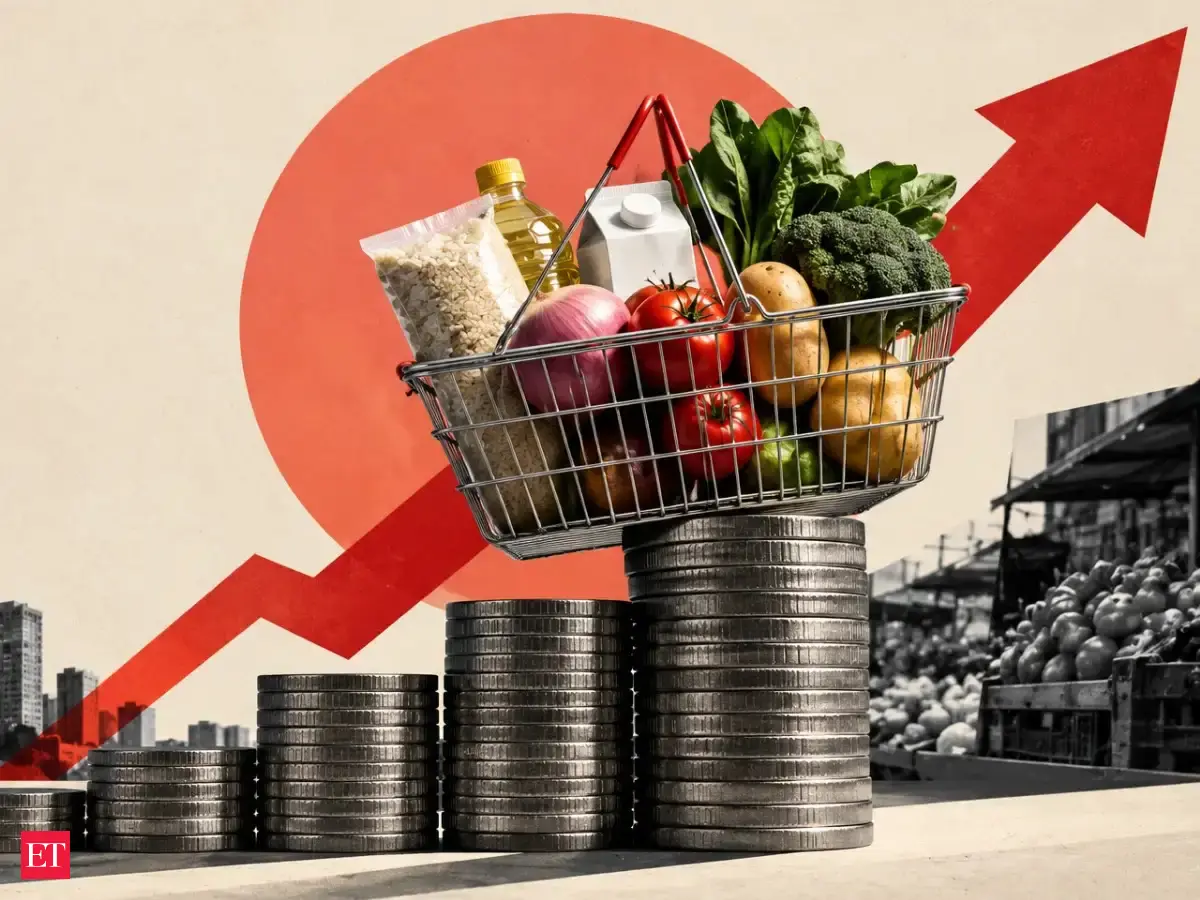
India's headline inflation rose to 5.54% in September, up from 4.82% in August, surpassing economist expectations and adding pressure on the Reserve Bank of India to continue tightening monetary policy. The reading, released by the country's Ministry of Statistics and Program Implementation on Monday, represents a 22-month high and marks the 11th consecutive month of rising inflation in the world's fastest-growing economy.
The inflation print exceeded a Reuters poll of economist expectations of 5.40%. The acceleration comes as India faces mounting pressures from multiple sources, including elevated global commodity prices, geopolitical tensions in the Middle East, and domestic weather challenges affecting agricultural output.
Food inflation was a primary driver of the increase, climbing to 7.74% in September from 5.97% in August. Prices rose faster in rural areas than in cities, reflecting the impact of below-normal rainfall during India's key monsoon season from June to September. According to the India Meteorological Department, the country received its lowest rainfall in over a decade during this period—the fourth lowest since 2001 and the 13th driest since 1901. Several key agricultural states, including Maharashtra, Andhra Pradesh, Punjab, and Haryana, are facing extreme drought conditions.
Transport-related inflation also contributed significantly to the headline increase. Transport services for goods inflation rose 14.73%, while personal transport inflation jumped 7.46%, driven largely by elevated oil prices. India is particularly vulnerable to oil price shocks, importing nearly 85% of its fuel needs. The country has been heavily exposed to supply disruptions caused by ongoing conflict in Iran, with crude flowing through the Strait of Hormuz at elevated prices due to Middle East tensions. Experts predict oil prices will remain volatile in the near term amid concerns over the regional conflict.
In response to the inflation surge, the Reserve Bank of India raised its benchmark interest rates earlier this month for the first time since 2023, joining several major central banks in tightening monetary policy. The central bank signaled that in "current conditions," further rate cuts are "off the table in the near term," and that future policy action could be a rate hike or a pause. HSBC analysts predicted another rate hike in December, stating "this may not be a deep tightening cycle, but a tightening cycle it is."
Despite the inflation pressures, the RBI raised its economic growth estimate for India by 40 basis points to 7.1%. However, the central bank cautioned that protracted geopolitical tensions, trade frictions, tightening financial conditions, and elevated international commodity prices would likely weigh on economic activity. The RBI expects core inflation to reach 4.4% for the financial year ending March 2027 and headline inflation at 5.2%—both above the central bank's medium-term inflation target of 4%.
Farm-dependent rural areas face additional risks from ongoing drought conditions and what sources described as a "Super El Niño" weather pattern. The confluence of geopolitical disruptions to energy supplies, weak monsoon rainfall, and global commodity price pressures has created a complex backdrop for India's inflation trajectory in the months ahead.