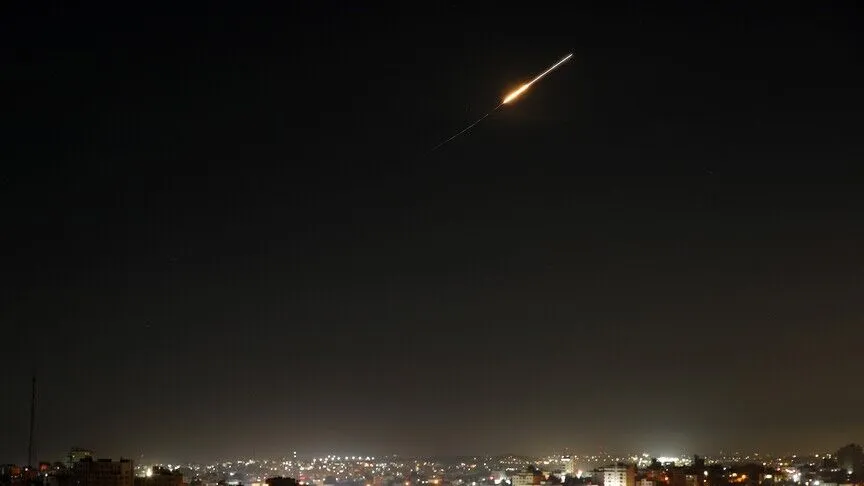
Yemen's internationally recognized government, backed by a Saudi-led military coalition, launched a major offensive against the Iran-backed Houthi movement on October 5, with 100 coalition fighter jets providing continuous air support. The campaign, formally named "Dawn of Yemen," represents a significant escalation in a conflict that has destabilized the region and disrupted global energy markets.
The Yemeni military said it carried out more than 1,000 strikes as part of the coordinated assault, with coalition forces targeting Houthi weapons depots, missile launch facilities, and naval capabilities. Saudi coalition spokesman Major General Turki al-Maliki said the operation destroyed ballistic missile launch platforms in Sanaa and weapons depots in Saada, along with facilities storing booby-trapped boats and naval mines in the Red Sea port city of Hodeida. Military sources claimed to have driven the Houthis from areas surrounding the Bab al-Mandeb Strait, a critical global shipping chokepoint, and the port city of Mocha, though some sources stopped short of confirming these territorial claims.
The offensive follows an announcement by Yemen's Presidential Leadership Council on October 4 that it would pursue an ambitious goal of reclaiming all territory held by the Houthis—territory home to most of Yemen's population and much of it controlled by the group for over a decade. Presidential Leadership Council chairman Rashad al-Alimi said the campaign would continue "until the country is liberated from the grip of the terrorist militia." Al-Alimi stated that all efforts to reduce tensions had been exhausted before the operation was authorized.
The escalation comes after the Houthis made dramatic territorial gains last month, seizing Yemen's entire Red Sea coastline and three strategically positioned islands overlooking the Bab al-Mandeb Strait. In response, the group has intensified attacks on neighboring Saudi Arabia, claiming on October 5 to have struck King Khalid International Airport in Riyadh, a Saudi Aramco refinery in Rabigh, and military installations in the kingdom's south. The Houthis warned international airlines to cease flights through Saudi airspace, declaring it an active operations zone except over the holy cities of Mecca and Medina.
The military confrontation is occurring amid broader Middle East instability. Pakistan and Turkey have pledged to deploy troops to Saudi Arabia under a new mutual defense pact, and representatives from Saudi Arabia, Pakistan, and Turkey held an emergency meeting in Riyadh on October 5 to discuss military support. The United States is providing intelligence and targeting assistance to the Saudi-led coalition, while other regional and European allies are limiting their involvement to defensive support. The fighting has displaced more than 184,000 people according to the United Nations and has become the most active combat front in the wider Middle East conflict in recent weeks.
The offensive poses significant risks to global energy supplies. A source in the Saudi energy sector reported that a Houthi attack on October 4 halted pumping through the East-West pipeline to the Red Sea, a key export corridor for Saudi Arabia. Saudi Aramco Chief Executive Amin Nasser warned on October 5 that global oil stockpiles were "scarily thin" due to the broader Middle East war. "The system is already straining," Nasser told the Energy Intelligence Forum in London. Crude prices had already been rising because of Middle East conflict before the Houthis began targeting Saudi oil infrastructure and tankers in the Red Sea.
On the ground, the Houthis have maintained momentum despite the coalition's air campaign. On October 5, the group effectively encircled the city of Taiz after cutting the main supply route linking it to Aden, the interim government capital. However, Ahmed Nagi, a senior analyst for Yemen at the International Crisis Group, told reporters that while the development was significant, "it is still too early to say that we are witnessing a decisive turning point."