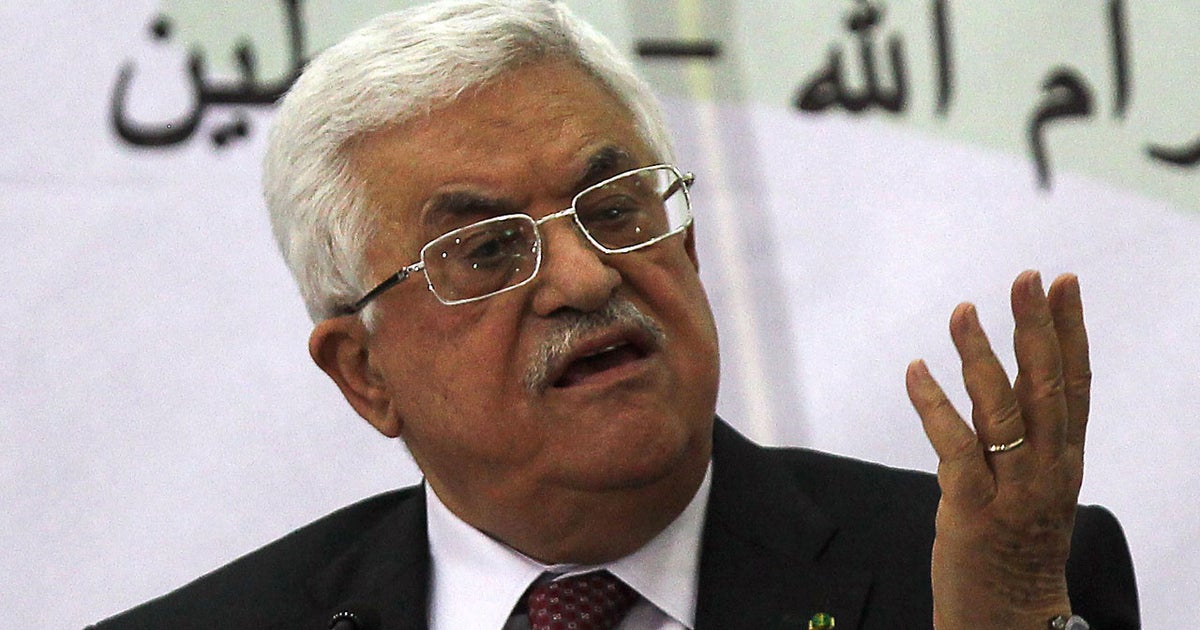
Palestinian Authority President Mahmoud Abbas issued a decree on Friday, October 9, postponing what would have been the first Palestinian legislative elections in nearly two decades. The postponement extends the voting date to September 11, 2027, according to WAFA, the official Palestinian news agency. Presidential elections, which have not occurred for more than two decades, are also scheduled for the same date.
The decision came after the Palestine Liberation Organization's Executive Committee, which Abbas heads, met to discuss the postponement. In a statement, the committee said conditions in East Jerusalem, the West Bank, and the Gaza Strip were not conducive to holding elections. The statement specifically noted that Israel had not allowed election materials or international observers to enter Gaza.
Israeli Foreign Minister Gideon Saar disputed the Palestinian Authority's reasoning. On the social media platform X, Saar stated that Abbas' "attempt to drag Israel into this, falsely claiming that Israel imposed obstacles to holding elections, is yet another ridiculous lie designed to evade responsibility and accountability."
The postponement leaves entrenched Palestinian leaders unchallenged and threatens to further erode the Palestinian Authority's credibility among ordinary Palestinians and donor countries that fund the internationally backed institution. The Authority, dominated by Abbas' Fatah party, has administered semiautonomous parts of the Israeli-occupied West Bank since agreements reached in the 1990s. Throughout Abbas' presidency, which began in 2005, the institution has grown increasingly unpopular. Many Palestinians view it as corrupt and criticize its security cooperation with Israel.
The move was expected following meetings of Palestinian factions across the political spectrum in Cairo to discuss delaying the vote. Islamic Jihad deputy secretary-general Mohammed al-Hindi confirmed to the Associated Press earlier this week that postponement discussions had taken place. Hamas called the postponement "a step in the right direction" and said further talks should focus on rebuilding Palestinian institutions and holding elections at a later date.
Before the postponement announcement, leading Palestinian factions had not registered electoral slates. However, behind the scenes, veteran officials had been in talks to form alliances aimed at challenging Abbas' leadership. An unlikely coalition had emerged between Hamas, Islamic Jihad, and a bloc led by former Fatah security chief Mohammed Dahlan, who was driven from Gaza by Hamas and exiled in 2010 following a falling-out with Abbas. "Abbas is terrified by the electoral alliance bringing our faction together with opposition factions and forces within Fatah that reject his leadership," said Dimitri Dilliani, a spokesperson for Dahlan's faction.
Palestinians have not held legislative elections since 2006, when Hamas won a majority of seats. That result led Israel and Western countries to boycott Hamas's government, triggering months of unrest that culminated in Hamas's takeover of Gaza in 2007. For the two decades since, power has been divided geographically: Hamas controls Gaza while Abbas' Palestinian Authority governs the West Bank. The West Bank has experienced increasing violence in recent years as Israel has expanded settlements and outposts, with settler attacks on Palestinians and Israeli military raids on Palestinian Authority-controlled cities regularly reported. A U.S.-brokered ceasefire plan reached last year outlined a future role for the Palestinian Authority in Gaza, though its immediate role remained largely undefined as Hamas continued to govern the territory and international technocrats awaited permission to enter Gaza to oversee a transition of power.