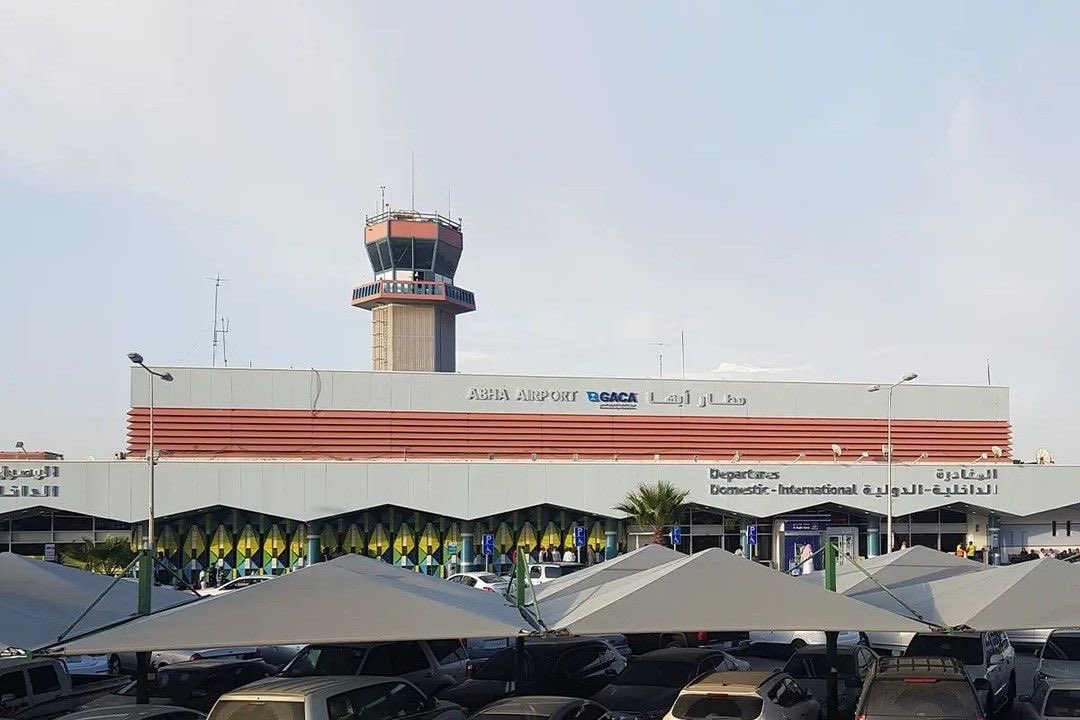
Three Saudi nationals, including an airline pilot, were killed in attacks on King Khalid International Airport in the Saudi capital on Thursday, according to a statement from Saudi Arabia's General Authority of Civil Aviation (GACA) released Friday. The civil aviation authority said two separate attacks targeted the airport's facilities and an aircraft belonging to Saudi carrier Saudia. Captain Hamoud Ali Alkalthami of Saudia Airlines was identified as one of the three killed. Several people of different nationalities were also wounded in the strikes, with injuries ranging from minor to serious. The Houthis, a Yemen-based militant group backed by Iran, claimed responsibility for the attacks.
The first attack on Thursday targeted airport facilities, while the second struck an aircraft on the ground with no passengers aboard, according to the GACA statement. The Houthi military spokesman Yahya Saree claimed that the group used drones and missiles to target the airport and that strikes had "hit their targets accurately." A separate Saudia Group statement confirmed that one aircraft was damaged while grounded at the facility.
The attacks triggered significant disruption to commercial aviation. Hundreds of flights to and from Riyadh were canceled on Thursday, according to flight-tracking data. By Thursday evening, 31 flights due to depart Friday had been canceled. The Indian Embassy announced that Air India had suspended operations through Saturday, while the Lufthansa Group suspended flights to Riyadh through October 16. Pakistan International Airlines also suspended service due to the evolving security situation. However, the GACA said in a Friday statement that airport operations and air traffic had returned to normal.
In response to the attacks, the Saudi-led coalition said it had destroyed three ballistic missile launch platforms used by the Houthis. Major General Turki al-Malki, the coalition's spokesperson, said in a statement Friday: "Houthi attacks on civilians and civilian infrastructure will be met with a firm response." The coalition also confirmed the destruction of a missile launcher used in the attack on Riyadh airport.
Thursday's strikes represent the deadliest attack on Saudi Arabia since the kingdom and allied forces launched a major military offensive against the Houthis last weekend. The attacks also mark a significant escalation in the wider U.S.-Iran conflict, which has kept oil and financial markets volatile. The Houthis issued a warning to global airlines earlier in the week, stating "for the last time" that they would target aircraft operating in Saudi airspace, which they described as a theater for their military operations.
The escalation comes amid broader regional tensions. Earlier in the week, Turkey and Pakistan agreed to help Saudi Arabia implement "deterrence measures" and deploy forces to support Yemen's counterattacks against the Houthis, following the recapture of a key Red Sea port city from the rebel group. Separately, U.S. President Donald Trump said Thursday that the United States would not launch attacks on Iran until after American midterm elections scheduled for November 3. Trump also indicated that Washington was having "productive discussions" with Tehran, and Iranian Foreign Minister Abbas Araghchi said Iran was reviewing a U.S. proposal and would respond within days. Oil prices declined following these comments, with Brent crude falling 1.3 percent to $102.94 per barrel and West Texas Intermediate dropping 1 percent to $90.51 per barrel.