A magnitude 7.7 earthquake struck near Panama's southern tip on Friday, October 9, 2026, damaging buildings and roads in the central part of the country and prompting President José Raúl Mulino to declare a "major disaster," according to the U.S. Geological Survey (USGS) and Panamanian officials. As of Friday evening, authorities had not documented any deaths, though Mulino cautioned that could change in the coming hours or days.
The USGS said the quake hit at about 1:56 p.m. ET (1756 GMT), centered a few miles from the remote community of Pitaloza Arriba in Herrera province, roughly 200 km (124 miles) from Panama City. The agency initially measured it at magnitude 8.0 before lowering the estimate to 7.7. Sources gave slightly different figures for its location and depth, from about 6 to 7 miles southwest of Pitaloza Arriba and 6 to 7.8 miles deep. A second quake of magnitude 6.6 followed roughly two and a half to three hours later, centered about 8 miles west of Río Grande on the Pacific coast, according to CBS News and NBC News.
Health Minister Fernando Boyd said Herrera, Coclé and Los Santos provinces were worst affected, and that the town of Tonosí in Los Santos was completely cut off. "We are trying to figure out how to get there by air, because it's impossible by land," he said. Mulino said some roads had "completely collapsed." Omar Smith of the National Civil Protection Service said several injuries had been reported, including one person struck by debris in Penonomé, where the cathedral partially collapsed and the governor's office and the Dos Continentes hotel were damaged. Local media reported that the colonial-era Church of San Atanasio in Los Santos had collapsed, and social media videos showed a hotel reduced to rubble at Playa Venao. Former president Ricardo Martinelli posted photos of his collapsed house in Soná. Smith said no damage had been reported in Panama City.
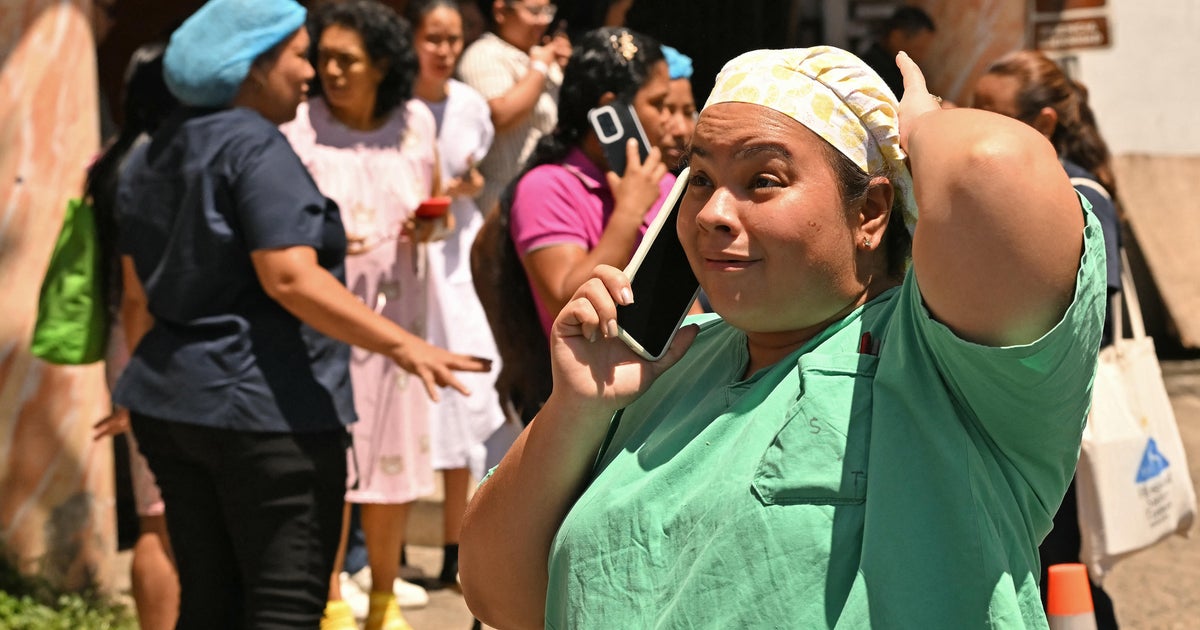
Shaking lasted about 40 seconds to a minute in the capital, where thousands evacuated high-rise buildings. Geosciences institute director Nestor Luque attributed the quake to the Azuero Sona Fault System. Seismologists counted more than 45 aftershocks, according to the University of Panama, while the local geosciences institute counted more than 80, including one above magnitude 6.0. The electricity provider Naturgy reported outages in six provinces, and the education ministry suspended classes nationwide.
A tsunami warning was issued for Panama and several other countries in the region but was later lifted. Tocumen International Airport temporarily suspended operations and then reopened, and the Panama Canal Authority and the Cobre Panama copper mine reported normal operations, with technical teams inspecting canal facilities. A USGS exposure report estimated about 43,000 Panamanians lived in areas with at least severe exposure, and it put possible economic losses at 1% to 10% of gross domestic product.
Mulino traveled to Penonomé to coordinate the response and thanked the United States and other countries for offers of help. Secretary of State Marco Rubio said the State Department was mobilizing resources at Panama's request, and the leaders of Colombia, Ecuador and Guatemala offered support. The quake follows deadly earthquakes in Venezuela in June, which killed more than 6,500 people according to CBS News, and in Colombia in August. Panama's last widely damaging quake was in 1991.