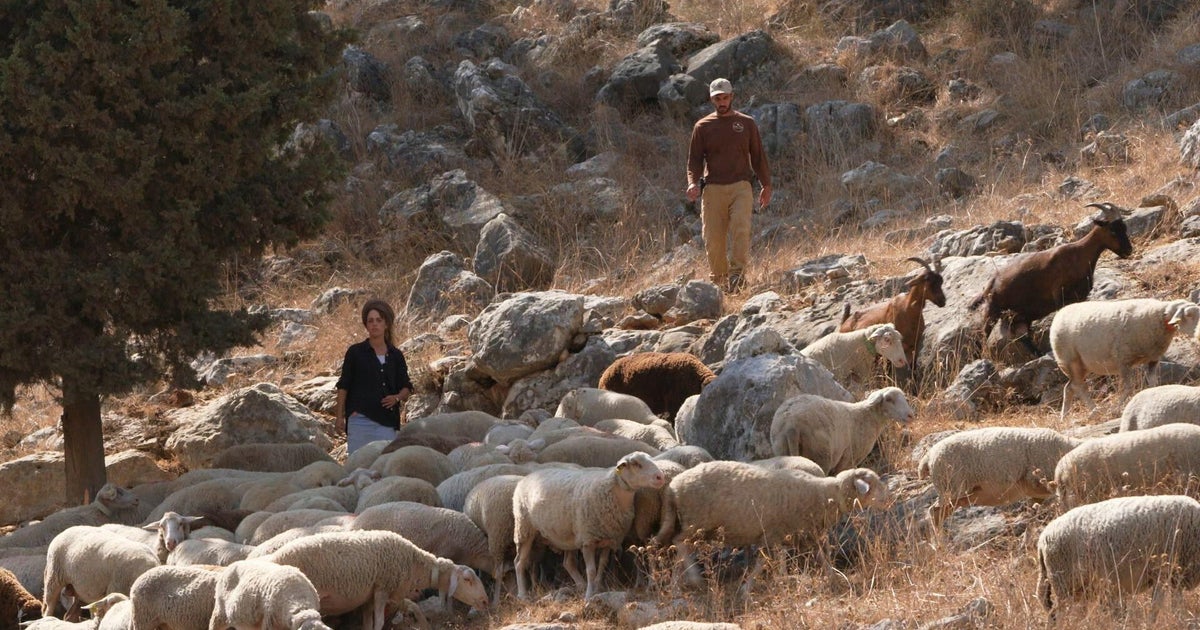
Israeli settlers in the West Bank have adopted an unconventional but increasingly systematic approach to claiming Palestinian land: sheep farming. According to reporting published October 11, 2026, settlers have established approximately 200 sheep farms in recent years, with herds driven deliberately into Palestinian territories to establish and expand territorial control.
Mordehai Minster, who cofounded one of these sheep farms, described the tactic explicitly in interviews with CBS News. "When you have sheep, everyone understands," Minster said. "Arabs tend to fight over grazing lands among themselves. It's a language that we understand, and they understand. And it's a way to delineate the border. 'This is where I graze my sheep. You don't take your sheep here. You don't plant here. You don't build here.'" These operations have seized an estimated 20 percent of West Bank land, according to the sources.
The farming operations frequently involve violence against Palestinians. Waheed Marsouq, a teacher in the Palestinian village of Al-Mughayyir, described settlers forcing sheep into homes: "They enter, they open the gate of the house and take the sheep inside to eat the trees around the house." The United Nations Office for the Coordination of Humanitarian Affairs documented more than 1,600 violent incidents involving settlers so far in 2026.
Many of the attacks are carried out by a group known as Hilltop Youth—young settlers aged 15 to 25, described by Minster as often struggling academically and behaviorally. Minster characterized some as having drug problems, including marijuana use. A hardcore group of approximately 500 settlers engages in these activities, with another 1,000 drifting in and out. They routinely storm Palestinian fields and villages, cut down olive trees, torch cars, and destroy property. The settlers claim a religious and ancestral mandate, describing their mission as divinely ordained to redeem the land.
The impact on Palestinian communities has been severe. More than 100 Palestinian communities have been displaced or erased as a result of settler violence and the advancing sheep herds. This represents a reversal of earlier settlement patterns: for decades, Jewish settlers built fences to protect themselves from Palestinian threats; now Palestinians are penning themselves in for protection.
The situation occurs against a backdrop of broader Israeli-Palestinian tensions. The West Bank, located on the west bank of the Jordan River, has been under Israeli military occupation for nearly six decades. It is home to more than 3 million Palestinians who view it as the foundation of a future Palestinian state, and more than 500,000 Jewish settlers who refer to the territory as Judea and Samaria and view it as their biblical homeland.
U.S. Ambassador to Israel Mike Huckabee has characterized the settler violence as terrorism, describing it as thuggish and disgusting. Minster disputed the terrorism label but acknowledged that some youth "overreact and act in thuggish ways and need to be controlled." He maintained that settler claims to the land remain legally and historically valid, stating, "The fact that violence exists doesn't change the merit of the right that we have to this land." The Israeli government has been criticized for showing an unwillingness to crack down on the violence. The reporting coincides with upcoming Israeli elections, scheduled for two weeks after the October 11 publication date, with how settler violence is handled potentially subject to change.