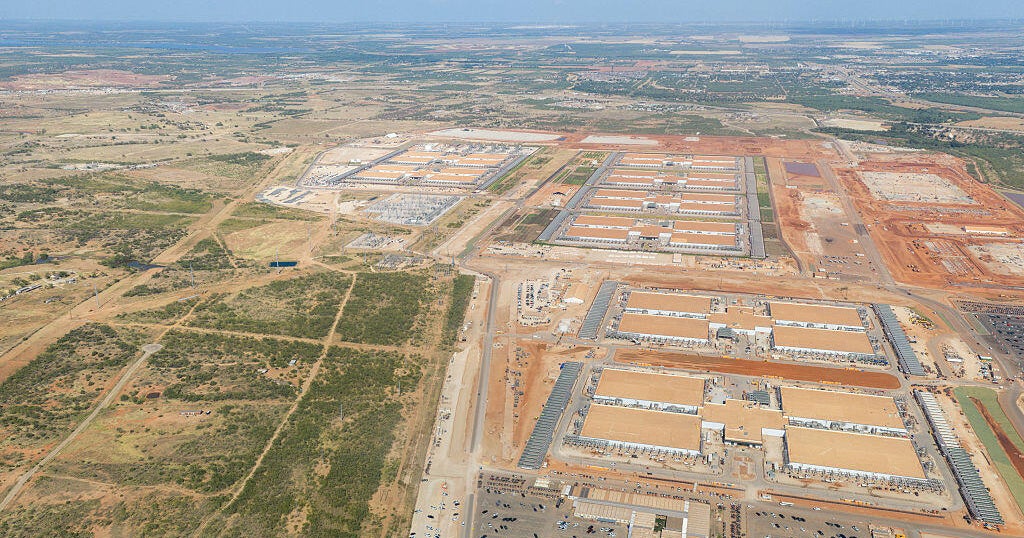
Data center construction has emerged as one of the most contentious issues in the 2026 midterm elections, opening a rare divide between the Trump administration and Republican candidates running in state and federal races. According to new data from Cleanview Research, an independent energy market intelligence company, 75% of data centers currently under construction and 80% of those in the planning stage are located in predominantly Republican states, a dramatic shift from 2022 when most facilities were built in blue states.
President Trump has positioned data centers as essential to American economic competitiveness and national security, particularly in the artificial intelligence sector. At an October rally in Ohio, Trump stated that communities should embrace data centers because "there's so much money to be made" and warned that rejecting them would result in facilities being built in China instead. Trump has dismissed public opposition on social media, posting that "the only reason that communities throughout the U.S.A. should not want Data Centers is if they want to end up being backwards and poor."
However, communities adjacent to proposed and existing data centers have mounted organized opposition campaigns. Residents have reported concerns about property values, noise pollution, higher energy bills, and resource depletion. Calls for construction moratoriums have spread across multiple states. Polling data shows that opposition to data center construction outweighs support by 30 percentage points, with majorities of Republicans opposing facilities near their homes, according to analysis from Chris Millay, a data center analyst at macroeconomic consultancy Greenmantle.
This grassroots opposition has created political pressure on Republican candidates in competitive races. In Texas, which hosts the most data centers under construction, Republican Governor Greg Abbott has paused environmental permits and grid connections for new facilities, even as he seeks a fourth term in a surprisingly close race against Democrat Gina Hinojosa. In Texas's competitive Senate race, Republican state Attorney General Ken Paxton, the GOP nominee, has proposed ending the state's sales tax break for data centers and suggested they should face criminal liability if they power AI systems that endanger children.
Ohio presents another example of Republican fracture over the issue. Democratic gubernatorial nominee Amy Acton called for a conditional moratorium on data center construction, but her Republican opponent, Vivek Ramaswamy, has taken a harder line, pledging to issue an executive order halting new data center approvals on his first day in office and maintain the pause until legislation passes requiring data centers to provide free electricity to surrounding residents. A New York Times/Siena poll found that data centers pose a weakness for Ohio Republican Senator Jon Husted, with voters favoring his opponent by 11 percentage points on the issue.
Chris Millay of Greenmantle characterized data centers as "such a consensus issue it's really impossible to take the other side," noting that voters view support for data center construction as a sign politicians cannot be trusted with job creation and economic priorities. The surge in red-state data center development reflects factors including these states' histories of accepting large energy-intensive infrastructure projects, relatively less stringent environmental regulation, and availability of open land, according to Millay's analysis.
The issue illustrates how rapid technological shifts and industrial development can create unexpected political vulnerabilities for candidates aligned with an administration's economic agenda. While Trump has called on developers to provide community benefits through education, tax relief, job creation, and energy cost protections, his broader endorsement of the industry has placed Republican candidates in a defensive position with constituents expressing genuine local concerns.