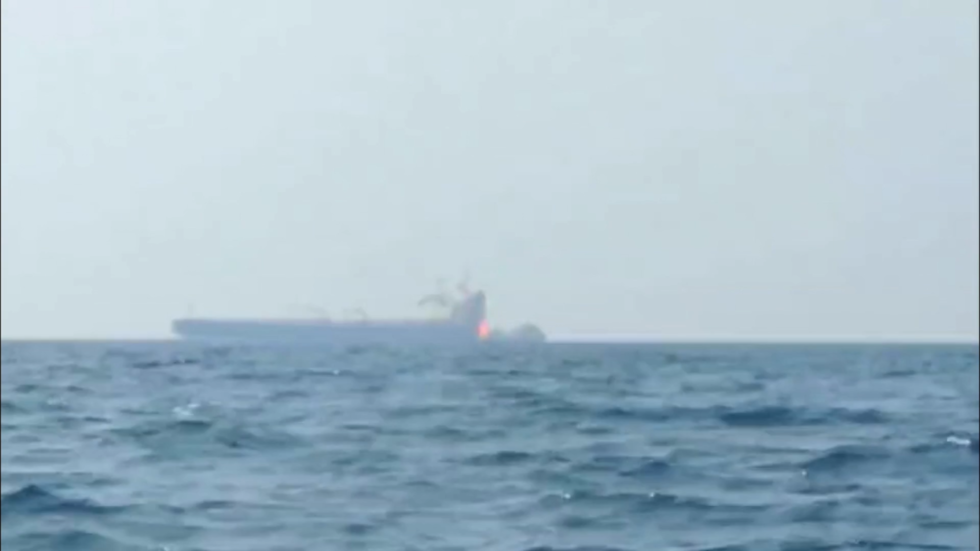
Iran's Revolutionary Guards claimed on Saturday, October 17, 2026, that two oil supertankers struck naval mines in the Strait of Hormuz, triggering explosions and fires on both vessels. The IRGC stated that each tanker was carrying more than 2 million barrels of crude oil. According to Iranian state media, the vessels had deactivated their positioning and radar systems while attempting to cross the waterway via routes not authorized by Iran. The second tanker was reportedly left immobilized following the strike.
The IRGC alleged that the tankers were violating Iranian maritime regulations by transiting without authorization. State media reports suggested that one vessel had attempted to cross with U.S. support and had deliberately disabled its tracking systems. Iranian naval commanders warned that vessels deactivating navigation systems would be considered "hostile." The claims have not been independently verified, and the exact locations, names, and flag states of the tankers were not disclosed in available reports.
The incidents mark the latest in a series of reported attacks and incidents affecting shipping in the Strait of Hormuz, a critical global oil transit route. Iran took control of the waterway in late February 2026 following the start of conflict involving the United States and Israel. The strait, flanked by Iran to the north and Oman to the south and approximately 30 kilometers (20 miles) wide at its narrowest point, normally carries about one-fifth of global oil consumption. Iranian authorities have since imposed strict restrictions requiring all vessels to seek Tehran's authorization before transiting.
Reports from maritime monitoring agencies indicate a surge in attacks around the waterway over the past two weeks. On Thursday and Friday of last week, Iran claimed that two additional tankers caught fire in what Tehran designates its "prohibited zone" in the Gulf of Oman. On Friday, maritime monitoring agencies reported that two tankers had been struck in Gulf waters off Saudi Arabia's coast. According to security firm Vanguard, the International Maritime Organization, and the British maritime agency UKMTO, six vessels were attacked in or near the Strait of Hormuz on Sunday—the highest single-day attack count since the conflict began.
The disruptions have significantly affected global energy markets. Before the conflict, security threats intensified shipping insurance costs and elevated oil prices. The International Energy Agency announced an agreement to accelerate the release of approximately 100 million barrels of emergency oil stocks, including more than 20 million barrels of diesel, in response to the shipping disruptions. The cost of shipping oil on large tankers fell from record highs this week as demand eased following the wave of attacks, and as the United States considered easing sanctions on the so-called shadow fleet.
The incidents occur within a broader context of regional escalation. In response to Iran's control of the Strait of Hormuz, Washington has imposed its own naval counter-blockade on Iranian oil exports. Iranian officials have stated that the country aims to keep oil prices elevated and maintain pressure on the United States, according to reporting from two senior Iranian officials speaking to Reuters. Additional security threats to commercial shipping have emerged in other regions, including deteriorating conditions in the Black Sea and continued attacks by Iran-backed Houthi militants along the Red Sea shipping route, creating multiple potential flashpoints for international trade disruption.