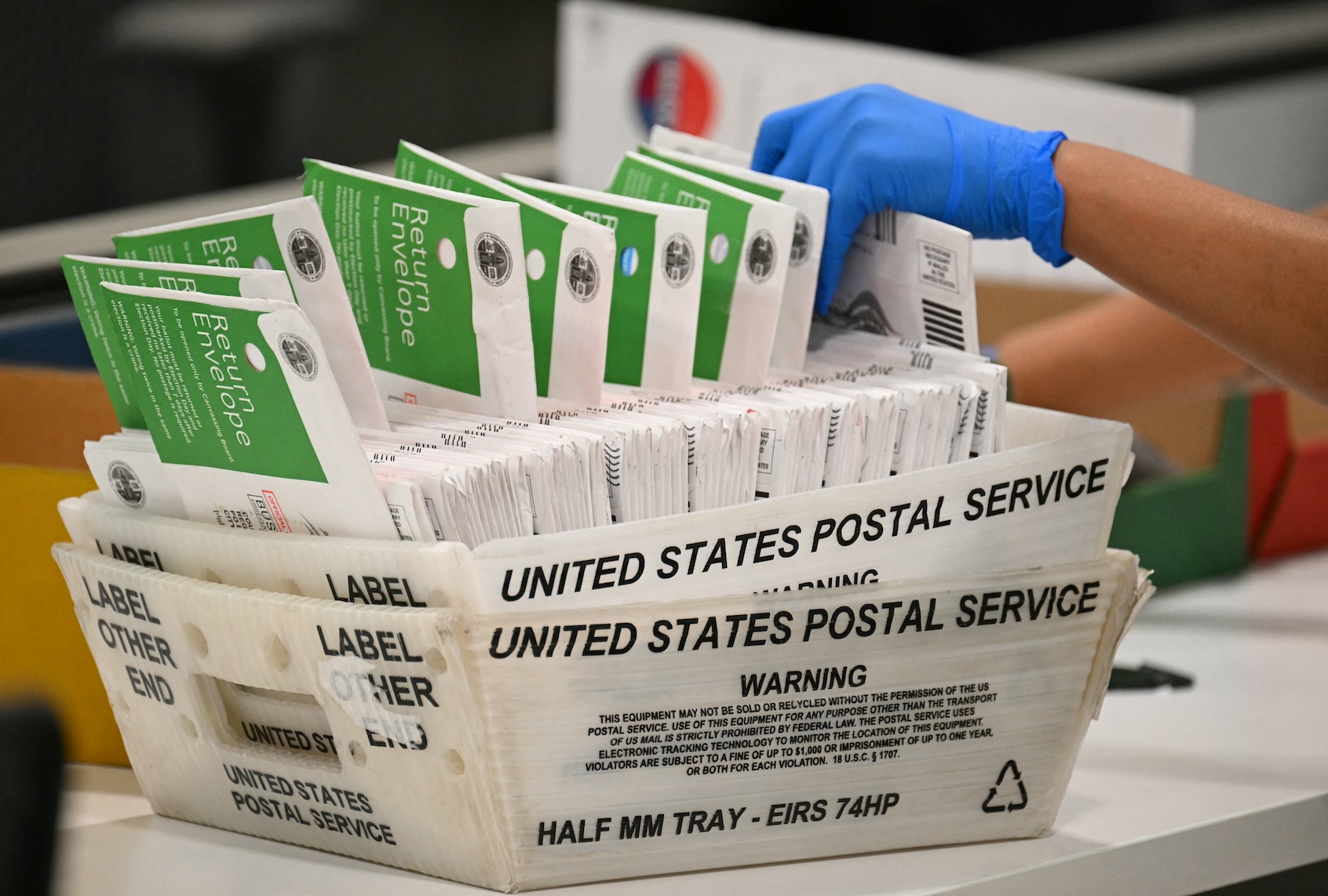
In early August, election workers north of Spokane, Washington, discovered more than 500 mail-in ballots that arrived too late to be counted—a stark contrast to the few dozen they expected three days after the primary election. Stevens County Auditor Lori Larsen, a Republican, called the sight "jarring." Across the 11 predominately rural counties in eastern Washington, nearly 2,000 ballots came in late, compared to about 600 in the 2022 midterm primary—a more than threefold increase.
According to a ProPublica analysis, the surge in late ballot arrivals stems from U.S. Postal Service cost-cutting measures implemented over the past three years. As mail volume declined and annual deficits grew, the agency consolidated the processing of first-class mail at larger regional centers rather than at smaller local hubs. In a change that mostly took effect after the 2024 election, the Postal Service reduced mail pickup frequency in half—from twice daily to once daily—at many post offices located 50 miles or more from these regional processing plants. These changes added one or more days to delivery times and, critically for ballots, delayed postmarking, which does not occur until mail reaches the regional centers.
The impact of the reduced service was clearest in five states with detailed mail-in ballot data: Washington, California, Ohio, North Carolina, and Oregon. All five states allow ballots to count if they arrive after Election Day, provided they are postmarked by the deadline. A ProPublica analysis showed that rejection rates for late-arriving ballots doubled or tripled in counties affected by the service cuts compared to 2022, far outpacing any increases in counties where postal pickups remained unchanged. In urban Spokane, by contrast, the number of ballots rejected for being late actually declined this year.
The delays have affected areas that voted for former President Donald Trump in 2024 more substantially than other regions, according to ProPublica's analysis. Washington Secretary of State Steve Hobbs, a Democrat, stated that he views the service changes—directed by Republican appointees leading the Postal Service—as a way to undermine mail-in voting. "I don't think they realized how much it was going to affect their voter base," Hobbs said, noting that Washington has "a lot of rural Republican voters."
Postal Service leaders say the upcoming general election scheduled for Nov. 3 should experience fewer delays due to "extraordinary measures" the agency implements during higher-turnout elections. The Postal Service has circulated a memo to more than 30,000 post offices instructing managers to separate completed ballots from other first-class mail during the 10 days before the election and deliver ballots intended for local election offices the same day they arrive. At an Oct. 15 news conference, Amber McReynolds, chair of the Postal Service board of governors, emphasized the agency's recommendation that voters mail ballots back at least a week before their state deadlines while defending the agency's ability to expedite ballots through the system. "We work to identify and address issues quickly," McReynolds said, "so ballots can continue to move swiftly from election offices to voters and from voters back to election offices."
Election experts, however, warn that mistakes remain likely despite the planned safeguards. The service changes represent a significant challenge to mail-in voting systems in rural areas, where mail-in voting has historically been a reliable option for voters in remote locations.