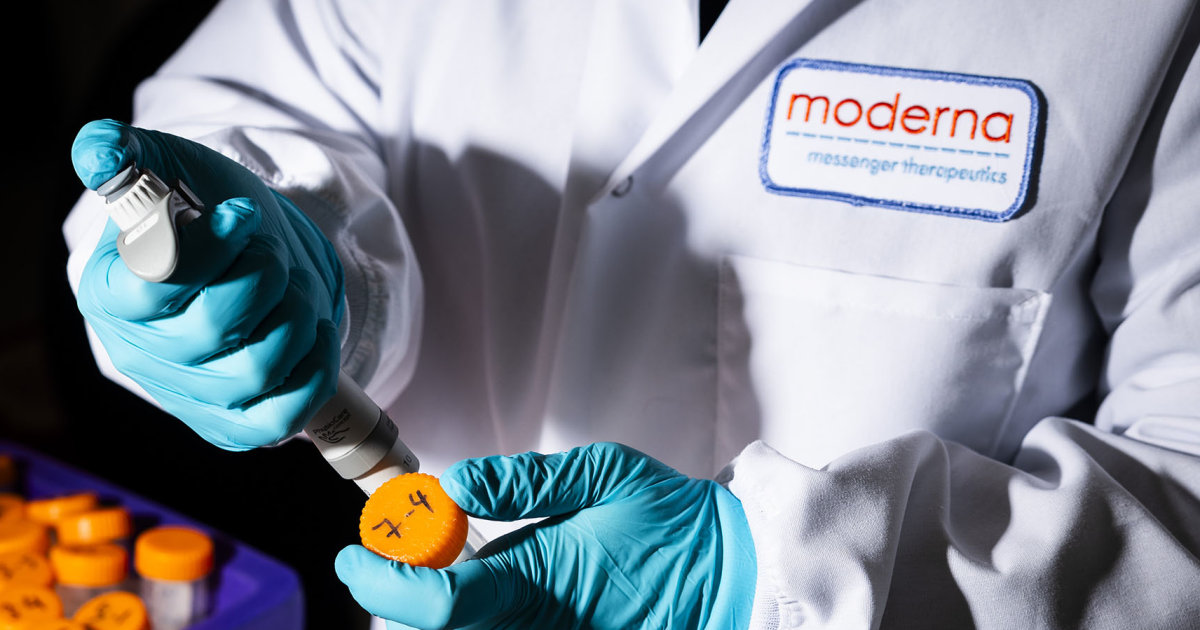
Pharmaceutical companies Moderna and Merck said Thursday that their investigational personalized mRNA vaccine reduced the risk of melanoma recurrence or death by 42% when combined with Merck's immunotherapy drug Keytruda, according to data from a Phase 3 clinical trial completed over two years.
The trial included 1,137 patients with Stage 3 melanoma who had undergone surgery to remove their tumors. Participants were randomly assigned to receive either Keytruda alone or Keytruda plus nine doses of the personalized vaccine, called intismeran. After two years, 82% of patients receiving both treatments remained cancer-free, compared with 70% of those receiving immunotherapy alone. The vaccine also reduced the risk of melanoma spreading to distant organs by 38%, according to the companies.
The vaccine is customized for each patient using genomic sequencing of their tumor. Researchers identify up to 34 distinctive mutations, called neoantigens, unique to the individual's cancer and encode them into messenger RNA instructions. When injected, the mRNA teaches the patient's immune cells to produce copies of these abnormal proteins, creating a target for the immune system to recognize and attack. Dr. Georgina Long, co-medical director of the Melanoma Institute Australia and principal investigator of the trial, said the results exceeded expectations. "We did not expect it to be that high," Long said. "This breakthrough is absolutely transformational."
The trial was conducted across 157 sites globally and involved multiple Australian institutions, including Melanoma Institute Australia, Peter MacCallum Cancer Centre, and Westmead Hospital. New Zealand sites also participated. Moderna CEO Stephane Bancel said the data demonstrated the potential of creating immune cells specific to individual tumors. "The clinical impact is very profound, and as we saw in the Phase 2 trial, very lasting," Bancel said in an interview.
The vaccine uses the same mRNA platform technology that underpinned COVID-19 vaccines developed during the pandemic. Each personalized vaccine can be manufactured in approximately nine weeks. Side effects were generally mild, including injection site pain and low-grade fever, similar to those observed with COVID vaccines. In contrast, previous attempts to combine immunotherapies with other drugs have sometimes resulted in severe side effects including organ inflammation.
The results will be presented Saturday at the annual meeting of the European Society for Medical Oncology in Madrid. Data on overall survival—how long patients ultimately live after treatment—was not yet available, though investigators noted a "favorable trend," according to the companies. The results are expected to be published in the New England Journal of Medicine. Moderna and Merck said they are preparing to file for U.S. regulatory approval and expect the vaccine to launch in 2027.
Experts cautioned that while the results are significant for melanoma patients at high risk of recurrence, the findings may not necessarily translate to other cancer types. Dr. Helen Petousis-Harris, a vaccinologist at the University of Auckland, noted that while the improvement from 70% to 82% cancer-free survival represents a meaningful benefit—approximately 12 additional patients per 100 avoiding recurrence at two years—the results reflect the vaccine's use alongside an already-effective immunotherapy in patients with surgically removed tumors. Researchers noted that melanoma's responsiveness to immunotherapy differs from less immunogenic cancers such as pancreatic or brain cancers.

