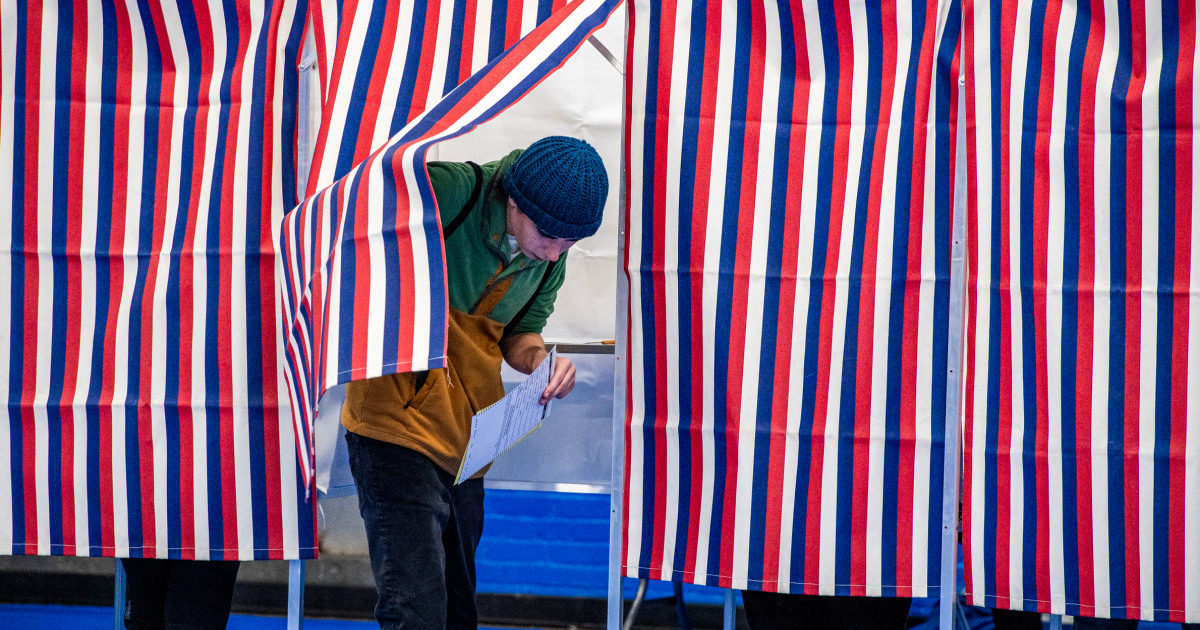
The Supreme Court on Thursday cleared the way for New Hampshire to fully ban the use of student IDs for voting during the midterm elections, granting a Republican-backed emergency appeal and blocking their use as a backup method of identification.
The decision stemmed from a dispute over how far a new state law restricting student IDs as voting identification should reach. New Hampshire passed legislation in April 2026 that removed student IDs from the list of expressly accepted forms of identification for obtaining a ballot. The state's secretary of state, David Scanlan, a Republican, subsequently issued guidance stating that student IDs could not be used for any purpose when voters sought ballots—going further than the law itself, which only barred them as a primary form of ID.
U.S. District Judge Joseph Laplante initially declined to block the law but on October 2 issued a ruling limiting Scanlan's guidance. Laplante found that under state law's separate provision allowing voters to establish identity using "any other evidence that reasonably establishes" their identity, election officials could still consider student IDs when determining voter eligibility. The 1st U.S. Circuit Court of Appeals declined to halt Laplante's ruling, prompting New Hampshire to seek emergency intervention from the Supreme Court, with backing from the Republican National Committee.
In an unsigned order issued Thursday, the Supreme Court invoked the "Purcell principle," a longstanding legal doctrine holding that lower federal courts should ordinarily not alter election rules on the eve of an election. "Here, the District Court did not point to anything that would justify deviating from that principle," the majority wrote. The court determined that Laplante's intervention came too close to the November 3 election to justify the change.
Justice Ketanji Brown Jackson was the sole public dissenter. She argued that the Purcell principle did not necessarily apply because the lower court's order had left the state election rule itself untouched rather than actively changing it. "When a federal court determines that material misrepresentations are being made about a State's election rules, an injunction to prohibit that conduct does not contribute to public confusion, it prevents that very problem," Jackson wrote.
New Hampshire Attorney General John Formella, a Republican, praised the ruling in a statement, saying the decision represented "an important victory for our efforts to defend those laws and prevent last-minute court orders from creating uncertainty for voters and election officials." State Rep. Donald McFarlane, who sponsored the bill, said he backed the restriction because colleges do not maintain the same identity verification controls as government agencies when issuing student IDs.
The dispute comes less than two weeks before New Hampshire voters cast ballots in a closely contested U.S. Senate race between Republican former Senator John E. Sununu and Democratic Representative Chris Pappas for the seat held by retiring Democratic Senator Jeanne Shaheen. The Supreme Court's decision was not a final ruling on the merits of the underlying case, and litigation over the law remains ongoing.
The case was challenged by Coalition for Open Democracy, a nonprofit voting rights group that argued the law unlawfully burdened the right to vote and discriminated against young voters.