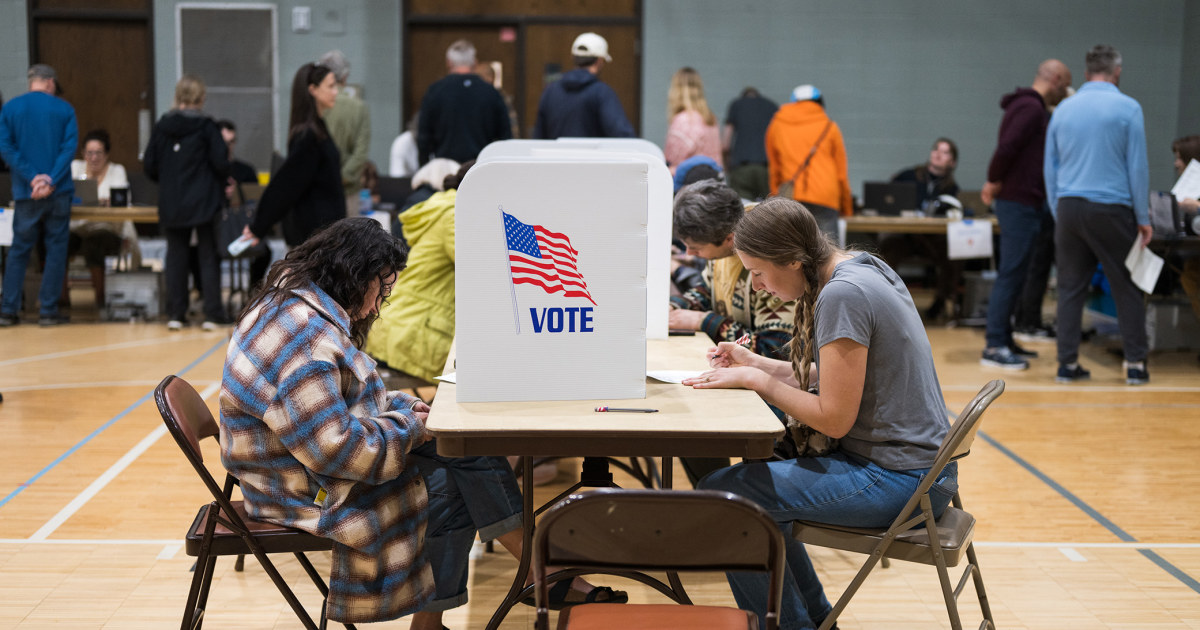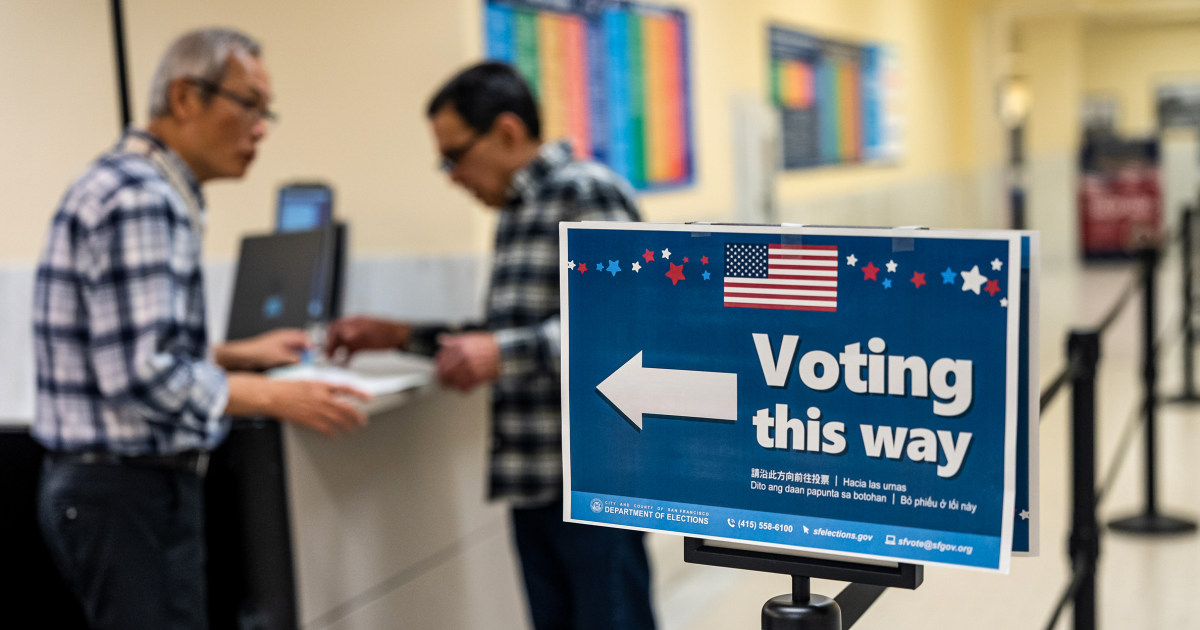
A federal appeals court on Friday rejected the Trump administration's latest attempt to force California to set aside ballots from over 20,000 people it alleges may be noncitizens. The 9th U.S. Circuit Court of Appeals issued a 2-1 ruling, marking the second time in one week the panel denied an emergency request from the Justice Department in the case.
The majority judges—Mark Bennett, a Trump appointee, and Gabriel Sanchez, a Biden appointee—found that the Justice Department had not met its burden for obtaining such extraordinary relief during an ongoing election. "There is no feasible way to identify and segregate the ballots of specific individuals without potentially catastrophic effects on the entire system," the judges wrote, citing findings from a district court ruling issued Wed., Oct. 28.
The Trump administration filed suit in mid-October demanding that California election officials separate any ballots cast by people on its list of alleged noncitizens and withhold them from counting pending citizenship verification. U.S. District Judge David Carter rejected the request, ruling that granting it would violate constitutional principles governing state election control and could disenfranchise thousands of eligible voters. Carter also questioned the administration's methodology, noting that the Department of Homeland Security had claimed in July that the number of noncitizens registered to vote in California was closer to 200,000—roughly ten times the figure now being litigated.
The district judge pointed to similar claims the administration had made in Nevada, where it initially alleged 15,903 registered noncitizen voters. That number was later reduced to 6,218, then to 185 after manual review. Nevada officials subsequently confirmed that all 185 individuals were citizens. "Given the vagueness of Plaintiff's descriptions of its procedures and the unreliability of its similar claims in other states, the Court cannot conclude that Plaintiff's process is credible," Carter wrote.
The appeals court also rejected the administration's argument that it faced an emergency requiring intervention. The judges noted the emergency was "at least in part, a self-constructed one" because the Justice Department had waited until very close to the election to seek relief. California officials have stated that the federal government's list is highly unreliable and likely includes citizens who are legally entitled to vote. Election officials have also noted that hundreds of thousands of ballots have already been processed and are completely anonymized, making it impossible to match them back to individual voters.
In a dissenting opinion, Judge Patrick Bumatay, another Trump appointee, argued that what the government sought was a "modest" remedy. "The federal government and the States can work together. California decided long ago that aliens can't vote in its elections. Today, the federal government merely seeks to safeguard that decision," he wrote.
The ruling represents the latest development in a broader legal battle between the Trump administration and California over election administration. The conflict has drawn intervention from civil rights organizations, voting rights groups, and labor unions. A federal judge on Friday also ordered the Trump administration to share its disputed list of names with lawyers representing the Coalition for Humane Immigrant Rights and the UCLA Voting Rights Project, marking the first time a nongovernment organization will have the opportunity to examine the list's accuracy and assess its impact on eligible voters. The Justice Department has not immediately said whether it plans to appeal to the Supreme Court.