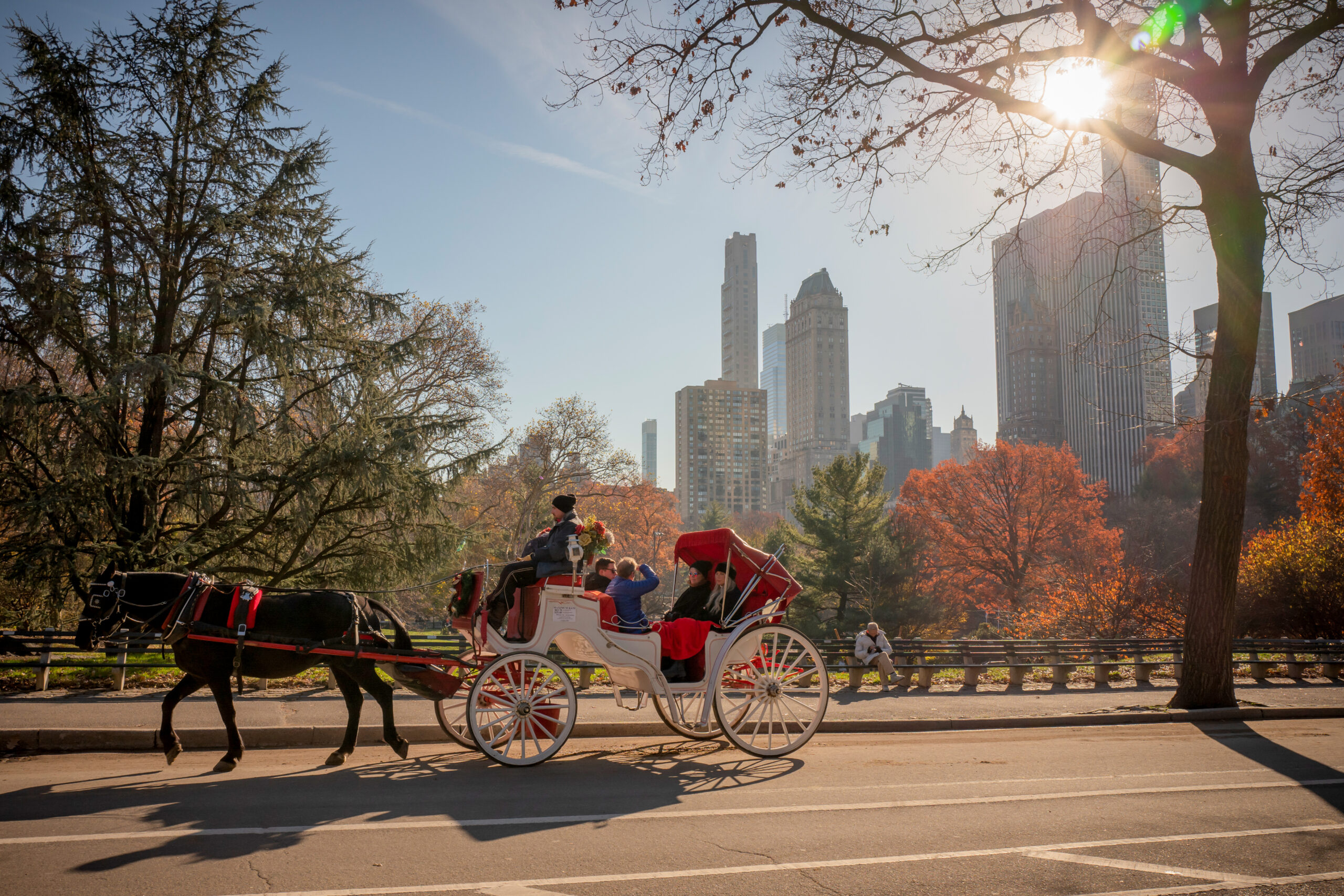
The New York City Council voted 40–7 on Thursday, October 22, to ban horse-drawn carriages from Central Park, ending a cultural fixture dating to the 19th century. The legislation, backed by Mayor Zohran Mamdani, takes effect June 1, 2028, and prohibits the issuance of new licenses for carriage horses, horse-drawn cabs, and their drivers on or after that date. All active licenses will permanently expire on May 31, 2028. Two council members abstained from the vote.
The push to eliminate the carriage industry gained momentum following the June death of 18-year-old Indian tourist Romanch Mahajan, who fell from a horse-drawn carriage in Central Park while visiting with his family. The incident was reported as the first known passenger fatality since horse-drawn carriages began operating in the city. Animal rights advocates have long criticized the practice, citing health risks to horses working in urban traffic and pollution, while supporters have defended it as a quintessential New York experience romanticized in film and television. The City Council heard hours of testimony from carriage drivers, animal welfare advocates, city officials, and residents before voting.
Council Speaker Julie Menin said the vote reflected mounting concerns about public safety, animal welfare, and overcrowding in Central Park, which now welcomes more than 42 million visitors annually. The bill, sponsored by Council Member Christopher Marte, is informally known as Romanch's Law. "The resulting plan establishes a deadline to phase out the industry while ensuring the development of a comprehensive workforce transition that will protect the livelihoods of the hardworking New Yorkers who depend on it," Menin said. The legislation requires the city to develop a transition plan by April 1, 2027, to assist carriage drivers in finding new employment, though the plan does not guarantee financial compensation.
The carriage industry currently operates approximately 68 licensed horse cabs in Central Park, a cap in place since World War II. The industry employs roughly 150 drivers and more than 180 horses, according to industry representatives. Medallion owners have reportedly paid up to $400,000 for their licenses. The Transport Workers Union Local 100, which represents carriage drivers, immediately vowed legal action, with union officials calling the bill a "train wreck of constitutional and due process violations." International President John Samuelsen stated the legislation "offers nothing concrete for blue-collar drivers and carriage owners who will be financially crushed, stripped of their jobs, their licenses, expensive city-issued medallions, small businesses, and way of life." Administrative Vice President Alexander Kemp said the union would seek a temporary restraining order after the mayor signs the bill.
President Donald Trump, who was born in New York, weighed in against the ban on social media. "The Horse-drawn Carriage in New York City is a quintessential New York experience," Trump wrote. "So sad that, for political reasons, we will see it go!" Trump noted that accidents involving other vehicles in Central Park do not result in bans and questioned the reasoning behind singling out carriages. Union officials have accused Council Speaker Julie Menin of using the incident to advance real estate development interests, suggesting that stable land could be repurposed by developers.
Animal rights organizations, including People for the Ethical Treatment of Animals and Animal Wellness Action, praised the vote as a historic achievement after decades of advocacy. PETA's Ashley Byrne called it "the end of the road for a vile industry that has forced horses to haul heavy carriages through chaotic traffic and punishing weather until they collapsed and died." Wayne Pacelle, president of Animal Wellness Action and the Centre for a Humane Economy, said the vote "reflects years of dedicated advocacy and the determination of people who refused to give up on a more humane future for New York City." The Central Park Conservancy also supported the ban, stating that "in the modern era, carriages pose a serious — and even fatal — safety risk to Park visitors, carriage drivers, and the horses themselves." Romanch Mahajan's uncle, Gaurav Mahajan, said at a rally following the vote that "the hour of justice has finally arrived."
The legislation represents the culmination of efforts dating back more than a decade. Former Mayor Bill de Blasio had pledged to shut down the industry during his 2013 mayoral campaign but ultimately failed in repeated attempts. The bill was previously called Ryder's Law, named after a 26-year-old carriage horse that collapsed in August 2022 while pulling a carriage and died the following October. Since May 2025, at least seven people have been injured in carriage-related incidents, including drivers and tourists. The union's promised legal challenge means the final implementation of the ban remains contested, despite the council's passage.