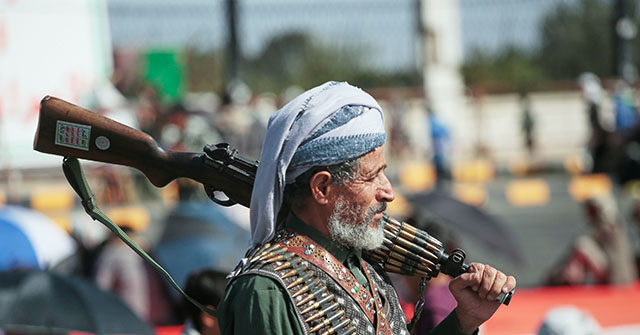
Yemen's Houthi movement claimed responsibility on Monday for ballistic missile and drone attacks targeting Saudi Arabia's critical oil infrastructure and Riyadh's main international airport, intensifying a conflict that has disrupted regional travel and raised alarms about global energy supplies.
Houthi military spokesman Yahya Saree said in statements released on Monday that the group had launched a ballistic missile at King Khalid International Airport and deployed drones to strike pumping stations along the East-West Pipeline, a 750-mile route that runs from refineries at Abqaiq to the Red Sea port of Yanbu. Saree claimed the attacks "achieved their target" and warned international airlines and travelers that the airport was "unsafe" and served as a military target for Houthi forces.
The Saudi-led military coalition said its air defenses intercepted and destroyed a ballistic missile launched toward Riyadh and claimed it had destroyed four ballistic missile launchers, a missile storage facility, underground tunnels, and five additional tunnels used to store weapons in operations against Houthi targets in Yemen. Coalition spokesman Turki al-Maliki said the operation also targeted Houthi supply lines and military equipment. However, Saudi Arabia's national oil company Aramco and other Saudi officials did not immediately confirm damage to the pumping stations or verify the Houthis' claims of successful strikes on the airport.
The claimed attacks come just hours after King Khalid International Airport resumed limited operations on Sunday following a previous Houthi assault on October 12 that killed 13 people and wounded more than 300—the deadliest attack on the kingdom in more than a decade. The East-West Pipeline had been temporarily shut down in September as a precaution after a drone attack and has since returned to pumping at near-optimum capacity.
The escalating hostilities mark a breakdown of a UN-brokered truce that had largely held since 2022. Saudi Arabia has intensified its military response after Houthis captured strategic areas along Yemen's Red Sea coast last month and advanced toward the Bab el-Mandeb Strait, a critical global shipping route. The conflict has already prompted cancellations and relocations of major events: organizers of the Dakar Rally motor sports event announced on Sunday they would move this year's race out of Saudi Arabia to Africa, though the event is expected to return to the kingdom in 2027.
The disruptions to Saudi oil infrastructure and reduced shipping through the Strait of Hormuz are raising concerns about global energy markets. Freight rates along shipping routes from Yanbu to Ningbo have doubled since early September, according to analysts at Rystad Energy, adding to transportation costs and inflationary pressures affecting the global economy.
Top officials from the Mecca Pact countries—Saudi Arabia, Turkey, and Pakistan—are scheduled to meet Iranian officials in Tehran on Monday to discuss regional coordination, marking the first high-level contact between Iran and all three bloc members since the escalation of Houthi attacks.