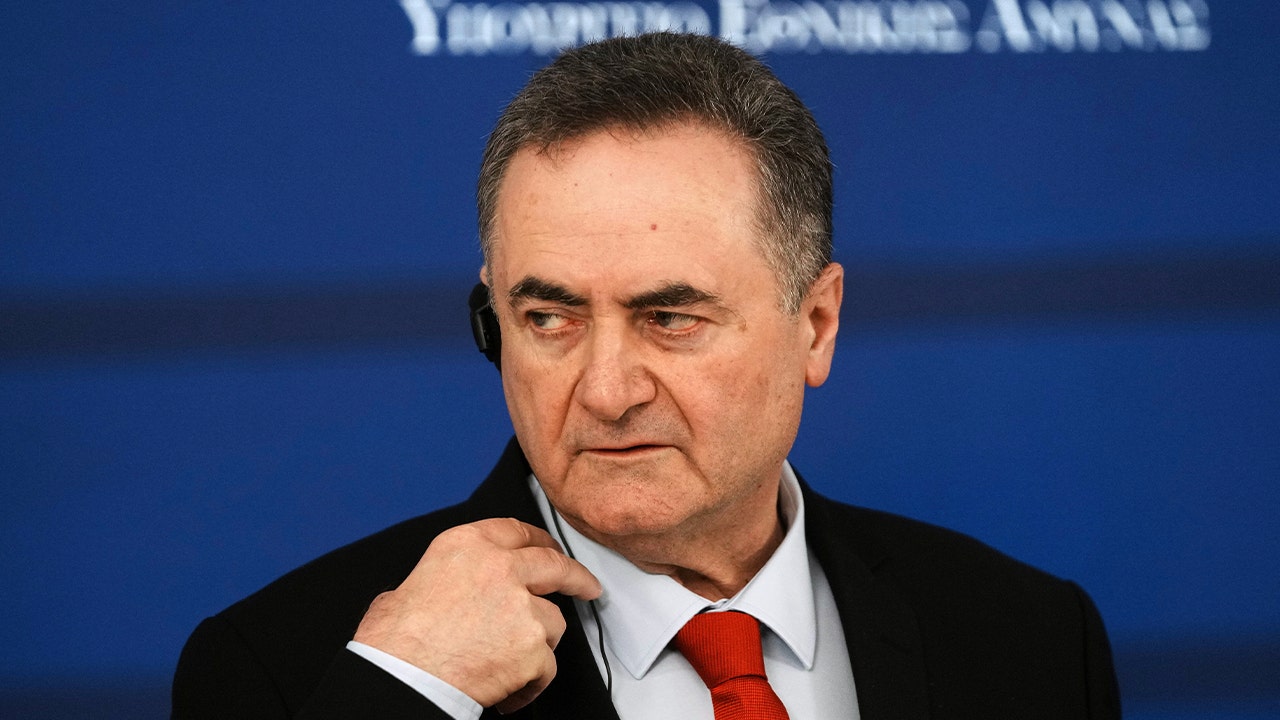
President Donald Trump said Sunday that he is close to deciding whether to make a deal with Iran or resume military attacks. "I have a decision to make: Do I finish it off, which would be very easy to do, or do I make a deal? That's all," he said in an interview with Fox News' Sunday Morning Futures. "It's getting to be decision time."
On Monday, senior officials from Saudi Arabia, Turkey and Pakistan held talks with Iranian leaders in Tehran in an effort to prevent renewed conflict. The Saudi delegation was led by Defense Minister Prince Khalid bin Salman, brother of the Crown Prince. Pakistan sent Army Chief Field Marshal Asim Munir, and Turkey sent Intelligence Chief Ibrahim Kalin. They met Iranian President Masoud Pezeshkian and Mohsen Rezaei, secretary of Iran's Supreme National Security Council, at Saadabad Palace. It was the first joint visit to Iran by the three countries since they signed the Mecca (also spelled Makkah) Joint Defense Agreement in August, a pact under which an attack on one member is treated as an attack on all. It came after Houthi attacks on Saudi Arabia that included Riyadh airport.
Afterward, the four countries issued a joint statement agreeing to continue discussions on regional peace and security, but announced no breakthrough or concrete steps. Saudi Arabia said the mission aimed to prevent "another round of military escalation" and support mediation. Iranian officials described the visit as evidence that regional cooperation remains possible despite U.S. pressure; Rezaei said it showed "American threats have little impact on countries around the world." Saudi security analyst Hesham Alghannam called it "possibly the last chance before escalation spirals out of control."
Trump has suggested U.S. strikes could resume after the Nov. 3 midterm elections, and the U.S. has sent more forces, including a third aircraft carrier group, toward the Persian Gulf. Leaving the White House Sunday, he said, "There won't be a strike today." The last confirmed U.S. strikes on Iran were on Sept. 1. On Saturday he said there was a possibility of "a nice, big, beautiful agreement" but questioned whether Iran would abide by it. Last Friday he said Washington "may do another little Epic Fury," referring to the U.S.-Israeli campaign against Iran that began in February. He also named Pickaxe Mountain, a deeply buried site linked to Iran's nuclear program, as a possible target. Breitbart, citing The Hill and the New York Times, reported that U.S. Central Command has prepared strike options that could include energy infrastructure, which Trump had not authorized.
Iran has pushed back. Abbas Gouzardi, spokesman for Iran's parliament speaker, told ISNA that talks would be "meaningless" until Tehran's seven stated conditions are met, and called Trump's warnings "boasting with the aim of threatening." Qatari mediators visited Tehran on Sunday, according to Reuters. Reports on their proposal describe a five-day framework in which Iran would reopen the Strait of Hormuz while the U.S. lifted its naval blockade, but the sides disagree over who acts first and talks have stalled. Iran, via Tasnim, denied a Saudi media report that it offered through Pakistani mediators to reopen the Strait in exchange for lifting the blockade. Pakistan and Qatar brokered an interim peace agreement in June, but fighting resumed shortly after.
The main disputes are Hormuz and the nuclear program. Trump says the U.S. controls the Strait and that trade exceeds prewar levels; CNBC reported that both sides claim control, trade remains severely curtailed and energy prices are elevated. Iran has enriched uranium to 60 percent purity and refuses to discuss nuclear concessions until the U.S. lifts the blockade and oil sanctions, while Washington demands nuclear concessions first. Last week Rezaei said "not a single particle of enriched nuclear material" would leave Iran. The IAEA has raised serious concerns about Iran's safeguards compliance.
Other risks are building. Bloomberg and others reported that the U.S. is reducing diplomatic and military staffing in parts of the Middle East, and shipping officials say Iran is hitting more ships near Hormuz with guided missiles rather than drones. A person familiar with Tehran's thinking told Bloomberg that Iran is preparing to retaliate across the region, including against Israel and the UAE. Israel votes Tuesday; Mint reported Prime Minister Benjamin Netanyahu has reportedly told U.S. officials he intends to strike Iran after the vote, while Bloomberg noted rival Gadi Eisenkot might be less eager to restart the war. Brookings analyst Aslı Aydıntaşbaş said, "All indications point to a resumption of war and a major bombing campaign, although the timing remains uncertain."