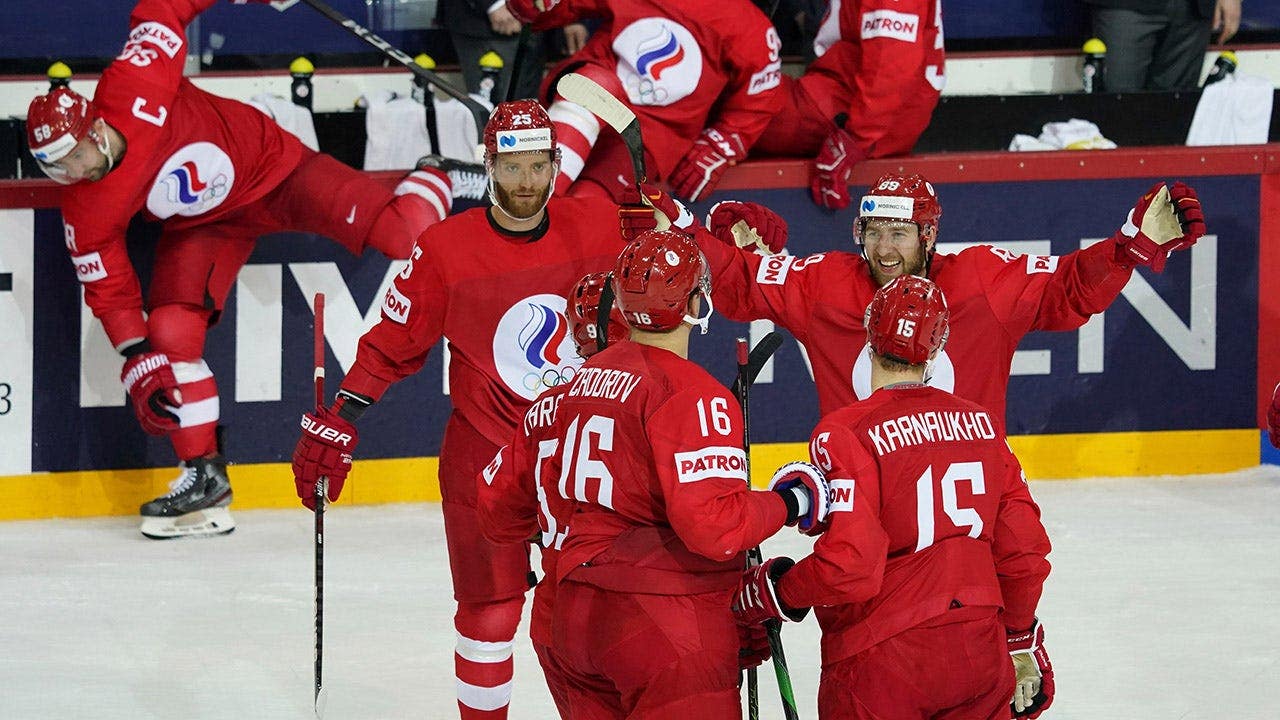
The Court of Arbitration for Sport (CAS) ruled on Friday, Oct. 30, that Russia must be allowed to compete in international ice hockey tournaments, overturning a ban imposed by the International Ice Hockey Federation (IIHF) since February 2022. The decision came after the Russian Ice Hockey Federation appealed the IIHF's earlier decision to keep Russia excluded from competitions during the 2026-27 season. CAS, based in Lausanne, Switzerland, determined that arguments made by the IIHF "citing safety, security and other concerns" were "not supported by sufficient evidence."
The IIHF expressed "disappointment" with the ruling and maintained that its exclusion decisions "were necessary to protect the safety and security of all participants and safeguard the integrity of its competitions." The federation said it would comply with the CAS ruling while noting that the decision "does not remove the concerns that informed its assessments." The IIHF also flagged significant logistical challenges, stating that the ruling "has significant practical implications for competitions already at an advanced stage of preparation."
Multiple countries and hockey federations have condemned the decision. Canada's Foreign Affairs Minister Anita Anand and Secretary of State for Sport Adam van Koeverden both stated that Canada "strongly opposes" Russia's return and will maintain restrictions on Russian athletes at events hosted in Canada that receive federal funding. The decision is particularly contentious as the men's world junior championship, one of the first tournaments affected by the ruling, is scheduled to begin on Dec. 26 in Edmonton and Red Deer, Alberta. Germany, which will host the men's world championship in May 2027, also opposed the decision, with German hockey federation chairman Frank Lutz citing "significant security-related, political, and economic consequences" for hosting. Finland, Sweden, Czechia, and the United Kingdom similarly expressed opposition to Russia's return.
Ukraine's ice hockey federation said it "deeply" disagreed with the ruling, arguing that "the threats that were the reason for suspending Russian teams in 2022 have not disappeared. On the contrary, they have only intensified." Ukraine qualified for the top-flight men's world championship for the first time in 20 years and would compete alongside Russia if the ruling stands. The Ukrainian federation said it "respected the authority and status" of CAS while expressing outrage at the outcome.
Russia's sports minister, Mikhail Degtyarev, welcomed the decision, stating on state television that "discrimination in hockey has been brought to an end." The Russian Ice Hockey Federation indicated on social media that it intends to compete in the upcoming world junior championship in Alberta.
The ruling also raises practical questions about tournament logistics. The men's world junior championship currently includes 10 countries with schedules and arrangements already in place. Adding Russia would require restructuring groups, schedules, travel, and accommodation arrangements. The IIHF said it would work with national hockey federations, organizing committees, and host authorities to implement the ruling while managing these complexities. New IIHF President Franz Reindl, whose home country Germany hosts next year's men's world championship, said the federation would "work closely with all of them to find practical solutions."
The ban on Russia from international ice hockey began shortly after the February 2022 invasion of Ukraine. Russia did not compete in ice hockey at the 2026 Winter Olympics and was excluded from the NHL's 4 Nations Face-Off earlier this year. The CAS ruling affects multiple tournaments in 2027 in addition to the December 2026 world juniors, including the women's world championship in Quebec City and other championship events.