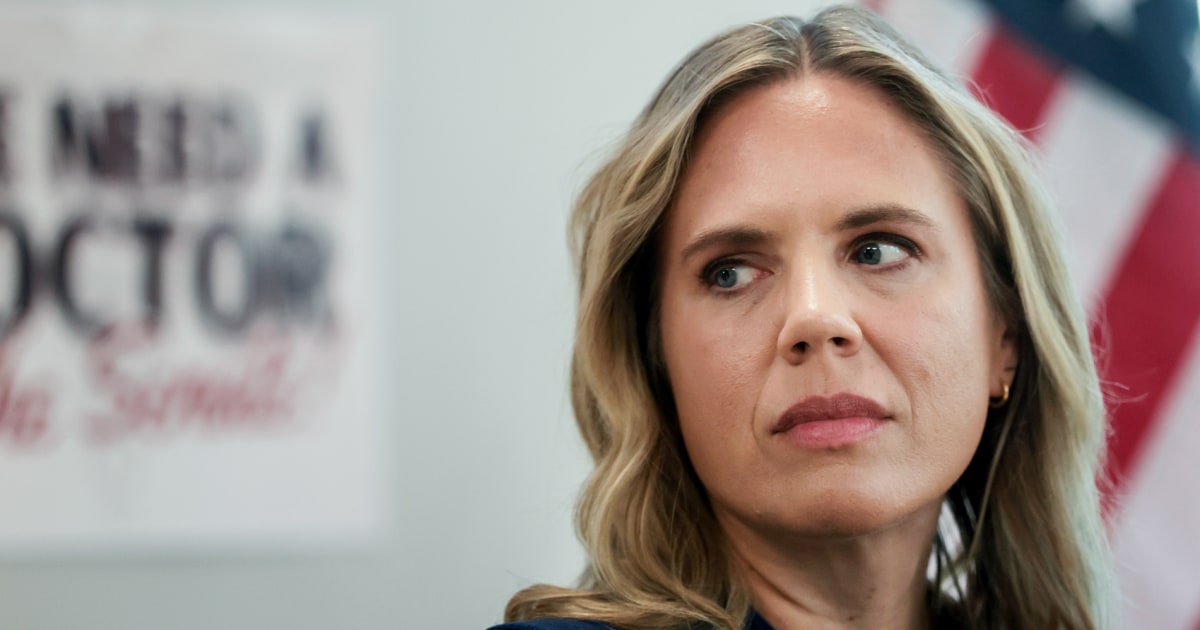
Democrat Annie Andrews has defeated Republican Sen. Darline Graham in South Carolina's Senate race, according to projections by NBC News and the Associated Press. The victory represents a major upset in a state that has not elected a Democratic senator this century and voted for President Trump by more than 17 percentage points two years ago.
Andrews, a pediatrician, won with 50.6 percent of the vote to Graham's 47.2 percent, according to AP tallies with 93 percent of votes counted. She will be the first Democratic senator elected from South Carolina since 1998 and the first woman elected to that seat from the state. "South Carolina, you have shown the nation — in an era of partisan divides, of vitriol and namecalling, in a politics dominated by billionaires, special interests, and insiders in Washington — that we will not bow down," Andrews said in a statement after the race was called.
Graham, a former state government administrator, was appointed to the seat in July by South Carolina Gov. Henry McMaster following the sudden death of her brother, longtime Sen. Lindsey Graham, who died of a heart problem. Though Graham won the Republican primary and runoff with Trump's backing, she faced persistent criticism for her lack of political experience. During a debate with Republican rival Ralph Norman ahead of the August runoff, Graham acknowledged being "not that informed on national security," a moment that drew backlash from within her own party.
The race underwent a dramatic shift in recent months. When Lindsey Graham won the June Republican primary by double digits, he was widely expected to win reelection. After his death, however, a crowded special primary ensued with ten candidates. Graham and Norman advanced to a runoff, which Graham won by less than 5 percentage points—a margin that some political analysts said suggested vulnerability. The primary division discouraged some Republican voters, with Norman himself saying he would vote for Graham but had no intention of campaigning for her.
Andrews' campaign significantly outpaced Graham's in fundraising and spending. In the final pre-election period, Andrews raised over $4 million, primarily from online donors, and spent more than $4.6 million in two weeks. Graham's campaign raised approximately $90,000 and spent $65,000. Outside groups amplified the disparity: the Senate Leadership Fund, a GOP super PAC, spent $13 million to support Graham, while the Senate Majority PAC, aligned with Democratic leadership, announced a last-minute $750,000 digital buy. Andrews previously lost a 2022 congressional race against Republican Rep. Nancy Mace and has worked as a senior adviser to Everytown, a gun control advocacy group.
Political experts attributed the upset partly to the challenging political environment for Republicans nationally. President Trump's approval rating fell to 30 percent last month according to Pew Research Center, and historically the party holding the White House loses seats in midterm elections. Graham's campaign also drew a notable split from the president when, in October, she criticized Trump's announced decision to waive sanctions against Russia, saying she would instead "put the pressure on Russia to end the war and get gas prices down" and expressing distrust in Putin and Russia—even as Trump was scheduled to campaign for her in the state.
Both candidates centered their campaigns on economic concerns. Andrews emphasized healthcare costs and affordability based on her 20 years working within the healthcare system, while Graham highlighted cost-of-living pressures and energy policy. Andrews secured endorsements from political figures across the aisle, including two former South Carolina governors—one Democrat and one Republican—who appeared together in campaign materials for her.