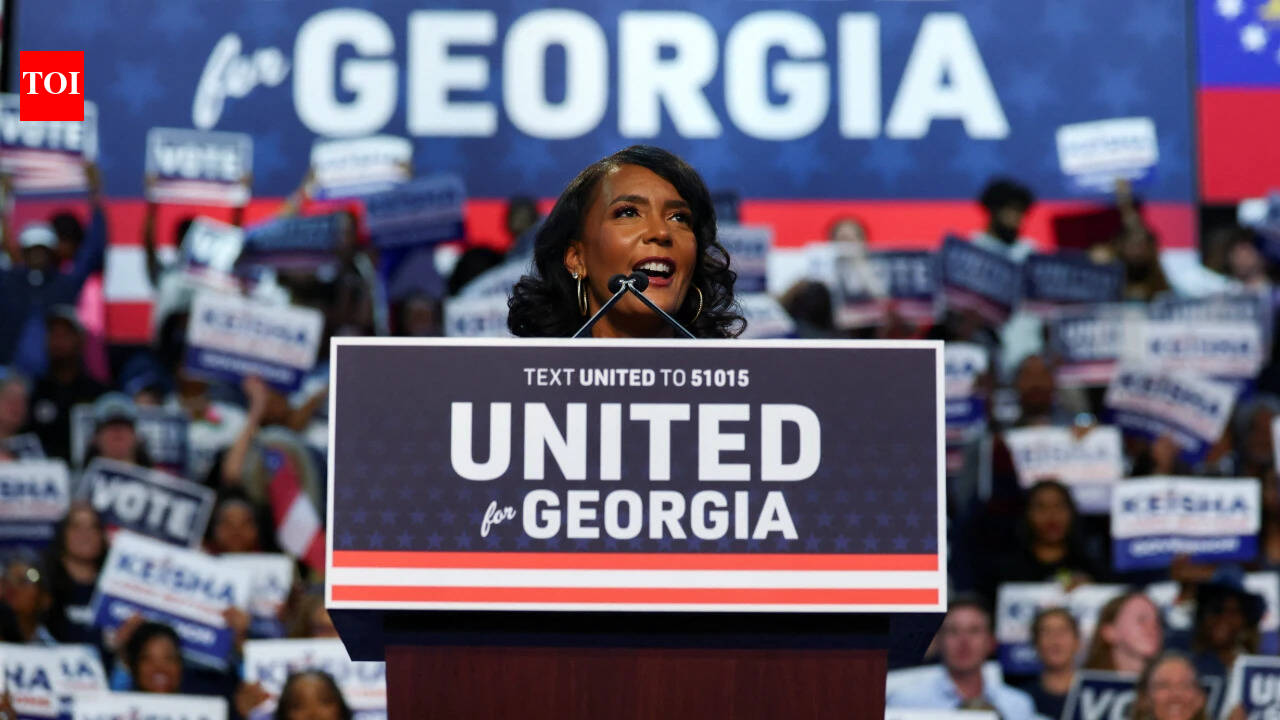
Keisha Lance Bottoms won Georgia's gubernatorial election on Tuesday, Nov. 3, becoming the first Black woman elected governor of any U.S. state, according to projections by the Associated Press, NBC News, CNN, and other media outlets. The former Atlanta mayor, 56, defeated Republican billionaire businessman Rick Jackson and will succeed Republican Gov. Brian Kemp, who was barred by term limits from seeking another term.
Bottoms' victory marks a historic milestone for Black women in American politics and represents a significant shift in Georgia's political landscape. The win returns the governor's office to Democratic control for the first time since 1998, ending more than two decades of Republican dominance. It also reflects Georgia's transformation into a competitive battleground after the state backed Democratic presidential candidate Joe Biden in 2020 and Republican Donald Trump in 2024.
With 73 to 75 percent of votes counted at the time of the projection, Bottoms led Jackson by approximately 10 percentage points, with vote shares reported at roughly 55 percent to 44 percent. Jackson, the billionaire founder of healthcare staffing company Jackson Healthcare, spent more than $100 million of his own fortune on the campaign. He had presented himself as a political outsider and defeated Lieutenant Governor Burt Jones, who carried endorsements from both President Trump and Gov. Kemp, in a Republican primary runoff.
Bottoms focused her campaign primarily on economic issues and policy proposals. Her platform included expanding Medicaid coverage, raising Georgia's minimum wage to $15 an hour, increasing pay for teachers and public safety workers, and repealing Georgia's six-week abortion ban. She also pledged to pause new data center developments and stop the installation of additional automated law enforcement cameras. During the campaign, she contrasted her approach with Jackson's stated ambition to govern as "Trump with a Southern tone" and become the president's "favorite governor."
Before entering the 2026 gubernatorial race, Bottoms served as Atlanta's mayor from 2018 to 2022 and did not seek a second term. She subsequently joined the Biden White House as director of the Office of Public Engagement and later served as a senior adviser to Biden's 2024 reelection campaign. Jackson attacked Bottoms' mayoral record, pointing to crime increases and protests following police incidents in Atlanta. Bottoms countered that Jackson's company had benefited from government contracts and accused him of trying to "buy this election" with his personal wealth.
Bottoms will be Georgia's first female governor and first Black governor of either sex. Her election comes eight years after fellow Democrat Stacey Abrams became the first Black woman nominated for governor by a major U.S. political party. Although Abrams lost governor's races in 2018 and 2022, her campaigns helped build a multiracial Democratic coalition that increased turnout, contributed to the election of two Democratic U.S. senators, and delivered the state's electoral votes to a Democratic presidential candidate for the first time in decades.
The same election day also saw Democratic Senator Jon Ossoff win re-election, defeating Republican congressman Mike Collins. Ossoff's victory further confirms Georgia's status as a key swing state in American politics. President Trump had endorsed Jackson in July and campaigned for him in the Atlanta area in the final weeks of the race, making the Republican defeat a setback for the president.