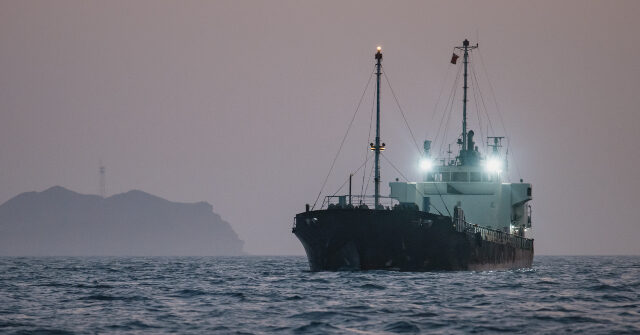
A tanker was struck by two projectiles while transiting the Persian Gulf off Qatar on Wednesday, according to the United Kingdom Maritime Trade Operations (UKMTO) center. The attack occurred approximately 50 nautical miles north of Madinat ash Shamal, Qatar's northernmost city near the entrance to the Strait of Hormuz. The UKMTO did not identify the vessel or the flag nation it was sailing under, and no group claimed responsibility for the strike.
The status of the crew, extent of damage, and potential environmental impact remain unconfirmed. UKMTO said Thursday that it was unable to provide a full assessment at the time of its initial bulletin. The location of the strike places it in a strategically sensitive region close to the southern coast of Iran, an area where maritime security concerns have mounted.
On the same day, Iranian state television reported that two oil tankers and a towboat struck mines in the Strait of Hormuz and caught fire. Iran's Islamic Revolutionary Guard Corps (IRGC) claimed in a statement that the vessels were damaged while attempting to use "unauthorized passages" through the strait, and that the tugboat was damaged while attempting to aid one of the damaged tankers. The IRGC also claimed that its forces captured two American drones—identified as LUCAS drones—after its electronic warfare unit took control of them and forced them to land on Iranian soil.
By Thursday afternoon, Iranian forces claimed that a total of five ships had been damaged in the strait, all by striking naval mines. However, none of the vessels were identified, and it was unclear whether any corresponded to the tanker struck by projectiles reported by the UKMTO. According to a report cited by one source, there was "little to confirm Iran's claims" in publicly available information.
The incidents highlight a broader reporting challenge in the region. UKMTO noted in a report issued last month that it was struggling to accurately document attacks in the Strait of Hormuz because a majority of ships operate with transponders turned off and many vessel operators choose not to report incidents they experience while passing through the waterway. This gap in reporting makes it difficult to assess the full scale of maritime incidents in the area.
The Strait of Hormuz is a critical chokepoint through which approximately 20 percent of the world's oil supply passed during peacetime, according to one source. Iran closed the strait following U.S. and Israeli military operations against Iran in February, marking an escalation in regional tensions. Diplomatic efforts are ongoing to reduce tensions, with Iran's foreign minister holding calls on Thursday with regional leaders including those from Turkey, Saudi Arabia, Qatar, Oman, and Kuwait to discuss efforts to improve security and stability in the region.