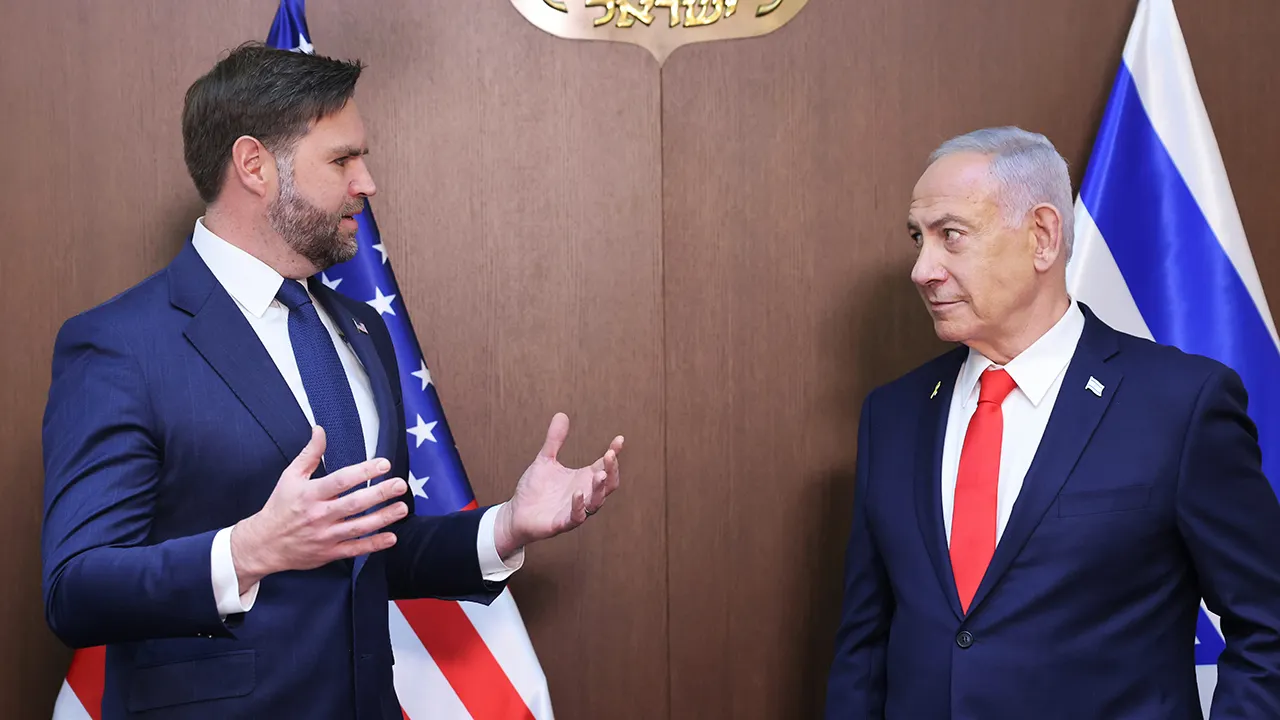
Vice President JD Vance has privately accused Israeli Prime Minister Benjamin Netanyahu of being "wrong on everything" about the Iran war, according to reports published Thu 2026-11-05, as disagreements over the unpopular conflict create visible fault lines within the Trump administration and raise questions about Vance's political future.
The reported clash, originally published by Axios on Nov. 4, emerged after Republicans lost control of both chambers of Congress in Tuesday's midterm elections. Vance publicly attributed the defeat to the war, writing on X: "The reason we lost is the war." In a longer statement, he urged President Donald Trump to pursue a negotiated settlement rather than renewed military strikes, stating "Everyone knows why we lost. And any honest conversation about where we go from here must start there." Trump acknowledged the war's electoral impact, telling reporters it was "largely true because it drove the gasoline up a little bit short term," though he defended the military action as necessary to prevent Iran from acquiring nuclear weapons.
According to sources, Vance has led a faction of senior administration officials urging Trump to negotiate an end to the conflict, warning that the unpopular war could cost Republicans political power. Netanyahu had pressed Trump to resume strikes against Iran ahead of the midterms, but Trump held off. Vance declined to endorse Netanyahu's recent re-election campaign and criticized Israeli government officials who opposed Trump's efforts to end the Iran war. Natan Sachs, a senior fellow at the Middle East Institute, told Fox News that Vance's public criticism of Netanyahu—while avoiding direct attacks on Trump—allows the vice president to distance himself from an administration that has "just taken a huge electoral beating" while positioning himself differently from the president ahead of 2028.
Vance has also engaged in direct outreach to Iranian officials. Last month, he sent a letter through Qatari intermediaries to Mohsen Rezaei, secretary of Iran's Supreme National Security Council, proposing renewed peace negotiations. According to Axios, the letter stated that any negotiations to prevent further U.S. military strikes must address Iran's nuclear program. A U.S. official told the outlet that Trump backed this effort.
Vance's main concern appears to be Netanyahu's presentation of a plan for regime change in Iran through military action. Sachs noted that many opposition leaders in Israel remain skeptical that regime change can be achieved through an air campaign, warning such an approach could strengthen rather than weaken the Iranian government.
Polling data supports Vance's electoral assessment. Roughly six in ten voters said U.S. military action against Iran was the wrong decision, according to an AP Voter Poll. Exit polls showed 34 percent of voters cited the Iran war as a crucial factor in their midterm decision.
The uncertainty over Netanyahu's political future in Israel adds another layer to the administration's foreign policy divisions. Sachs suggested that if Netanyahu is not re-elected as Israeli leader, Vance will face a choice: whether to continue a confrontational line with a new Israeli leadership or claim the dispute was specific to Netanyahu.