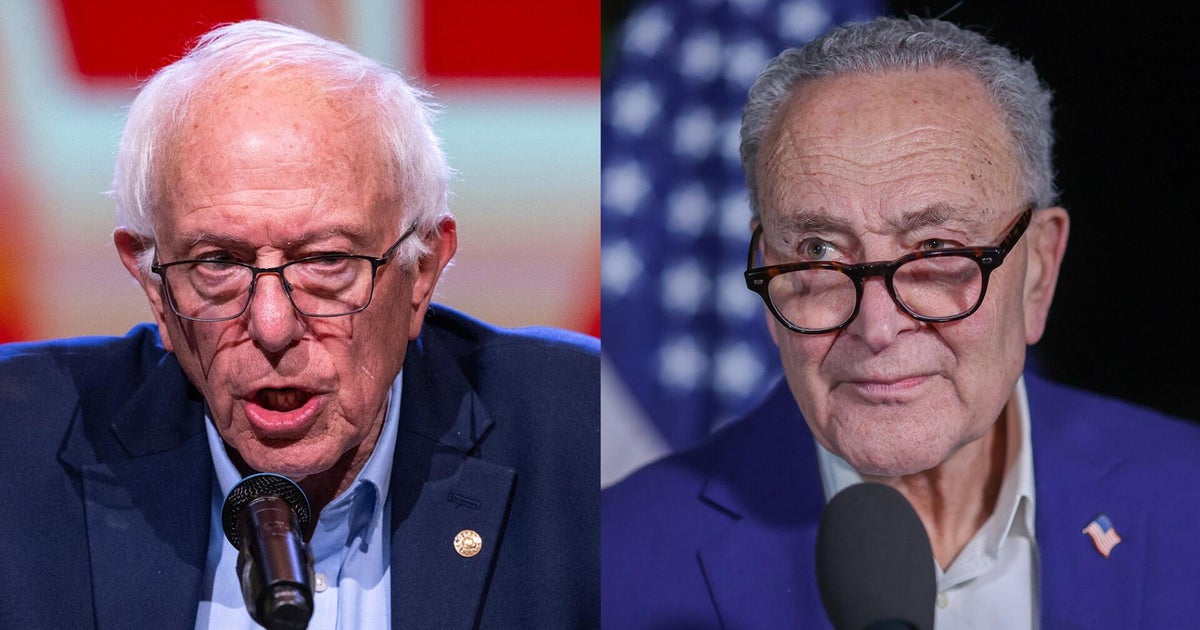
Sen. Bernie Sanders announced Tuesday that he will not support Sen. Chuck Schumer's bid to remain Senate majority leader, marking the most prominent internal opposition to Schumer's leadership after Democrats gained seats in the midterm elections held Tuesday, Nov. 3.
"The time is now for change, and I will not be supporting Chuck to be reelected as the Democratic leader," Sanders said at a Capitol news conference. The Vermont independent acknowledged Schumer's work ethic, saying "I like Chuck. Nobody who works harder than Chuck Schumer." He called for "a vigorous debate about the direction of the Democratic Party" and said the party needs to move in "a new and bold direction."
Sanders was joined by Sen. Elissa Slotkin of Michigan, who also withheld her support from Schumer. Slotkin set a condition for her vote rather than naming an alternative candidate, saying she would vote "no until and unless" she sees a concrete plan from any contender for how they would govern differently and address costs and corruption. She suggested colleagues "withhold quorum" if Schumer runs unopposed, and emphasized the need for "a new generation of leadership."
The defections signal a challenge to Schumer's leadership from the party's progressive wing. At least five incoming senators have indicated they will not back Schumer, including Abdul El-Sayed of Michigan, Troy Jackson of Maine, Peggy Flanagan of Minnesota, Juliana Stratton of Illinois, and Adam Hamilton of Kansas. Sen. Chris Van Hollen of Maryland, who initially told reporters he was not seeking the position, said Tuesday he is "actively listening" to colleagues and calling them to discuss the race, leaving open the possibility he could challenge Schumer.
Schumer responded with confidence about his prospects. "I'm confident I will be elected majority leader. And our caucus is really united in focusing on bringing down costs, on ending the corruption, on ending the chaos, on ending the war," he said. Sen. Kirsten Gillibrand of New York, chair of the Democratic Senatorial Campaign Committee, defended Schumer, noting his role in recruiting candidates who helped Democrats expand their Senate majority. "No one has put in the time and effort that anyone has put into this cycle that he did," she said.
Democrats expanded their Senate control in the Nov. 3 elections, flipping seats in states including Texas, Kansas, and South Carolina. The party is projected to hold 54 to 56 seats in the next Congress. Senate Democrats will choose their leader by secret ballot next month, with senators-elect participating. Schumer needs a simple majority of the caucus to retain his position. Leadership elections are expected to occur later this month.