An 8-year-old Haitian third grader was reunited with his family on Monday after spending 11 days in federal immigration custody. The child, who attends Fay Elementary School in San Diego's City Heights neighborhood, was taken into custody by ICE on Nov. 4 during a routine immigration check-in appointment.
According to the Department of Homeland Security, ICE agents designated the child an unaccompanied minor after determining that the man accompanying him—identified as his uncle—could not establish legal guardianship. DHS said that "out of an abundance of caution" to ensure the child's safety, the agency removed him from the household and placed him in the care of the Office of Refugee Resettlement, a division of the Department of Health and Human Services that oversees unaccompanied minors in federal custody.
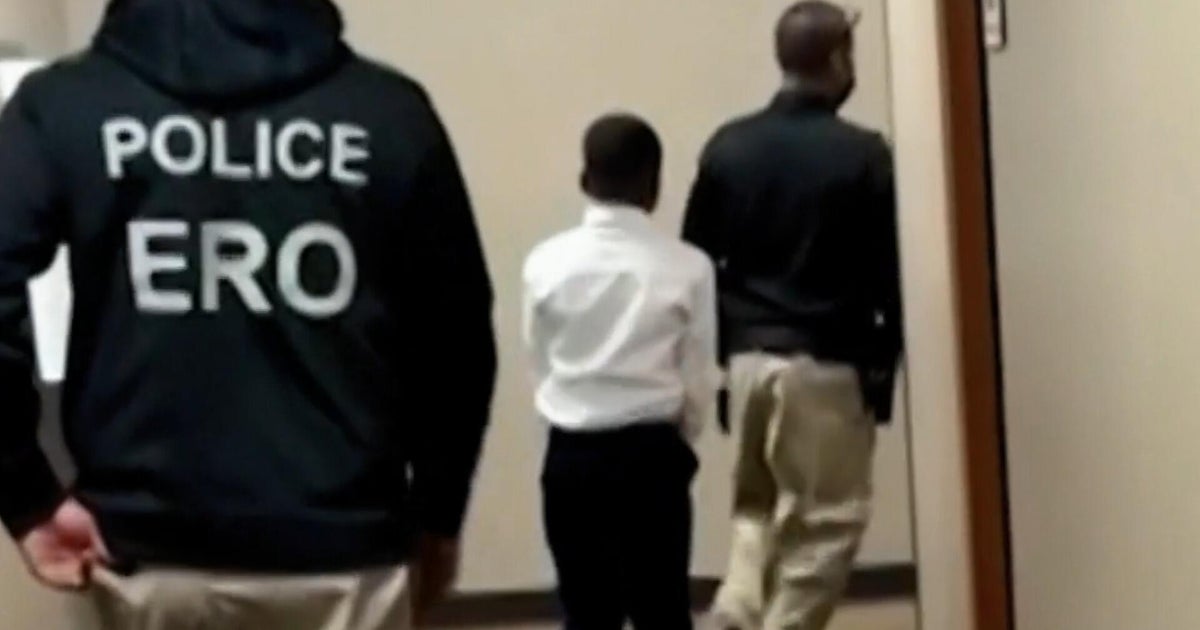
Video footage recorded by volunteer observer Karen Pohl showed three armed federal agents escorting the boy from ICE's field office in the Edward J. Schwartz federal building in downtown San Diego. The video spread widely online, sparking nationwide outrage and protests outside the building. San Diego City Councilmember Sean Elo-Rivera, who first posted about the detention on Instagram, said he made the case public to prevent the boy from being lost in the system. The entire San Diego Democratic delegation and California's two U.S. Senators sent a letter to Homeland Security Secretary Markwayne Mullin and Health and Human Services Secretary Robert F. Kennedy Jr., demanding the child's release.
Representative Juan Vargas, a Democrat representing San Diego, intervened with federal officials and met the child as he was released. "My heart breaks thinking about what he endured," Vargas said. "Fortunately, he's now reunited with his family, his classmates, and his community." Guerline Jozef, executive director of the Haitian Bridge Alliance advocacy group, described the emotional reunion, saying the uncle "let go of this pain that he was holding and they ran to each other and jumped on top of each other." She added that the child's aunt had not eaten since his detention, saying, "They haven't been able to sleep because of that."
The boy had been living with his uncle since his father was deported to Mexico in 2025. He had previously held Temporary Protected Status, a humanitarian designation that provides work permits and deportation protection. In August, following a legal victory for the Trump administration, approximately 350,000 Haitians living in the United States lost their TPS status.
After his release, the child returned to school where he received support from school counselors. "School leadership, and counselors had a meeting with the student when he returned to school this morning to ensure he had all the supports he and his family needed, and then he went off to class," the San Diego Unified School District said in a statement. The boy told NBC 7 that he loves Haitian food and his favorite class is physical education.
The Haitian Bridge Alliance said the case highlighted broader concerns about how ICE handles children without documented legal guardians. "An eight-year-old child belongs in a classroom, on a playground, and surrounded by love—not in immigration detention," Jozef said. "We welcome his release, but his freedom should never have required a public outcry. No child should endure the trauma of detention because of their immigration status." The organization noted that when parents are taken into custody by ICE, they are not provided an opportunity to return home to arrange guardianship for their children.