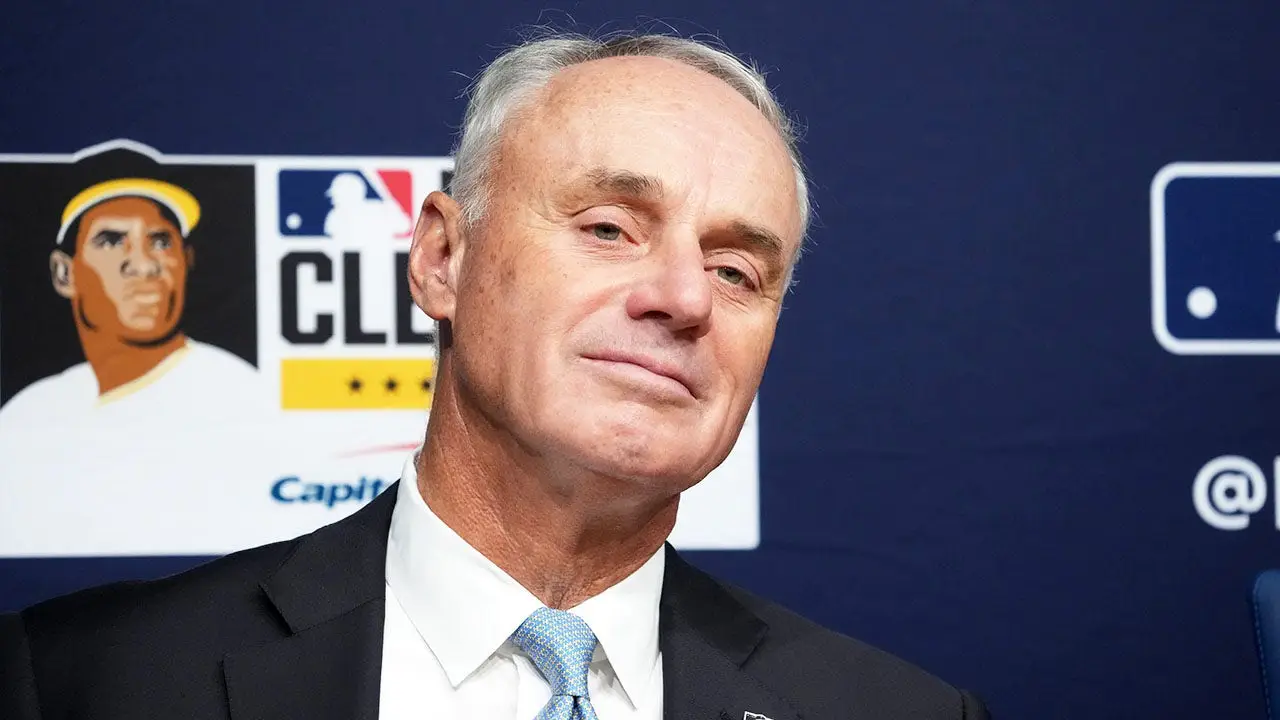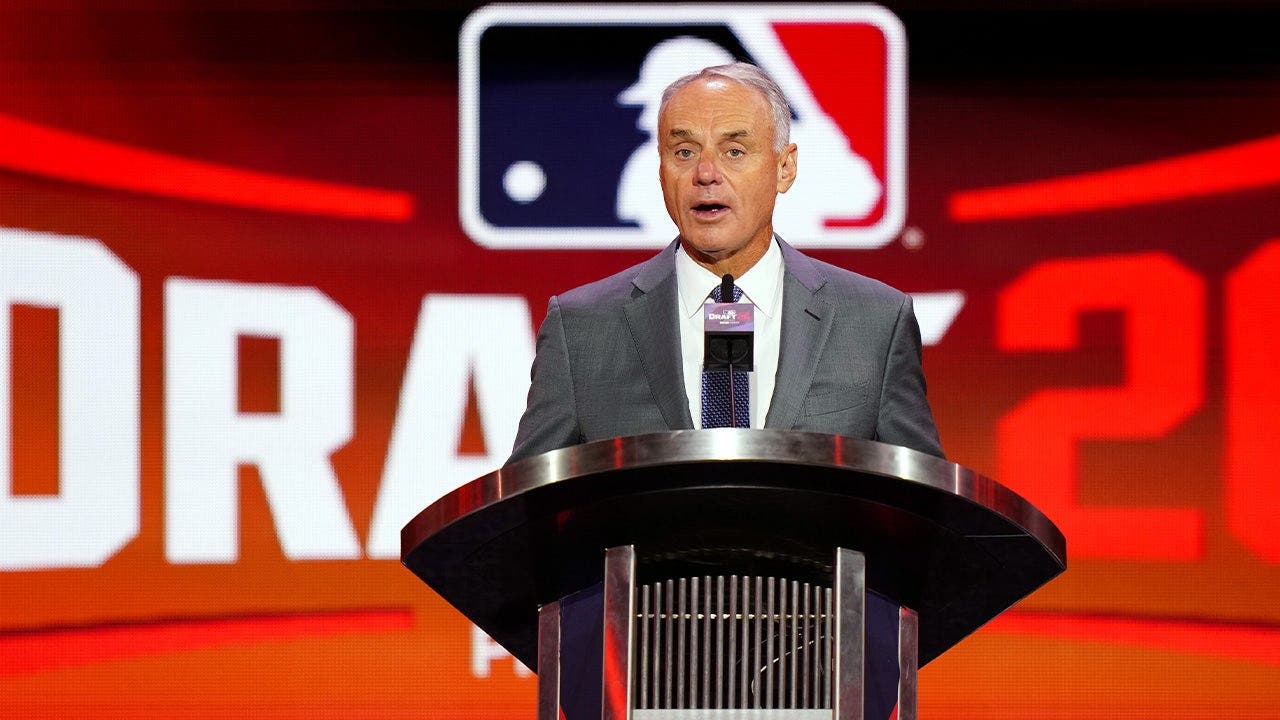
Commissioner Rob Manfred said Wednesday, Nov. 18, that Major League Baseball owners will not move off their demand for a salary cap and floor, putting the sport on track for a lockout when its collective bargaining agreement expires. Speaking at a news conference in New York during the owners' meetings, Manfred said he could not “imagine the owners ratifying a deal that does not include a cap and floor.”
“There’s plenty of room for compromise,” Manfred said. “But there’s one thing that I will not compromise [on], and that’s the issue that we’re hearing from the vast majority of our fans: They want a salary cap and floor, and on that we will not compromise.” The league cited a Morning Consult poll conducted in November 2025, in which 79 percent of “avid” MLB fans and 69 percent of “casual” fans supported a salary cap system. Manfred said, “We are not prepared to tell 70% of our fans that they’re wrong on this issue.”
The current agreement expires at 11:59 p.m. ET on Dec. 1, and the Associated Press reported that a lockout would begin Dec. 2. A lockout, the sport’s 10th work stoppage since 1972, would halt all trades and signings, and the AP reported it could threaten the 2027 season. Manfred said a decision on a lockout would be made “at the last possible moment” and that the league would make itself available to bargain over the Thanksgiving holiday. An OutKick column published Wednesday described the stoppage as potentially indefinite, while the AP reported only that it could threaten the 2027 season.
MLB has proposed a hard cap of $258.2 million and a floor of $180.2 million, beginning in 2028, using luxury tax payrolls with average annual values. Under the plan, a team could remain as low as 90% of the floor in 2028, or $162.18 million, but would have to spend the full floor amount over three years. Individual contracts would be capped at 15% of a team's payroll, or 16% for re-signing free agents. MLB said it proposed a 50-50 split of revenue, while the union said it calculates the players’ current share at more than 55%.
The Players Association has said it will not accept a salary cap. In a statement, union head Bruce Meyer said, “There can be no clearer example of the league’s lack of seriousness than their insistence that they will not negotiate over the economics outside of a radical change to the system.” He added, “There should be no illusions about the owners’ true motivation in pushing for this system.” The union’s most recent economic proposal was made in May, and it has rejected MLB proposals that include a salary cap. Manfred responded, “Another word for ‘non-starter’ over months is a refusal to bargain.” The last time management proposed a cap, in 1994, the AP reported it led to a 7 1/2-month strike that canceled the World Series for the first time in 90 years.
MLB is making competitive balance its central argument. Morgan Sword, MLB’s executive vice president of baseball operations, said 64% of playoff teams over the past 10 years and 85% of World Series participants came from large markets. The Milwaukee Brewers became the first small-market team to win the World Series since 2015, and Manfred said a matchup between two smaller-market clubs, such as this year’s Brewers and Rays, “should not be a once-in-a-decade phenomenon for us.”