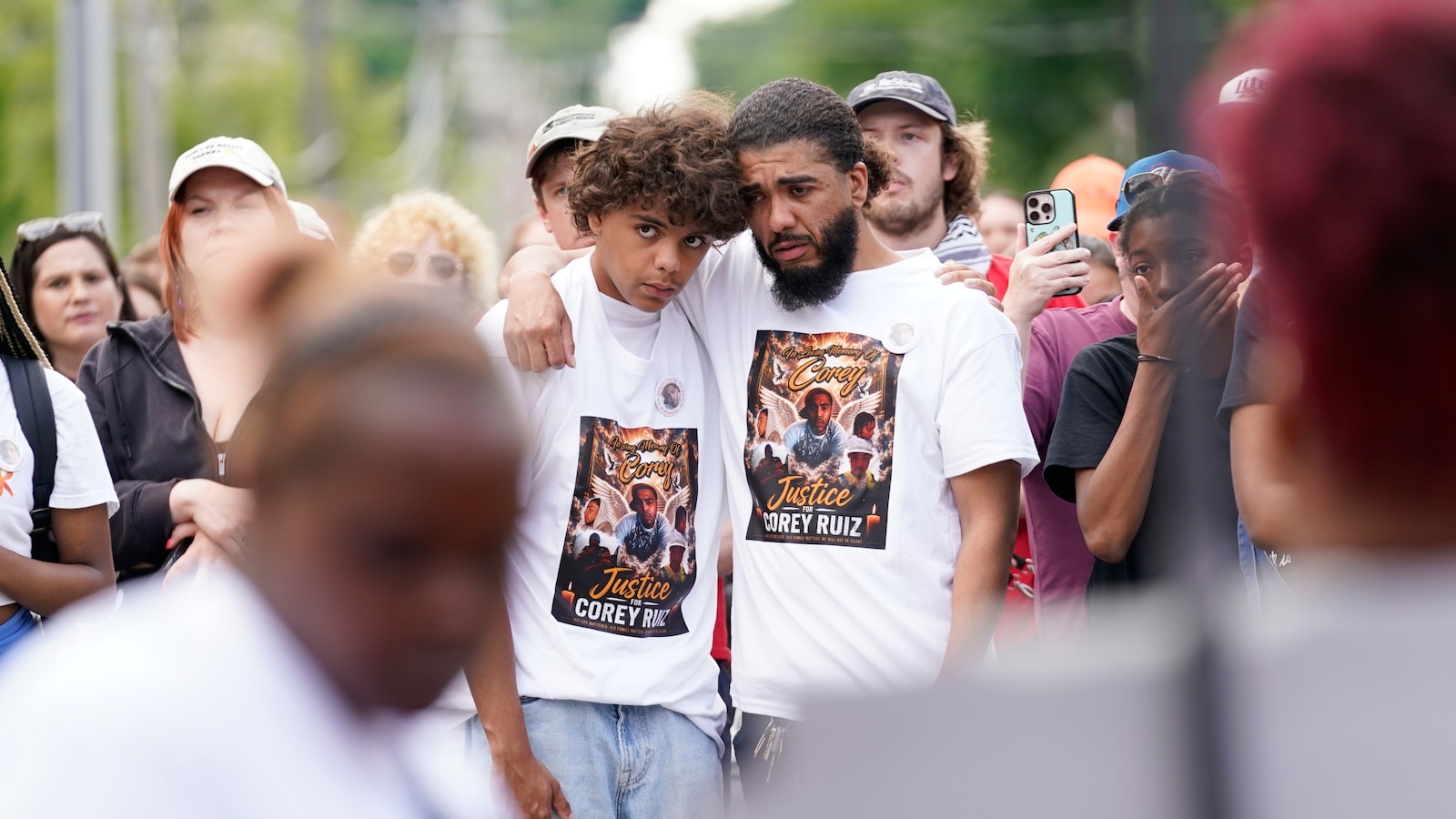
Dane County District Attorney Ismael Ozanne announced Thursday, November 19, 2026, that he will not file criminal charges against Madison police officer Kiel Baitinger-Peterson in the fatal shooting of Corey Ruiz. Ruiz, a 38-year-old Black man, was shot on July 22 in Madison, Wisconsin. Baitinger-Peterson, a white officer with more than a decade of experience in law enforcement, fired the shots that killed him.
Baitinger-Peterson was one of four officers who responded to calls about someone checking out parked cars and an alleged burglary attempt, police said. The officers surrounded Ruiz, who was on a bicycle, in the middle of an intersection. In a statement announcing his decision, Ozanne said, “I conclude it was reasonable for the officer to use deadly force when this person resisted officers, produced a knife, and was not affected by multiple attempts to use Tasers while officers attempted to take him into custody.” The Wisconsin Department of Justice said shortly after the shooting that two officers had tried to use a Taser on Ruiz without success, and that Ruiz “brandished a knife and injured” the officer.
Ozanne said he reviewed police reports, diagrams, surveillance videos, police squad car videos and citizen videos before reaching his decision. He said it was a correct interpretation of the law. “A person does not have to like and/or agree with the law, however I am sworn to apply the law to the facts at hand,” he said. “The law applies equally to members of law enforcement and to those who are not.” Madison police officers do not wear body cameras, so bystanders’ videos and police dash-camera footage are the primary visual records of the encounter.
Civil rights attorney Ben Crump, who represents the Ruiz family, rejected the prosecutor’s conclusion. Speaking at a news conference surrounded by Ruiz’s family, Crump said, “In the video you see they tackle him, they tase him, they kick him and then the police officer executes him.” Crump said the videos showed nothing that justified the shooting, and he said the medical examiner had told the family that Ruiz would have survived had the third shot not struck his head. Crump said his team would “explore every possible avenue” when asked whether the family would file a lawsuit. Ruiz’s brother, Adam Ruiz, told reporters the prosecutor had “mistreated” the family. “We’re destroyed,” he said. “We won’t accept this.”
The Wisconsin Professional Police Association, the police union, said through its executive director, Jim Palmer, that the use of deadly force was legally justified and “is supported by the evidence and consistent with the legal standards governing the use of force by law enforcement officers.” Madison Police Chief John Patterson said he trusts the city’s officers but recognized the decision “will bring various emotions,” and he urged protesters to remain peaceful. Patterson said the department will conduct an internal review, and all four officers who interacted with Ruiz remain on paid administrative leave. Baitinger-Peterson did not reply to an email seeking comment.
The Wisconsin Department of Justice released its investigative files on Thursday, including photo and video evidence. Dash-camera footage shows officers repeatedly shouting, “He’s got a knife! He’s got a knife!” as a fourth officer arrived and deployed a Taser. Ruiz is seen holding a knife in his right hand, and he stumbled and fell onto his right side before Baitinger-Peterson fired three shots at close range. In an interview with investigators days after the shooting, the officer said he had grabbed Ruiz’s right arm before realizing it held a knife, and that he fired a third shot because Ruiz’s face and body did not appear to change after the first two.
The shooting sparked several days of protests and renewed calls for police reform. It was the third time since 2012 that Madison police had shot and killed someone in the same neighborhood. A few dozen people gathered at the shooting site on Thursday afternoon, where flowers had been left, and a candlelight vigil was held after dark. City leaders had braced for more protests after the decision. In a separate development announced in September, a $350,000 donation from a local nonprofit is expected to help equip all Madison police officers with body cameras by the end of 2027.