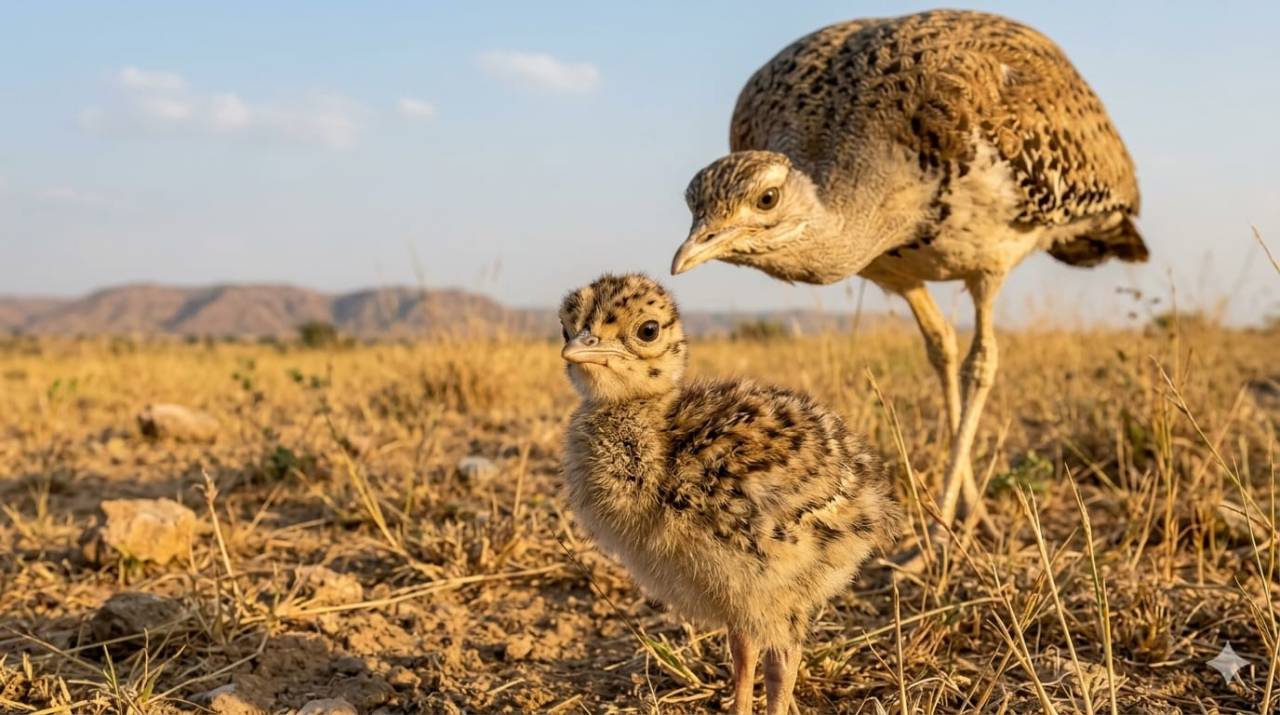
At least six limestone mining projects near the Great Indian Bustard (GIB) 'priority area' in Jaisalmer, Rajasthan, have moved through different stages of the environmental clearance process since July, according to a report published by Deccan Chronicle. Priority areas are habitats that serve as foraging and breeding grounds for the GIB, a bird classified as critically endangered.
The most recent developments involve two limestone projects in Joga village that cleared the first stage of the approval process in November. The Joga-IV Limestone Block, a 368-hectare site being developed by Shree Cement East Private Limited, lies 3.8 km from the GIB priority area boundary. The 376-hectare Joga-II Limestone Block, operated by Ambuja Cements Limited, is 5.7 km away. Both were recommended for the grant of terms of reference (ToR) by the Union environment ministry's expert appraisal committee (EAC) during a meeting held from November 2 to November 4. The ToR sets out the scope, methodology and reporting requirements for an environmental impact assessment study.
Earlier, the EAC recommended on October 8 that two other projects receive environmental clearance. Wonder Cement Limited's Parewar SN1 Limestone Block in Parewar village has a mining lease area of 960 hectares, of which 0.29 hectares falls within the GIB habitat. The site is 7.34 km from the Mokla Parewar Conservation Reserve. The EAC recommended that no mining take place on the 0.29-hectare portion within the habitat, and that Wonder Cement surrender that area after the clearance is granted and the mining lease deed is executed. The Ramgarh Auctioned Block in Ramgarh village is more than one kilometre from the habitat.
In September, another limestone project in Joga, 5.8 km from the priority area, cleared the first step of the approval process. In July, a limestone mining project with more than 280 hectares, or 29 per cent of its mining lease area, within the GIB habitat in Joga village received a similar clearance.
Both Joga projects also involve a proposed transport route of about 12 km from the mining blocks to Sanu railway siding, of which around 3.5 km passes through the habitat. The project proponents have also proposed a 250-km alternative route to Phalodi railway station that does not pass through the priority area. According to the meeting minutes, the EAC directed the proponents to explore feasible alternative routes, prioritising avoidance of the GIB habitat. If the route through the priority area is chosen, the EAC recommended that the proponents prepare a separate GIB-specific conservation and mitigation plan for the transport corridor.
The projects come after the Supreme Court in December 2025 accepted an expert committee recommendation to expand the GIB priority area. In Rajasthan, the area increased from 13,163 square km to 14,013 square km, and in Gujarat it grew from 500 square km to 740 square km. Dr Devesh Gadhavi, a former member of the expert committee constituted by the Supreme Court in a public interest case concerning the GIB population, said that he had presumed such changes in the wider landscape would eventually lead to significant landscape-level change. He said the loss of habitat would be irrecoverable and that, in his dissent note on the technical report, he had stated that mining should not be permitted in the GIB priority area.