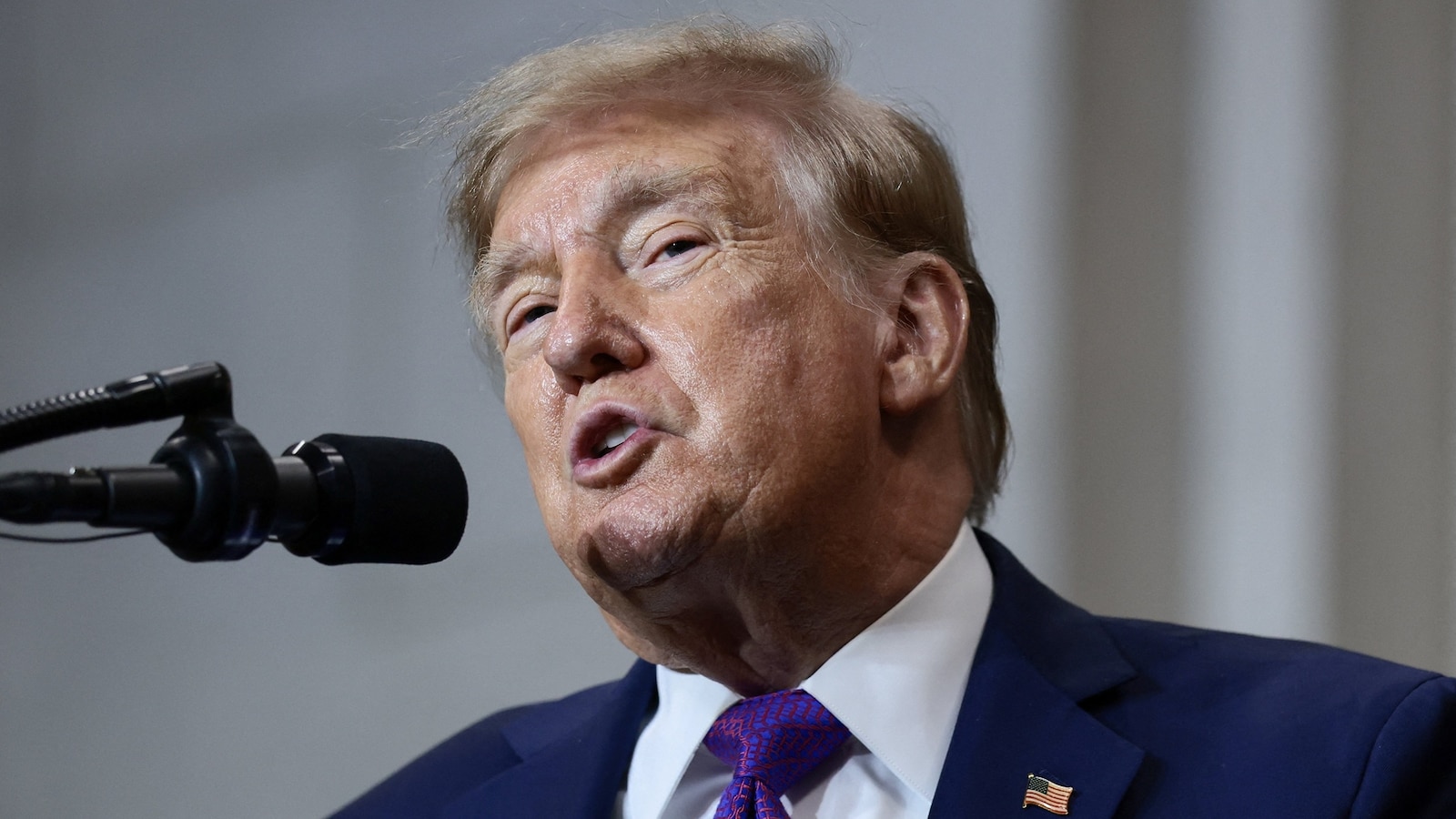
President Donald Trump said in an Oval Office interview with the New York Post, published Tuesday, Nov. 24, that his war effort against Iran is "funded" through roughly the end of January. He said Democrats, who take control of Congress in January, could limit his military options, and he warned that halting the conflict early would turn what he called a "total win" into "a loss."
Asked whether his window to order further strikes was narrowing, Trump said, "Up until really the end of January, pretty much, you know, we're funded," and added, "We can put that war to bed anytime we want." The Post reported that Trump launched the war in February and initially projected it would take "four weeks or so." U.S. and Israeli strikes on the first day, Feb. 28, killed Supreme Leader Ayatollah Ali Khamenei and several other senior figures, according to an NBC News report. A ceasefire followed in April and a memorandum of understanding in June, which collapsed weeks later after Iran attacked commercial ships, the Post reported. Trump said earlier this month the conflict was "effectively over" militarily, but he has said he intends to keep an embargo on Iranian ports to force a nuclear deal.
On regime change, the Post reported that Israel favors a complete change of government in Tehran. Trump said that goal was "probably doable" but not his own. "I just don't want them to have a nuclear weapon," he said. "I was never for or against regime change, that was never a criteria for me." According to JNS, citing Israel's Channel 12 News, Israeli Defense Minister Israel Katz said Tuesday that the Israel Defense Forces and U.S. Central Command were preparing for a possible strike on Iran, and that the decision rests with Trump.
NBC News reported Tuesday, citing a U.S. official and a person familiar with the discussions, that administration officials are debating whether to target senior Iranian leaders to eliminate hardliners and help end the war, now in its ninth month. Supporters argue it would show Tehran that Washington can find and strike its leadership at any time. Opponents warn it could harden the positions of those in power, expose American officials to retaliation and undermine diplomacy; some U.S. military leaders raised similar risk concerns. NBC did not identify specific targets. The option has long been presented to Trump but has been under renewed discussion in recent weeks. A U.S. official said Gen. Dan Caine, chairman of the Joint Chiefs of Staff, presents options and a recommendation without actively advocating for one. Ynetnews reported the Pentagon did not respond to a request for comment.
Trump made other claims about Iran's military and the blockade. At a White House turkey pardon ceremony Tuesday, he said Iran had "no army," "no navy" and "no air force," and "a little capacity to fire missiles," according to Breitbart. He called the blockade "the greatest naval blockade in history" and said "not one Iranian ship has gotten through," apart from "a little moratorium." In a Fox News interview with Trey Yingst on Sunday, Nov. 22, he said he was leaning toward renewing major military operations after the start of 2027 if diplomacy failed, and called Iranian negotiators "professional tap dancers," according to Israel National News. On Nov. 20 he said, "We know who they are, where they are." A White House official told Fox News Digital the blockade and a new task force would continue "with full effect" and that Trump "has many options at his disposal." NBC also reported that Washington and Tehran have continued exchanging strikes with little public acknowledgment.
Iran has announced it will sue the United States for compensation over an airstrike on a school that, according to the Post, killed dozens of pupils and teachers. Trump said he wanted compensation for people Iran had killed, claiming Iran had "killed 75,000 protesters in the last seven months," citing the USS Cole attack and saying, "This war started in 1979." These figures were Trump's own and were not independently verified in the reports.
Assessments of Iran's weapons programs differed. Katz said Iran is developing chemical weapons and Israel "will not allow them to reach the capability." According to Channel 12, Israeli and U.S. intelligence assessments indicate Iran cannot yet put a chemical warhead on a ballistic missile and launch it. Kasra Aarabi of United Against Nuclear Iran told The Jerusalem Post that Iran's chemical and biological programs pose a growing threat. CBS News reported last week that Netanyahu supported a coordinated offensive while Trump had not decided. Trump has not announced a decision to resume strikes, according to The Jerusalem Post.