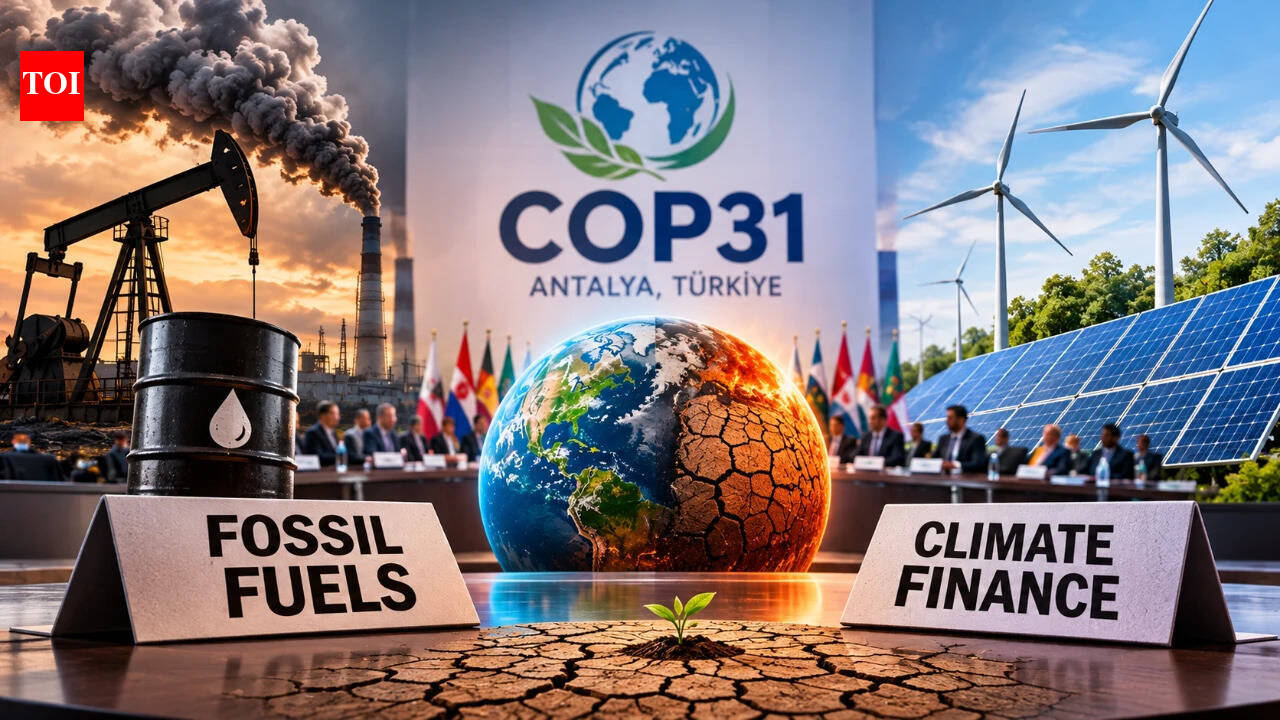
The 31st UN Climate Change Conference, known as COP31, ended without agreement on its central political declaration, the Antalya Pacts. The talks were held in Antalya, Turkey, from Nov. 9 to 20 and were co-hosted by Turkey and Australia. The final text was rejected on Sunday, Nov. 22, and the negotiations ran two days past schedule, becoming the longest-running climate talks in UN history, according to multiple reports.
The central dispute concerned fossil fuels. The draft text did not mention phasing out coal, oil and gas, and oil-producing states resisted stronger language. Times of India and Economic Times reported that Saudi Arabia and other oil-producing nations blocked the mention, while Democracy Now reported that the effort to remove references to fossil fuels was led by Saudi Arabia and joined by Russia. The Workers World Socialist Party website, a left-wing publication, said a bloc led by Saudi Arabia, Russia and India had demanded the words be removed. The draft also retained a call to expand carbon capture technology, which Saudi negotiator Mohammad Ayoub defended, saying, “We believe that climate change requires all solutions on the table.”
Climate finance was the second major point of contention. Democracy Now reported that many poorer countries objected to the lack of financial commitments from wealthy nations to help them adapt to climate change. Marshall Islands climate envoy Kathy Jetn̄il-Kijiner said her delegation objected to adopting the text and “cannot join consensus,” adding that the country would “not accept an outcome that undermines our security and threatens our future.” Russian delegate Sergei Kononuchenko criticized developed countries for providing climate finance largely through loans, according to Times of India. Turkey and Australia also sought a global goal to electrify the world economy, but Economic Times reported that the target was ultimately dropped.
Negotiations chair Chris Bowen, Australia’s climate minister, said he could not overcome what he called “unbridgeable red lines,” and described the geopolitical backdrop as the most complicated and fraught in living memory, citing high energy prices and the fallout from the Middle East war. EU representative Darragh O’Brien, Ireland’s climate minister, said the EU “will not endorse a cover decision” that does not mention fossil fuels and “will not accept a COP that greenwashes fossil fuel.” Former US vice president Al Gore wrote on X that it was “outrageous that a handful of petrostates have veto power over any mention of fossil fuels.”
UN Secretary-General António Guterres said he shared “the very profound frustration” of those who expected governments to respond to the climate crisis. UN climate chief Simon Stiell said the outcome “certainly fell short today” and that “the world cannot afford a repeat.” China’s foreign ministry spokesman Guo Jiakun said Beijing felt disappointment but that confidence in the multilateral process should not be lost, adding that the green transition is “irreversible.” The European Commission’s spokeswoman Anna-Kaisa Itkonen called the failure a “terrible outcome.”
The talks did produce progress on some issues. Times of India reported that countries advanced climate finance mechanisms and a framework for a just transition. The outcome nonetheless drew comparisons to the failed 2009 Copenhagen summit, and Economic Times reported that the setback raised doubts about the effectiveness of climate diplomacy. The COP28 summit in Dubai in 2023 had agreed to transition away from fossil fuels in energy systems, and Times of India reported that countries did not reaffirm or strengthen that commitment at COP31.
The United States did not take part in the summit, according to Democracy Now. The Workers World Socialist Party website reported that the United States withdrew from the UN climate convention in January. On Friday, Nov. 20, a Malaysian climate activist, Amalen Sathananthar, was detained after interrupting the closing plenary, Democracy Now reported.
Writing in The Conversation, analysts said the failure may lead to a greater role for coalitions of countries acting on specific issues. Ana Toni, chief executive of last year’s COP30 talks in Brazil, said that “we have already agreed on much of what we must do, and implementing it does not require consensus.”