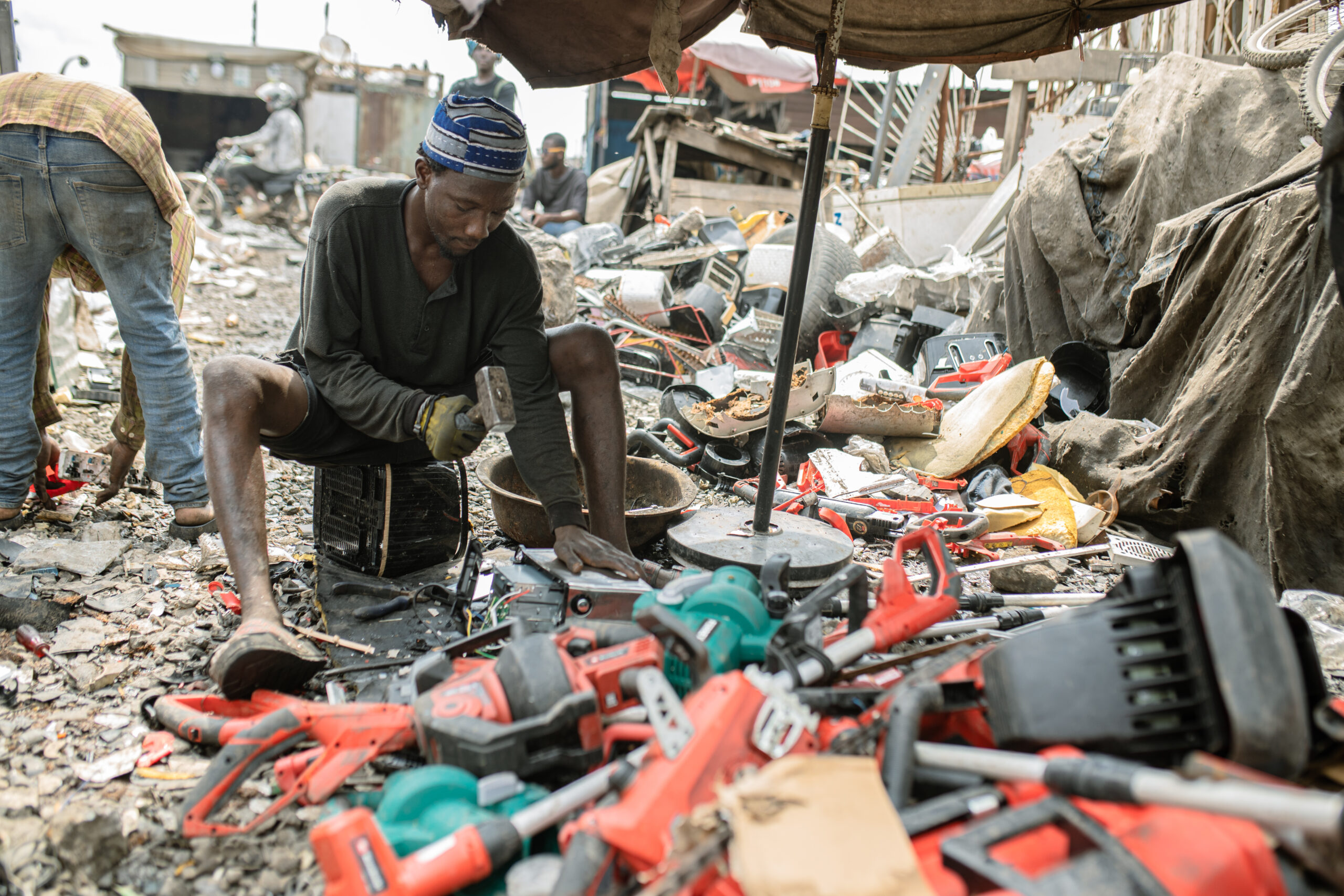
Faulty electrical appliances returned to British supermarkets have been found at Agbogbloshie, an e-waste dump in the centre of Ghana's capital, Accra, according to a joint investigation by Unearthed and Greenpeace Africa published on Thursday.
The investigation found boxes of small appliances from Tesco, Argos and George at Asda among the piles of electronic waste at the site, which lies beside the Odaw river. Many of the items carried returns labels showing they had been sent back to high-street stores because they were faulty. Reporters documented dozens of toasters, slow cookers, kettles and other goods, many still in their boxes, during four visits to the site. One toaster bore a returns slip saying 'not working' from Tesco's Sandhurst Extra store.
Agbogbloshie has long been one of the world's largest digital scrapyards. Workers, many of them young men from Ghana's arid north, break open appliances with mallets, remove wiring and burn plastic insulation, according to the investigation. The site was once ranked alongside Chernobyl as one of the most polluted places on earth.
Exporting broken electrical goods from the UK to Africa is illegal in almost every circumstance, the investigation noted. Ghana's environmental regulator said that broken European electrical appliances 'should not be here.' The investigation's authors suggest that goods returned to UK shops are being sold off in bulk and shipped untested by middlemen to Ghana, where they are sold in local electrical markets, often without any guarantee that they work. Items that cannot be repaired or do not sell end up at Agbogbloshie.
Tesco said that, after being presented with the findings, it had suspended its third-party e-waste management providers 'with immediate effect' while it carries out a full audit of their practices. Argos said it took the findings seriously. Asda referred the investigators to the British Retail Consortium, a trade association, which called the findings 'deeply concerning.'
Joshua Awuku-Apaw, a Ghanaian environmental consultant, said: 'Ghana is not a dumping ground for broken appliances or failed retail returns from the UK.' He added that shipping faulty appliances abroad under the cover of 'reuse' or 'second-hand trade' shifts the financial, environmental and health costs of overconsumption onto Ghanaian communities and workers.
The findings point to faulty goods being exported illegally from the UK to countries without formal recycling infrastructure, where e-waste can cause serious harm to the environment and to the health of nearby communities.