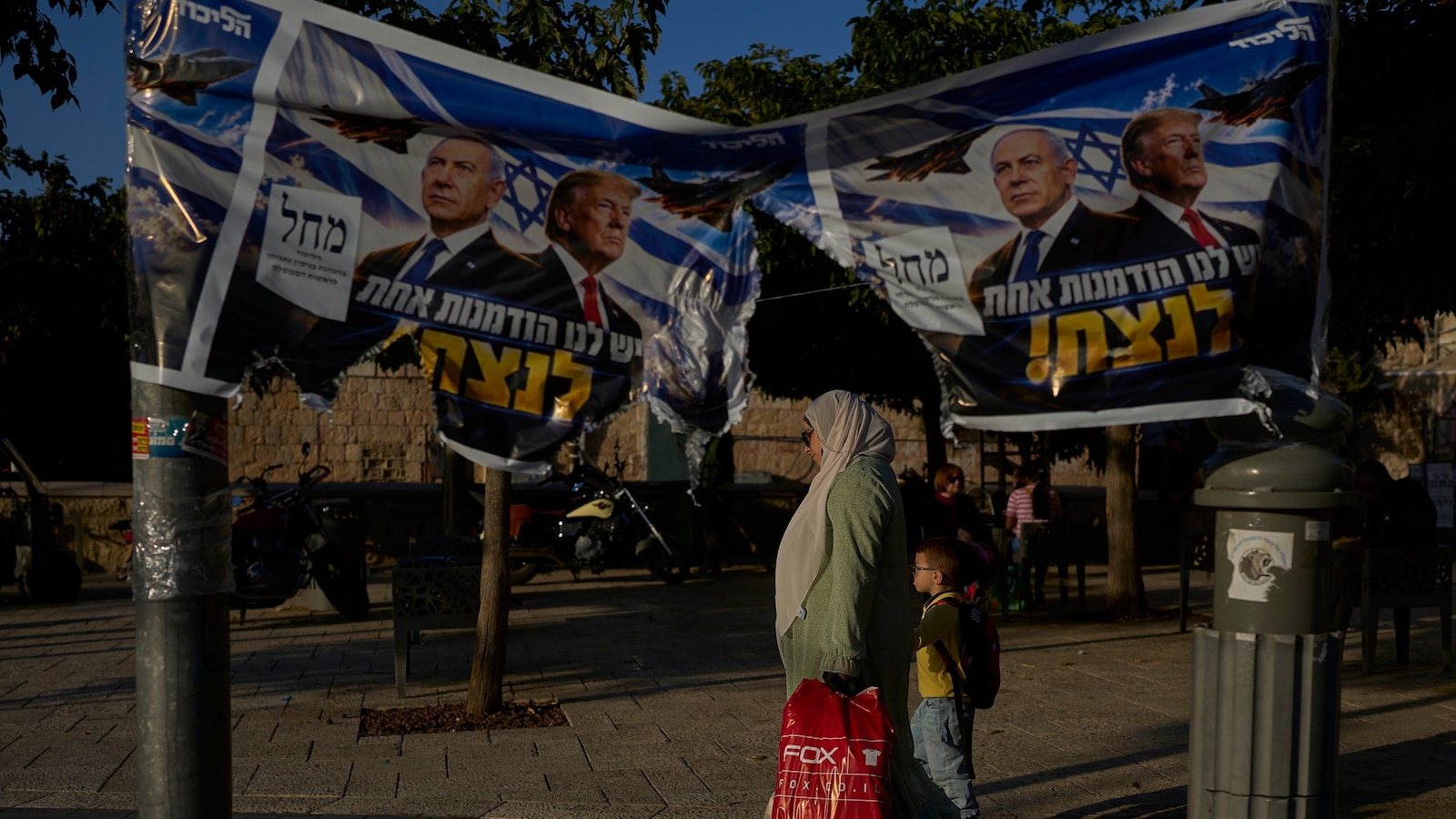
Prime Minister Benjamin Netanyahu's right-wing bloc maintains a lead following Israel's parliamentary election on Tuesday but fell short of a majority, according to final results released Thursday by the Central Elections Committee. Netanyahu's coalition secured 53 of 120 Knesset seats, while the opposition bloc led by former general Gadi Eisenkot won 48 seats. Arab-led parties achieved a record combined total of 19 seats, leaving all three political groupings unable to govern alone and requiring negotiations among competing factions.
Neither coalition can reach the 61 seats required for a parliamentary majority without support from parties outside their blocs. Eisenkot's opposition has a clearer mathematical path to a majority by partnering with Arab parties, who have signaled willingness to support an anti-Netanyahu government. Netanyahu's bloc faces a narrower coalition route because accepting Arab partners could cause his far-right settler allies to abandon the coalition.
In the hours before and after the final count, Netanyahu and allies made unsubstantiated allegations of election theft and fraud. Netanyahu alleged that foreign entities, potentially including Qatar, had interfered in voting among Arab citizens. His Likud party claimed it would provide Shin Bet, Israel's domestic intelligence agency, and police with "hundreds of testimonies and pieces of evidence regarding the theft of the election at numerous Arab polling stations." The Central Elections Committee chair requested that Shin Bet investigate possible foreign meddling, though the committee itself stated there was "no basis for allegations of election theft" and that the elections "were conducted lawfully."
The fraud allegations centered on an unprecedented surge in voter turnout among Israeli Arabs, who comprise roughly 20 percent of the population. Turnout among Arab voters in some localities exceeded 80 percent, compared with approximately 53 percent in the 2022 election. Arab party leaders attributed the increase to organized get-out-the-vote efforts and opposition to Netanyahu's far-right government policies. Arab party officials denied all accusations of fraud. Mansour Abbas, leader of Ra'am—one of the two main Arab parties—said his party had "no connection whatsoever" to the allegations and pledged full cooperation with law enforcement. Qatar's foreign ministry categorically denied claims it had funded or interfered in the Israeli election.
Israel's police said they would investigate any credible complaints of election irregularities. A Polymarket prediction trading platform is separately investigating suspicious betting activity, after hundreds of newly created accounts placed profitable wagers on Netanyahu's victory shortly before polls closed on election day, according to Bloomberg News reporting. Dozens of accounts were funded for the first time on voting day before results were announced, with some traders cashing out gains exceeding $100,000 collectively.
President Isaac Herzog is expected to consult party leaders and nominate a candidate believed to have the best chance of forming a government. If that candidate fails, another leader may be given an opportunity. The coalition-building process typically involves weeks of negotiations and could determine whether Netanyahu remains prime minister or faces replacement by an opposition-led government. If Netanyahu loses office, he would be politically weakened as he faces an ongoing corruption trial, and an official inquiry into security failures surrounding Hamas's October 7, 2023, attack would almost certainly be launched.