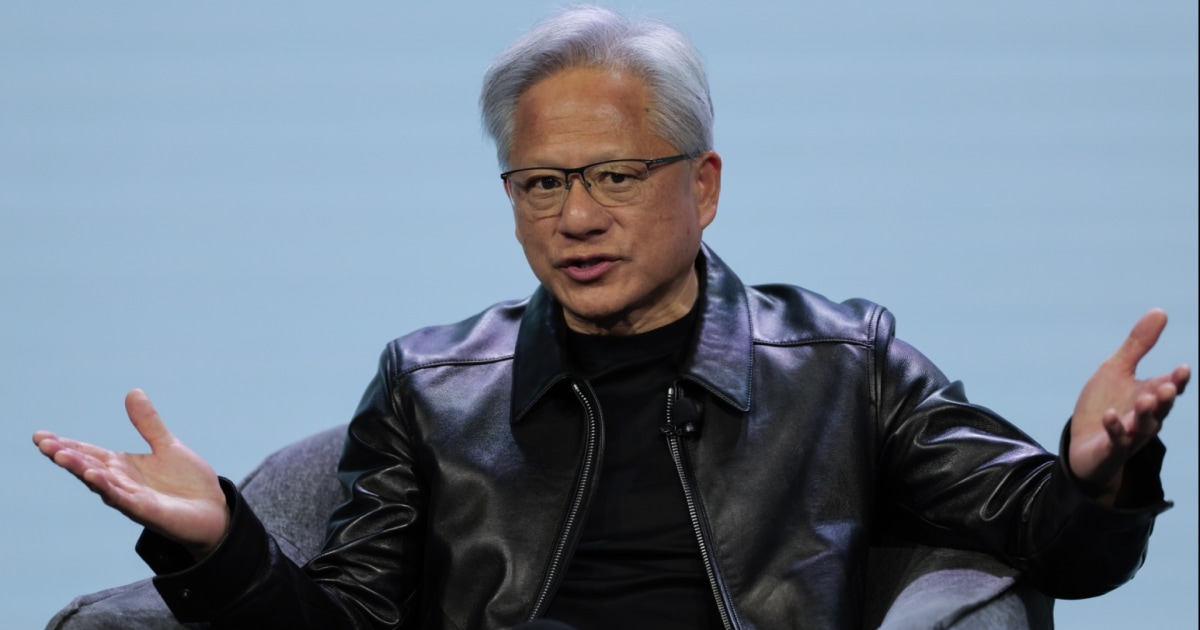
According to a New York Times investigation published Thursday, U.S. intelligence agencies surveilled a Singapore-based data center executive identified as Alice Huang, also known as Huang Le, because they believed she was working as a Chinese intelligence asset while cultivating a close relationship with Nvidia CEO Jensen Huang.
The Times reported that Alice Huang is linked to Megaspeed, a Singapore-based data center operator. Intelligence officials grew concerned after learning that she had developed what they viewed as a suspicious relationship with Jensen Huang, the CEO of the company that dominates the global advanced AI chip market. Investigators were already scrutinizing Megaspeed over suspicions that the firm was helping China circumvent U.S. export controls on Nvidia's artificial intelligence chips, which are restricted from shipment to China. The discovery that a suspected Chinese spy had cultivated a close connection to Jensen Huang—who is also close to President Trump and has influence over chip export policy—alarmed U.S. intelligence officials.
According to the Times, President Trump was briefed on the intelligence findings approximately one year ago. Despite the briefing, Trump chose not to take action, according to the report. The Times cited Trump's reluctance to disrupt Nvidia's profitable operations and the broader U.S.-China trade relationship as factors in his decision. Jensen Huang was not formally notified of the concerns about Alice Huang, according to the Times.
The Times' investigation included a visit to Megaspeed's headquarters in Singapore and a review of the company's corporate documents. The paper found that Megaspeed's Singapore director, who appears to be the company's owner, lives in China. Alice Huang was previously listed as managing director of Megaspeed but was removed from corporate documents after the U.S. Commerce Department began its investigation. In June 2024, Alice Huang was photographed at a party in Taipei sitting next to Jensen Huang and other artificial intelligence industry executives. A year later, she reportedly arranged for Megaspeed to purchase approximately $2 billion worth of Nvidia GPUs, with the chips bound for data centers in Malaysia and Indonesia that appear to serve customers in China.
The Commerce Department investigated Megaspeed over suspected involvement in diverting chips to China after a U.S. official visited a Megaspeed data center in Malaysia and observed GPUs stored in boxes rather than installed in server racks. The Justice Department later took over the investigation. U.S. intelligence agencies conducted electronic surveillance of Alice Huang. According to the Times, intelligence officials believed Jensen Huang was unaware that Alice Huang was attempting to gather information for China.
Nvidia pushed back on the report on Thursday. A company spokesperson told CNBC and other outlets that Jensen Huang's interactions with Megaspeed executives are routine and that he speaks with thousands of customer executives annually. The company stated that regional cloud customers like Megaspeed receive "ordinary business information—not sensitive Nvidia trade secrets—and zero information relevant to national security." Nvidia said the diversion allegations against Megaspeed "were thoroughly investigated and debunked last year." The company added that it regularly receives government briefings about entities of concern and acts accordingly, and expressed confidence that the U.S. government would notify the company if officials believed any individual posed a threat to American industry.
Megaspeed issued a statement to the Times indicating that its current leadership treats the allegations "extremely seriously and is committed to getting to the facts behind allegations." Alice Huang did not respond to requests for comment. A spokesperson for the Chinese Embassy in Washington characterized the report as part of a campaign of "groundless smears and slanders" directed at Beijing. The White House, Central Intelligence Agency, and National Security Agency declined to comment on the Times report.