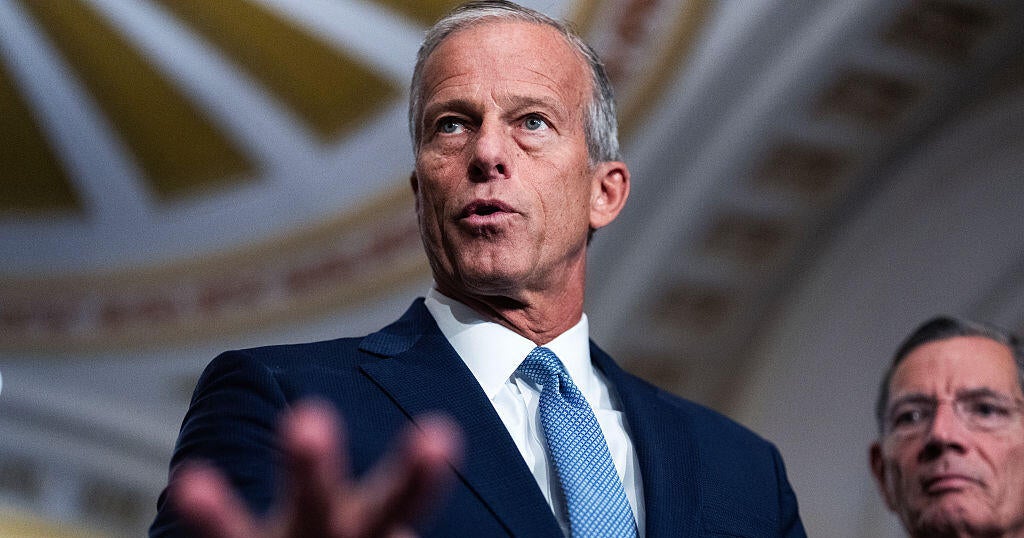
WASHINGTON — The Senate on Thursday, Nov. 19, passed a bipartisan permitting reform bill by a vote of 62-33, advancing legislation intended to speed up the approval of power plants, transmission lines and other energy infrastructure. The measure, formally called the Bipartisan American Affordability and Jobs Act of 2026, now heads to the House.
Fifteen Democrats, including Senate Minority Leader Chuck Schumer, voted for the bill, along with virtually all Republicans. Thirty-one Democrats voted no, as did Republican Sens. Mike Rounds of South Dakota and Josh Hawley of Missouri. President Trump has expressed support for the bill. In a social media post, he called it a “BIG WIN for U.S. ENERGY INDEPENDENCE and DOMINANCE” and said it would allow the U.S. to build pipelines, mines and power plants more quickly.
According to news reports of the bill's text, it would revise and speed up environmental reviews with tighter deadlines, accelerate electricity transmission, restrict the power of federal agencies to revoke existing permits, and limit judicial review and lawsuits. Supporters say the review process for major projects often takes five years or more. The bill would also require “new data centers of 20 megawatts or more to pay the full incremental cost of the infrastructure built to serve them,” according to the Bipartisan Policy Center.
The bill was crafted by Sens. Shelley Moore Capito, R-W.Va., Sheldon Whitehouse, D-R.I., Mike Lee, R-Utah, and Martin Heinrich, D-N.M. Capito called the measure “monumental, and it’s legacy-setting.” Senate Majority Leader John Thune, R-S.D., said, “This bill is years in the making.” Major industry groups representing clean energy developers and the oil and gas sector support the bill, saying it would deliver more electricity to the grid and avoid delays that can stretch a decade or more.
Opposition came from environmental groups and Native American tribal organizations. The Sierra Club and the National Wildlife Federation oppose the bill, citing concerns about limits on judicial review and changes to the National Environmental Policy Act, the Clean Water Act and the Endangered Species Act. Jen Duggan, executive director of the Environmental Integrity Project, said the bill “will pave the way for even more fossil fuel projects” and called it “a gift to some of the biggest polluters in America.” Tribal organizations objected to easing review and consultation rules that can be used to protect their interests. Democratic Sens. Jeff Merkley and Ron Wyden of Oregon raised concerns about the bill's effect on state authority over clean water and air, its support for fossil fuels over renewable energy, and its potential to ease construction of data centers.
A final vote was held up earlier this week while Merkley and Wyden pushed to add amendments, including one to ban data centers on public lands. Merkley said Majority Republicans blocked votes on a number of amendments, including one that would stop the Trump administration from canceling clean energy grants, and that the sponsors had reneged on promises of “a robust amendment process.” In the end, the bill passed without amendments offered by rank-and-file senators.
The bill still needs House approval. The House approved a more limited, industry-friendly version last year. Scalise said, “we want to get a bill to the president’s desk, and that’s still got a great chance to happen.” Thune said the clearest path to a law is for the House to pass the Senate measure as written, adding that if it returned to the Senate, “I can’t predict what happens.” The vote was the first major congressional action since the midterm elections, held Nov. 3.


