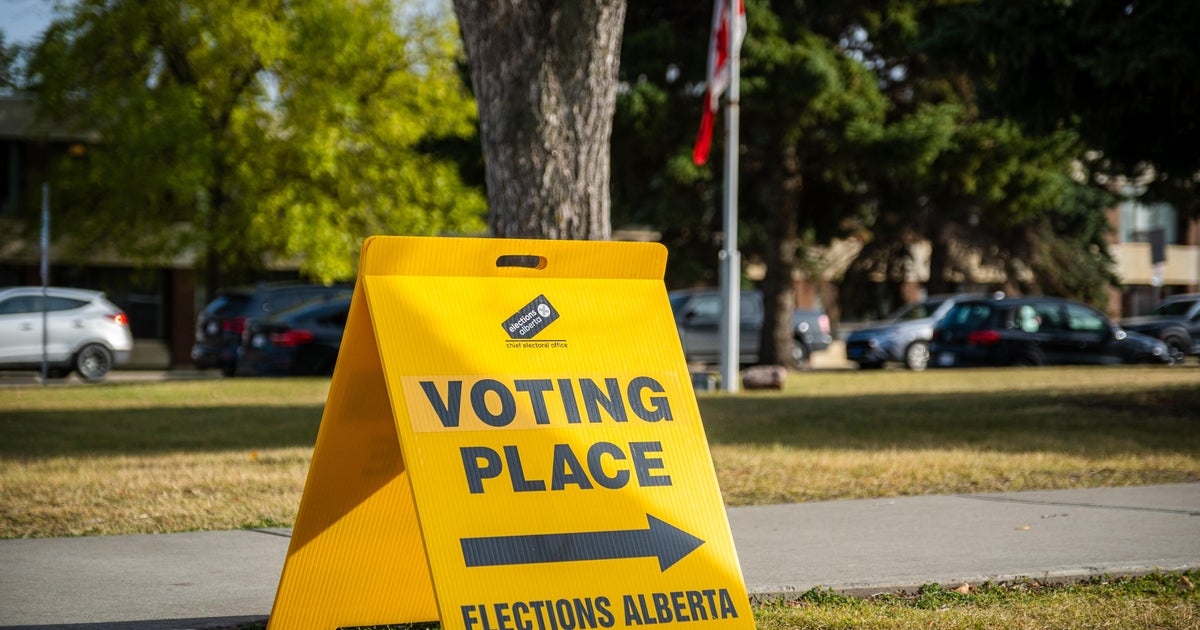
Voters in Canada's oil-rich province of Alberta have rejected a proposal to begin a legal process toward independence, delivering a significant victory for Prime Minister Mark Carney and Canadian unity advocates. With more than 1 million votes counted as of early Tuesday, approximately 76% of voters chose to remain in Canada, while close to 24% backed beginning a process that could lead to a future binding referendum on separation, according to Elections Alberta.
The referendum held on Monday was not a direct vote on independence but would have set Alberta on a path toward a second, binding vote on whether the province should separate from Canada. Results were delayed after more than 100 polling stations opened late, forcing extended voting hours on Monday. More than 1.35 million Albertans, representing 43% of eligible voters, cast advance or special ballots.
Alberta, home to the world's fourth-largest proven oil reserves, is a conservative stronghold whose political culture has historically aligned more closely with the American West than with much of Canada. Long-standing grievances toward the federal government in Ottawa run deep in the province, stemming from issues including the Canadian Wheat Board's historical control of crop prices, the impact of Pierre Trudeau's National Energy Program on the oil and gas sector in the 1980s, and more recent anger over federal energy investment policies and COVID-19 restrictions. However, resentment has not traditionally translated into widespread support for independence until recent years.
Thomas Lukaszuk, a former Alberta deputy premier who led the Forever Canadian campaign against separation, declared victory at a watch party in Edmonton. "We are a solid country that's united from coast to coast to coast," he told supporters. Lukaszuk's citizen initiative petition collected more than 400,000 signatures from Albertans opposed to separation. Prime Minister Carney told supporters that the result allowed Canada to move forward together and accelerate efforts to diversify trade, develop major infrastructure, and position Canada as a global energy powerhouse with Alberta at its center. "Albertans made a clear choice," Carney said. "They chose unity, to build together, and to take care of each other."
Alberta Premier Danielle Smith, who called the referendum under pressure from separatists within her governing United Conservative Party despite personally opposing independence, welcomed the results. "Albertans have voted for a stronger Alberta in a united Canada," she posted on social media. Smith had cited a poll showing 22% support for separation as justification for holding the vote, saying that figure was still too high. Separatist parties had traditionally attracted only 1% or 2% of the vote, according to former Premier Jason Kenney, though anger over COVID-19 restrictions mobilized activists who later embraced the separatist cause.
Despite the decisive outcome, separatist leaders said the movement will persist. Jeff Rath, co-founder of the Alberta Prosperity Project and a prominent separatist organizer, said he would have been satisfied if 30% of Albertans voted to begin the separation process. "Our movement isn't going anywhere," Rath said. "We've dominated the conversation in the last year. We've been educating Albertans on the benefits of independence, and we're going to continue moving forward." He indicated desire to oust Premier Smith as leader of the United Conservative Party and suggested the party could splinter to create a new pro-independence faction. Keith Wilson, another separatist movement leader, acknowledged the result while noting that "at least a quarter of Albertans feel that Alberta needs to be treated better."
Voters expressed diverse perspectives on the question. Dustin Degenhardt of Wainwright said Albertans had been mistreated by Ottawa, stating: "Alberta has essentially been treated as, you know, a colony. They want to take and take and take from us and not return anything." Taylor MacIsaac, also from Wainwright, backed separation. "I think it'll be good for Alberta to separate personally, as a very conservative individual that grew up in rural Alberta," she said. Conversely, Dave Malka, 59, of Edmonton, criticized spending $130 million on a "referendum on a referendum" rather than allocating funds to health care. With Trump threatening Canada, Malka said: "It seems to be happening at the absolute worst time when we should be united; instead we're fighting among ourselves." Jake Graham of Calgary, who attended a pro-Canada rally, hoped the vote would end the separation debate. "I hope this squashes this for a long time to come and that it's clear and decisive, that these grumblings disappear for a while and we can be a united Canada," he said.
Polling data before the vote had consistently predicted the outcome. An Abacus Data poll released on Saturday showed 74% of decided voters favored Alberta remaining within Canadian Confederation, though the same poll found 61% of eligible voters expected Albertans would vote again on separation even if most chose to remain. An Angus Reid Institute poll found 62% of Albertans surveyed believed "there will never be an end to the separatist movement" in the province.
The referendum drew international attention as concerns about potential Canadian fragmentation coincided with Trump's trade war against Canada and his rhetoric about making Canada the 51st U.S. state. Lukaszuk warned that the referendum had raised questions about Canada's stability as an investment environment. However, separatist organizers noted that most pro-independence Albertans do not favor becoming a U.S. state, and that negative sentiment toward Trump has made Albertans less inclined to leave the Canadian federation.