Hundreds of thousands of people marched across France on Saturday over school funding and rising living costs, in a second weekend of nationwide protests. Largely peaceful rallies gave way to clashes in Paris and several other cities despite a security operation of 70,000 police officers and gendarmes, according to the Interior Ministry.
Interior Minister Laurent Nuñez said police made nearly 1,000 arrests and that the figure was expected to rise. He compared it with 385 arrests recorded at the same point a week earlier, when 2,700 people were ultimately arrested after protests degenerated into looting and street violence. Nuñez said two people were seriously injured, one in Toulouse and one in Clermont-Ferrand, and gave no details. The Paris prosecutor's office said 64 people were arrested in connection with the Paris demonstration, 40 of them placed in custody.
Turnout figures differed. The Interior Ministry put nationwide attendance at 410,000, down from the 550,000 it reported the previous weekend, while the CGT union estimated nearly 800,000. In Paris, police counted 110,000 marchers, while the CGT said 250,000. Authorities confined the Paris march to the city's southeastern edge, away from the center, and cleared Place de la Bastille, where protesters had been expected to gather.
Near the end of the Paris route at Porte de Vincennes, masked protesters threw bottles, rocks and fireworks at police, who responded with tear gas, sound grenades and water cannons. Nuñez said about 500 rioters were among several thousand radical activists at the rear of the march, and that clashes lasted about two hours. Police also used tear gas in cities including Lyon, Clermont-Ferrand, Strasbourg and Bordeaux, and water cannons in Nice and Nantes. In Marseille, rubbish fires were set and police said several stores, including two jewelry shops, were ransacked. Nuñez said far-right activists sought confrontations with leftist groups in Nice, Montpellier and Cannes.
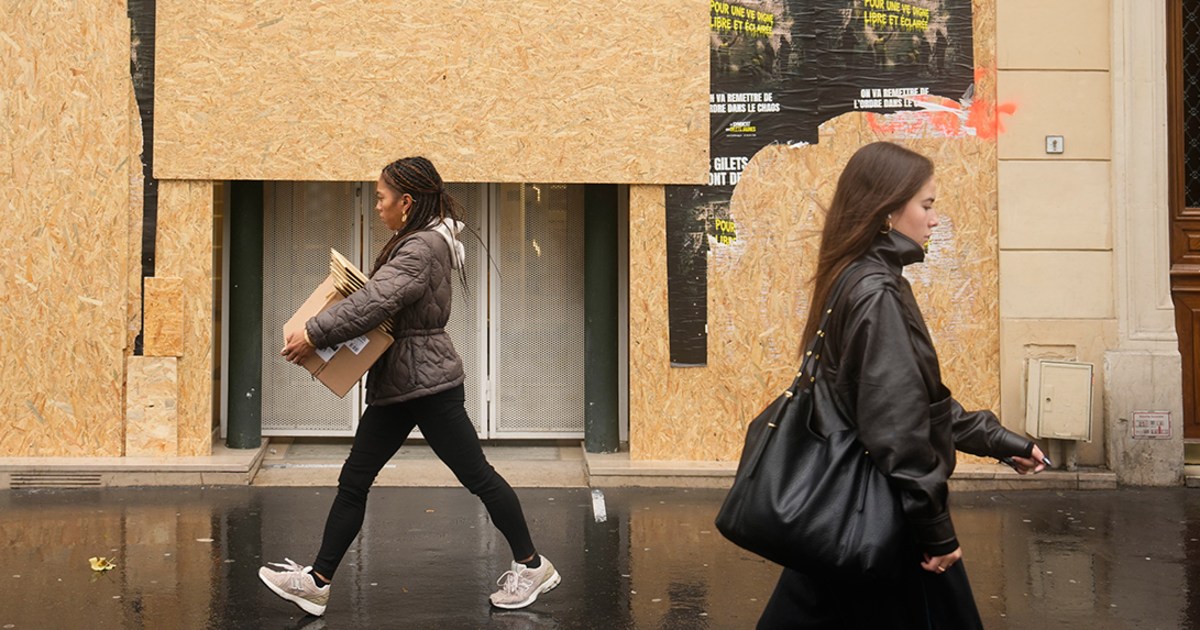
The Louvre, the Musée d'Orsay, the Picasso Museum and the Grand Palais were closed, along with the Paris Opera, and more than 20 metro stations were shut. Shopkeepers boarded up storefronts, and Art Basel Paris canceled its weekend program. Nuñez described the day as more positive than a week earlier, saying earlier police deployment and better protection of shopping centers made the difference. Amnesty International said the police measures risked 'a slide toward authoritarian practice.'
The protests began last month over staff shortages at a high school southeast of Paris and have widened into a movement over wages, pensions and prices. French energy prices were 21.3% higher in September than a year earlier, with overall inflation at 3.1%, according to INSEE. The unrest is testing President Emmanuel Macron before voters choose his successor in May. Hard-left leader Jean-Luc Mélenchon predicted protests would continue weekly, while the far-right National Rally, holding a congress in Orléans, has urged people to channel anger into votes for Marine Le Pen.