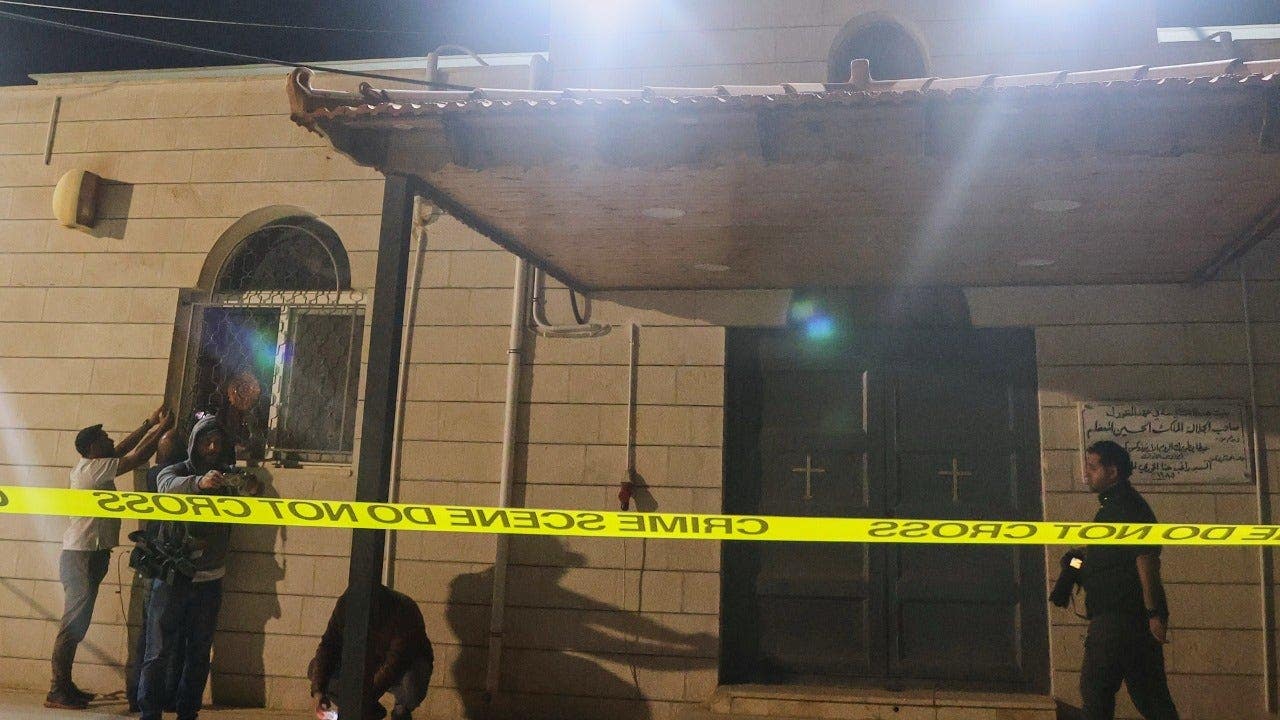
Three gunmen stormed the compound of St. George Greek Orthodox Church in the village of Hammoud, in Karak governorate in southern Jordan, during a funeral service on Friday, October 23, 2026, opening fire on mourners gathered at the church entrance. The death toll rose to nine by Saturday, with health minister Ibrahim al-Budour confirming that two people wounded in the attack died of their injuries, including one critically injured patient who remained hospitalized on Saturday in unstable condition. More than two dozen people were wounded in the assault, with approximately 25 remaining hospitalized.
According to authorities, one attacker wore a mask and carried a Kalashnikov rifle, while the other two had uncovered faces and carried handguns. The gunmen arrived in a blue pickup truck and fired repeatedly at mourners, changing magazines several times during the assault and shooting again at people who had fallen to the ground. Footage shown on Jordanian state television showed the armed men approaching the church and opening fire, and witness accounts described intense gunfire erupting approximately 15 minutes after the funeral service began, causing people to flee.
Jordanian Interior Minister Mazen al-Faraya described the assault as a terrorist attack carried out by an extremist group. Government spokesperson Mohammad Momani said the attackers subscribed to "extremist takfiri ideology," which brands people who reject a strict interpretation of Islam as apostates or nonbelievers. Takfiri beliefs have been invoked by terrorist groups such as ISIS to justify killing Muslims, Christians, and Jews. As of Saturday, Jordanian authorities had not officially linked the attackers to any specific terrorist organization and had not announced any arrests. Public Security Director Maj. Gen. Obeidallah al-Maaytah said authorities were continuing their investigation to identify the perpetrators and bring them to justice, and a public prosecutor ordered a ban on publishing investigation details.
King Abdullah II said during a National Security Council meeting on Saturday that "the security and safety of Jordanians are a red line," adding that "the hand of justice will reach every terrorist." On Friday, he pledged that Jordan would "confront the terrorist act that targeted Karak with the harshest penalties." Prime Minister Jafar Hassan ordered three days of national mourning beginning Friday, with flags to be flown at half-mast over government and public institutions.
Christian leaders across the region responded with condemnations and calls for unity. Patriarchs and heads of churches in Jerusalem described the targeting of mourners at prayer as "a grave crime against God and humanity" and expressed solidarity with the victims' families and the Greek Orthodox Archdiocese in Jordan. They called on all churches in the region to ring their bells at noon on Saturday Jordanian time to pray for the victims and the wounded. The Latin Patriarchate of Jerusalem said the attack violated the sanctity of places of worship and the right to worship freely and with dignity, emphasizing that Jordan's national unity serves as "a safeguard against terrorism and extremism." The Greek Orthodox Patriarchate of Jerusalem affirmed that the attack would not undermine the Christian presence or Christians' ties to their homeland, stating: "We are the children of this land, its living roots, and partners in its history, present, and future."
Karak is home to a significant Christian minority in the majority Sunni Muslim kingdom, where Christians make up between 2 and 3 percent of the population. Government officials sought to emphasize that Christians are "part of Jordan's national fabric." The Jordan Council of Churches said the attack targeted social peace and coexistence, emphasizing solidarity among all communities in Jordan and rejecting attempts to sow religious division. The U.S. embassy said security had been ramped up in Jordan following the attack.