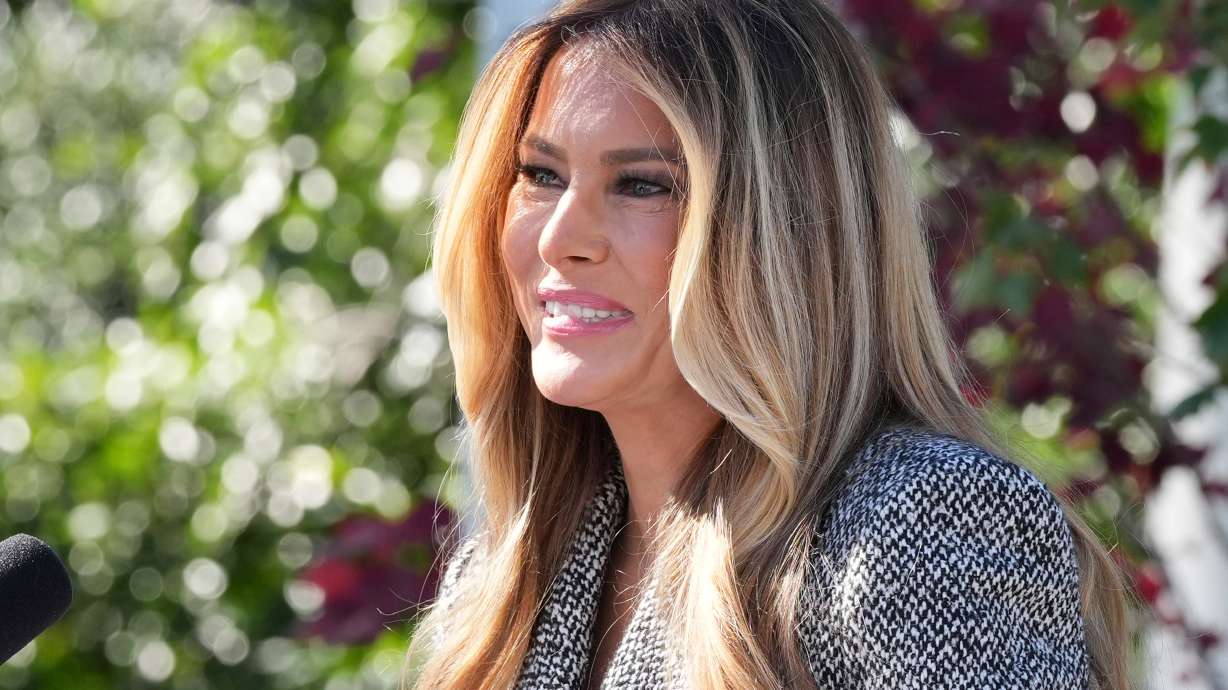
The White House announced on Friday that First Lady Melania Trump has secured a localized ceasefire between Russia and Ukraine in the Russian-occupied city of Oleshky, located in southern Ukraine on the Dnipro River. According to White House statements, the temporary halt to military action is set to begin on October 29, with the goal of allowing humanitarian aid to enter the city and enabling the evacuation of civilians through designated safe passages.
The White House said that Melania Trump initiated discussions with both Russian and Ukrainian leadership and worked directly with representatives from each country to negotiate the terms of the ceasefire. President Donald Trump stated that his wife's focus in the effort was to "save children." The announcement attributed the first lady with taking an active diplomatic role—described as "Exclusive Intermediary"—an unusual position for a U.S. first lady in direct foreign policy negotiations.
Oleshky has faced severe humanitarian conditions since Russia's full-scale invasion of Ukraine began in February 2022. The city was captured by Russian forces on the first day of the invasion and has endured years of shelling, bombardment, and isolation. In June 2023, the destruction of the nearby Kakhovka Dam from an explosion resulted in widespread flooding that inundated approximately 90 percent of the city's territory and killed hundreds of residents. The White House estimates that between 1,700 and 2,000 people remain in Oleshky, predominantly elderly residents along with approximately 50 children—a sharp decline from the city's pre-war population of roughly 24,000.
Residents face acute shortages of food, clean water, electricity, and medical supplies as winter approaches. Roads leading from the city are mined and dotted with destroyed vehicles, and drone activity continues overhead. Melania Trump described Oleshky as "on the brink of disaster" in her statement announcing the ceasefire. Ukraine has appealed repeatedly for a local ceasefire to organize evacuations, arguing that Russia, as the occupying power, is obligated under international law to ensure the survival of civilians under its control.
Under the terms of the ceasefire, non-military teams from both Russia and Ukraine will visit residents in their homes to assess humanitarian needs. Residents wishing to evacuate will receive coordinated support and transportation to their preferred destination—either Russian-held or Ukrainian-held territory. Melania Trump said that an unnamed American media organization would be granted access to document the operation. One source reported that Newsmax, a right-leaning news outlet, would receive "exclusive access" to cover the humanitarian effort.
Dmytro Lubinets, Ukraine's human rights ombudsman who led negotiations on the Ukrainian side, confirmed the planned humanitarian mission to Reuters and RFE/RL, describing the negotiation process as "difficult and protracted." He stated that Melania Trump's involvement had helped move the effort forward and that Ukraine had been attempting to resolve the situation since early 2026. Kremlin spokesman Dmitry Peskov welcomed the first lady's involvement, noting that the ceasefire built upon agreements between Presidents Putin and Trump and involved coordination between Russian and Ukrainian officials designated to address human rights issues.
A discrepancy emerged regarding the ceasefire's start date: the White House stated it would begin on October 29, while Russia's army chief Valery Gerasimov said Russian forces would begin a "regime of silence" starting October 27 at 4:00 a.m. Moscow time. Neither the Russian nor Ukrainian governments immediately provided independent confirmation of the ceasefire agreement, though Ukrainian officials confirmed preparations for the humanitarian operation.